Real Madrid defeated RB Leipzig 4–1 on October 21 to maintain their perfect Champions League start. Bernardo Silva, Arda Güler, Kylian Mbappé and Yan Diomande scored, but the post-match reaction also highlighted Courtois’s saves and defensive work still needed before El Clásico.
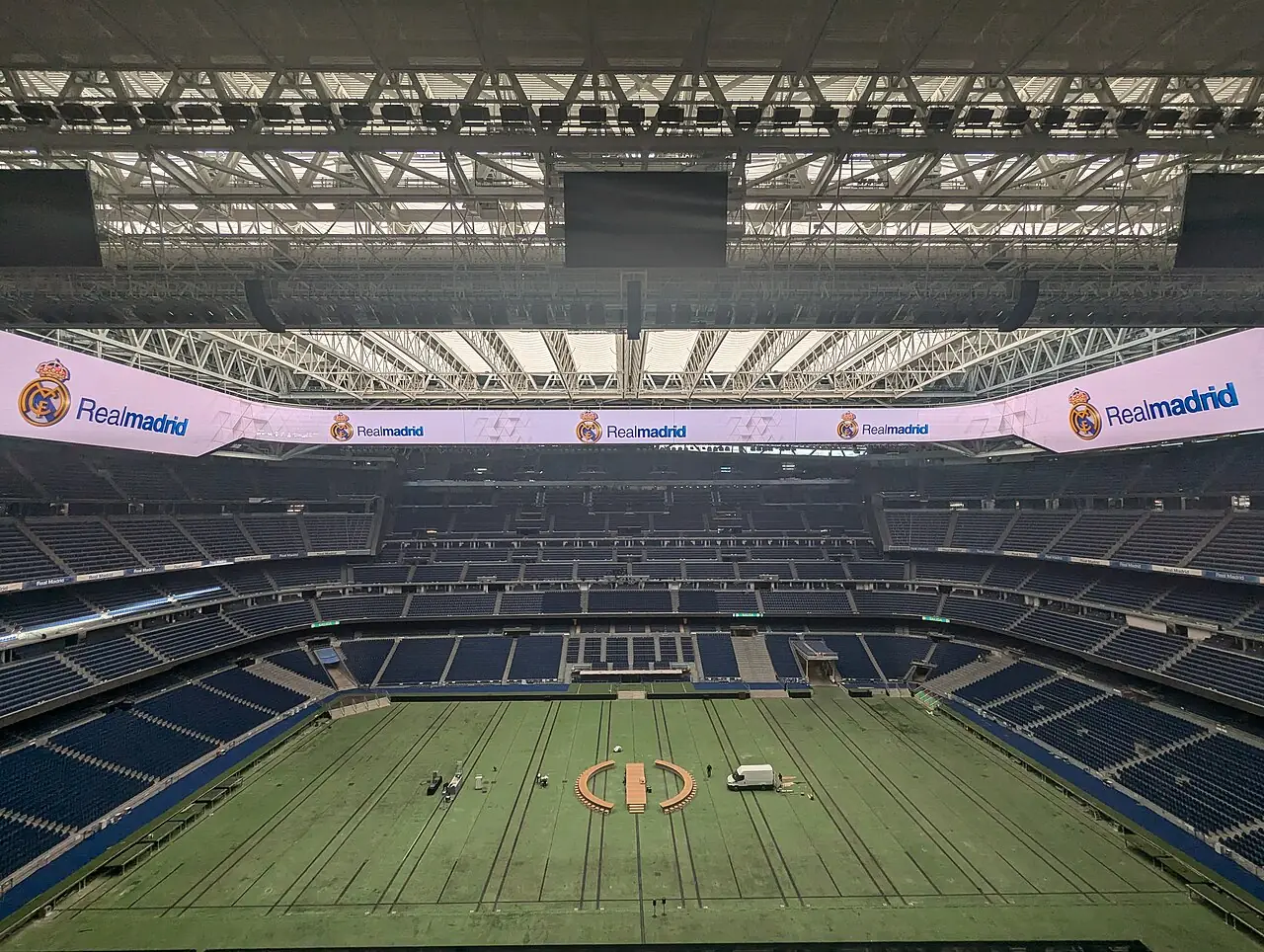
Real Madrid have a confirmed result to place alongside the selection questions that dominated the buildup: a 4–1 home victory over RB Leipzig and nine points from three Champions League matches. Wednesday’s win at the Santiago Bernabéu featured four different Madrid scorers and a much stronger second-half return than the narrow advantage at the interval suggested. It also left room for a more demanding assessment than the scoreline alone. Real Madrid match report.
That combination matters before El Clásico. A team can take encouragement from its finishing and squad depth while still recognising that a different opponent may punish the chances it allows. The result provides evidence of progress; it does not remove the need to examine how the game was won.
The goals and the decisive first-half interventions
Bernardo Silva opened the scoring in the 44th minute, finishing a rebound after Maarten Vandevoordt saved Arda Güler’s attempt. Before that, Thibaut Courtois had denied Rómulo and later Christopher Nkunku. Arda made it 2–0 after the interval, getting the final touch to a move involving Jude Bellingham’s cross and Mbappé’s header. Mbappé then struck from outside the area, Gomis replied, and Diomande’s 87th-minute volley completed the scoring. Official account of the goals.
Independent reporting by Europa Press likewise recorded the four Madrid scorers and the third consecutive European victory. Its account described a convincing margin without treating the entire display as uniformly impressive. That is a useful corrective to a highlight sequence consisting only of the goals. Europa Press report.
Leipzig’s first half changes the reading of the score
Leipzig’s own report acknowledged the defeat but pointed to courage and discipline before halftime. From their perspective, the opening period contained reasons for encouragement even though they went into the break behind. That assessment is consistent with a game in which the winning goalkeeper had important work to do before his side established a larger cushion. RB Leipzig report.
Martín Demichelis told the post-match media that his team had competed well in the first half and that going into the interval behind felt unjust. He also recognised Madrid’s improved control afterwards. These are the losing coach’s judgements, rather than an alternative result: Madrid converted the match into a three-goal victory. They nevertheless help explain why the opening 45 minutes should remain part of the evaluation. Demichelis’s comments reported by AS.
The analytical point is straightforward. A lead can reward decisive execution without proving that every phase before it was secure. Madrid’s supporters can celebrate the goals and still ask whether the same first-half chances would be acceptable in a tighter match. Those positions are compatible.
Bernardo’s first goal, and his explanation of balance
Bernardo said the opener was his first goal in a Madrid shirt. In the club’s post-match interview, he credited Courtois and said the team controlled the second half better. He also described the midfield’s challenge as balancing possession and control with the direct, aggressive qualities of the players ahead. The aim, in his account, is fluency without becoming passive. Bernardo Silva interview.
That explanation offers a useful way to judge the midfield beyond the scorer’s name. Keeping the ball matters partly because it can determine when the team attacks and what protection remains if the move breaks down. Moving it forward quickly matters because possession without penetration can leave dangerous forwards waiting rather than threatening.
The balance is not a fixed choice between slow and fast football. It concerns recognising the moment to retain the ball and the moment to accelerate. Bernardo’s interview presents that as an ongoing collective process. One effective evening strengthens his case for involvement without establishing that the same combination must start every future match.
Selection showed several routes into the team
The club’s confirmed starting team included Courtois; Valverde, Rüdiger, Huijsen and Carreras; Camavinga, Bernardo, Bellingham, Vinícius, Arda and Mbappé. That official list matters when assessing the pre-match debate: Konaté’s reunion with Leipzig did not mean that he started, and Diomande’s later impact came from a different role in this match. Confirmed Madrid lineup.
Selection debates often become predictions about a permanent hierarchy. A match provides narrower evidence. It shows who was chosen for that opponent, which combinations were used and how replacements affected the game. It does not establish that a player omitted from one starting team has lost the coach’s confidence or that a successful substitute must immediately replace someone else.
Our pre-match guide to Madrid–Leipzig examined the questions before kickoff. The result now supplies new evidence, especially about Madrid’s range of scoring options, while leaving the next selection decision open.
Mourinho’s satisfaction came with qualifications
José Mourinho praised the performance but said the team remained short of where he wanted it defensively. He was unhappy with the conceded goal and considered Courtois’s earlier saves important to keeping the contest open for Madrid to win. He also defended Vinícius’s contribution, highlighting defensive balance and explaining that a substitution can introduce a different quality without expressing dissatisfaction with the player removed. Mourinho’s press conference.
Those remarks are more informative than a simple claim that every attacking position is settled by the latest goal. The coach is weighing work without the ball, relationships between teammates and the qualities available from the bench. A scorer can change a game, while another player’s less conspicuous positioning contributes to the conditions in which that change becomes possible.
There is also a distinction between a substitute improving the team’s final minutes and proving that he would necessarily have produced the same effect from the start. Opponent fatigue, the score and the spaces available are different. The contribution remains valuable without turning it into a conclusion that the available evidence cannot establish.
Diomande’s finish and the confidence of the bench
Diomande’s club interview focused on the team victory, the value of the Bernabéu crowd and his eagerness for the coming Clásico. He credited Brahim’s pass for his spectacular finish and treated the evening as encouragement to keep going. These comments capture confidence after a successful appearance; they do not amount to a prediction that the next opponent will be beaten. Diomande’s reaction.
The breadth of the scoring is encouraging in its own right. Madrid did not need a single player to provide every finish. At the same time, the way those contributions fit together remains more useful than a bare tally of names. Rebounds, movement near the goal, a strike from distance and a late volley present different problems for a defence.
For an opponent preparing to face Madrid, that variety complicates the task of concentrating on one threat. For Madrid’s own analysis, it is a reason to examine the supply of chances as closely as the finishing. A spectacular conversion is worth celebrating without assuming that it can be reproduced whenever the team needs relief.
Nine points improve the position without finishing the job
UEFA’s competition schedule places this result on matchday three of a league phase that continues until January 27, 2027. There are still five league-phase fixtures for each team after the opening three. A perfect start is therefore a substantial advantage, but it is an early position in an unfinished programme. UEFA fixtures and results.
The current format rewards the top eight with direct passage to the last 16, while teams finishing ninth to 24th enter a playoff. That distinction makes continued results valuable even to a team already accumulating points quickly. It would be premature to turn nine points into a guaranteed final placing or a fixed qualification threshold. 2026–27 format guide.
A high-scoring round offers context, not a ranking shortcut
UEFA’s matchday-three results also include Liverpool’s 4–3 win over Villarreal and Paris Saint-Germain’s 4–2 victory against Barcelona on Tuesday. Those results place Madrid’s evening within a round featuring several productive attacks. They are confirmed results from separate fixtures, not evidence that the teams faced equivalent tests or that a direct comparison of winning margins can predict the next match. UEFA matchday results.
The opponents, venues and match situations differ. A one-goal comeback may expose different strengths and weaknesses from a game decided by a late burst of scoring. For readers following several clubs, the useful comparison concerns how each side creates and prevents chances, while keeping those circumstances visible.
That is especially relevant before a domestic rivalry with its own pressures. Madrid’s four goals are tangible encouragement, but Barcelona’s midweek result does not settle what will happen in a different competition. The next contest begins with its own selection, tactical choices and execution. Wednesday’s evidence belongs in the preparation; it cannot replace the match itself.
What carries into El Clásico
The clearest positives are the result, the variety of scorers and evidence that Madrid could improve after a competitive first half. The unresolved work concerns the chances allowed before the opener and the concentration required after building a lead. Those are observations grounded in this match and its reaction, rather than a forecast of Sunday’s score.
Madrid now approach the next challenge with an emphatic European win behind them. The most useful reading preserves both parts of the evening: the attacking quality that made 4–1 possible, and the interventions that prevented the match from developing very differently. Confidence has a sounder basis when it includes that complete picture.
Smashology Editorial Team
The Smashology Editorial Team is responsible for reviewing and publishing content at Smashology Media, overseeing sourcing, fact-checking, corrections, and editorial standards across coverage of internet culture, technology, entertainment, news, and crime.
Sources
Links cited in this article.
- Original sourcecommons.wikimedia.org
- reuse termscreativecommons.org
- Real Madrid match reportrealmadrid.com
- Europa Press reporthuffingtonpost.es
- RB Leipzig reportrbleipzig.com
- Demichelis’s comments reported by ASas.com
- Bernardo Silva interviewrealmadrid.com
- Confirmed Madrid lineuprealmadrid.com
- Mourinho’s press conferencerealmadrid.com
- Diomande’s reactionrealmadrid.com
- UEFA fixtures and resultsuefa.com
- 2026–27 format guideskysports.com