Bournemouth defeated AC Milan 3–0 on October 22, with penalties from Justin Kluivert and Marcus Tavernier followed by Amine Adli’s late free-kick. Mike Maignan’s dismissal left Milan short-handed for most of a match that extended the Cherries’ perfect Europa League start.
Bournemouth recorded a 3–0 victory over AC Milan at the Vitality Stadium on Thursday, October 22, turning a prominent European fixture into another successful night in their debut continental campaign. Justin Kluivert and Marcus Tavernier converted first-half penalties before substitute Amine Adli completed the scoring with a free-kick in the 84th minute. Milan goalkeeper Mike Maignan was sent off before the half-hour, leaving the visitors with ten players for most of the game.
The result and scoring sequence are confirmed by Milan’s official match report and Sky Sports’ report. The red card was a major turning point, but Bournemouth had already taken the lead while the teams were at equal strength. That sequence matters when assessing a result that combines an early advantage, a decisive disciplinary incident and the home side’s subsequent control.
Bournemouth take the initiative before the dismissal
Kluivert’s eighth-minute penalty put Bournemouth ahead after a handball involving Koni De Winter. Milan’s account describes an aggressive start from the hosts and an early passage in which they forced the visitors to defend their own penalty area. The first goal therefore preceded the incident that transformed Milan’s task. The match cannot accurately be reduced to a story in which the dismissal created Bournemouth’s lead from nothing.
From an analytical perspective, scoring first changed the options available to both managers. Milan needed a response without leaving themselves more exposed, while Bournemouth could continue their approach with a margin already established. That is an interpretation of the documented match sequence, not a claim about private instructions from either bench. The verified events explain the pressure on the visitors without requiring an invented dressing-room account.
The opening penalty also created a useful contrast with the second. Both were converted, but they arose from different incidents. Treating them as one continuous controversy obscures how the game developed. The first involved a defensive handball; the later decision followed Maignan’s contact with Tyler Adams and required Milan to reorganize around a replacement goalkeeper.
Maignan’s red card changes Milan’s structure
Sky reports that Maignan pushed Adams in the face as Bournemouth delivered a corner. The goalkeeper received a straight red card, and the hosts were awarded another penalty. Match records place the dismissal around the 27th–28th minute; the decisive fact is that it occurred before the half-hour. Lorenzo Torriani replaced Omari Hutchinson, and Tavernier converted the penalty in the 32nd minute to make the score 2–0.
That substitution imposed a cost beyond losing the starting goalkeeper. Milan also had to remove an attacking player to put a specialist goalkeeper on the pitch. In practical terms, the visitors needed to chase a two-goal deficit with fewer outfield options. Their subsequent difficulty creating chances should be assessed in that context, while still recognizing that the first concession came before the numerical disadvantage.
The general rules help explain why a penalty and a dismissal can coexist. IFAB Law 12 distinguishes disciplinary sanctions from the restart for an offence. Violent conduct can be punished with a sending-off even away from a challenge for the ball; a qualifying offence inside the offender’s penalty area while the ball is in play can also lead to a penalty. That background does not replace the referee’s match decision or establish the length of any later disciplinary sanction.
No future suspension length is asserted here. A red card shown during a match and a subsequent competition disciplinary decision are related but separate facts. The same caution applies to claims about an appeal or an injury: neither should be added without a specific, reliable update.
Adli supplies the late finish
Adli’s free-kick in the 84th minute completed the three-goal margin. Milan’s account also records a late Torriani save from Rayan and a De Winter header in the second half that the home defence diverted behind. The visitors made changes during the interval and introduced further substitutes as the game continued. Those details show a match that continued to produce incidents after the first-half turning point, rather than ending in any literal sense when the goalkeeper departed.
The final goal is significant because it secured a larger winning margin, but it should not be described as the strike that first put Bournemouth in front. The home team led from the eighth minute and had a two-goal advantage by the 32nd. Adli supplied the finish to an already favourable position. Keeping the timing straight avoids turning a memorable late moment into an inaccurate account of how the points were won.
For Torriani, the official report identifies a seasonal debut in difficult circumstances. Milan also gave Christian Comotto his first appearance of the season. Those are individual developments within a disappointing collective result, not evidence that either player’s longer-term place in the side has been decided. A substitute appearance and a future selection commitment should not be confused.
What the completed match statistics show
The completed Sky Sports statistics page records Bournemouth with 64.1% possession, 20 shots and seven attempts on target. Milan have three shots and none on target. The same page lists six corners for the hosts and four for the visitors, with 452 accurate passes against 226. These are full-match figures from that provider, rather than numbers taken from a halftime search result.
Together, they support a straightforward conclusion: Bournemouth controlled far more of the attacking output across the full match. They do not isolate the period before the dismissal. Using them to describe an uninterrupted eleven-against-eleven contest would overlook the major change in personnel. They are evidence about the game that actually happened, including the long stretch with Milan short-handed.
Possession is also not identical to threat. Here, the shot and on-target figures add information about what each team produced with the ball. The combination is more useful than any single percentage. It still does not establish every tactical cause, and this report does not supply an unverified expected-goals figure or invent a minute-by-minute possession trend that the reviewed data do not provide.
The managers’ reactions put the result in perspective
In comments reported by Sky, Bournemouth manager Marco Rose praised his team’s performance from the start and recognized that the red card changed the match. He also emphasized the need to remain humble across a long season. Milan coach Ruben Amorim focused on avoiding mistakes and keeping eleven players on the pitch. These reactions describe the managers’ public assessments; they do not establish a new transfer decision, a private dispute or a change in employment status.
Their emphasis fits two different immediate priorities. Bournemouth can take confidence from turning a favourable position into a convincing result. Milan need to examine how an early setback became a much larger problem. Those are sporting implications drawn from the result and comments. Neither team can resolve the rest of its European campaign through one night, however striking the scoreline.
Three wins matter, but qualification is not complete
Bournemouth’s results listing shows earlier Europa League wins over Real Sociedad and Sturm Graz before the Milan fixture. Three victories produce nine points, strengthening their position in the league phase. Milan’s sequence includes a home defeat against Benfica and an away win at Salzburg before this loss. That leaves the Italian side with one win from three European matches. These are results-based calculations, not a forecast that either side has secured or lost qualification.
The 2026/27 UEFA competition regulations specify a 36-club league phase in which each team faces eight opponents in single matches. A victory earns three points and a draw one. After three fixtures, five matches remain for each team. The arithmetic leaves substantial room for the table to change, even though a strong start can provide a useful cushion.
UEFA’s format explanation distinguishes the direct route into the last 16 for the top eight from the play-off route for clubs finishing ninth to 24th. Those thresholds give a result its competitive meaning. Nine early points are valuable, but they should not be presented as a mathematical guarantee of a particular finishing position before the remaining fixtures are played.
A notable result with a wider club connection
Spanish outlet AS’s report highlights the historical connection between Bournemouth’s red-and-black identity and Milan’s colours. That gives the meeting an additional resonance beyond the score. It does not change the competition’s points system or turn the match into a final, but it helps explain why hosting this particular opponent was a distinctive occasion for the club and supporters.
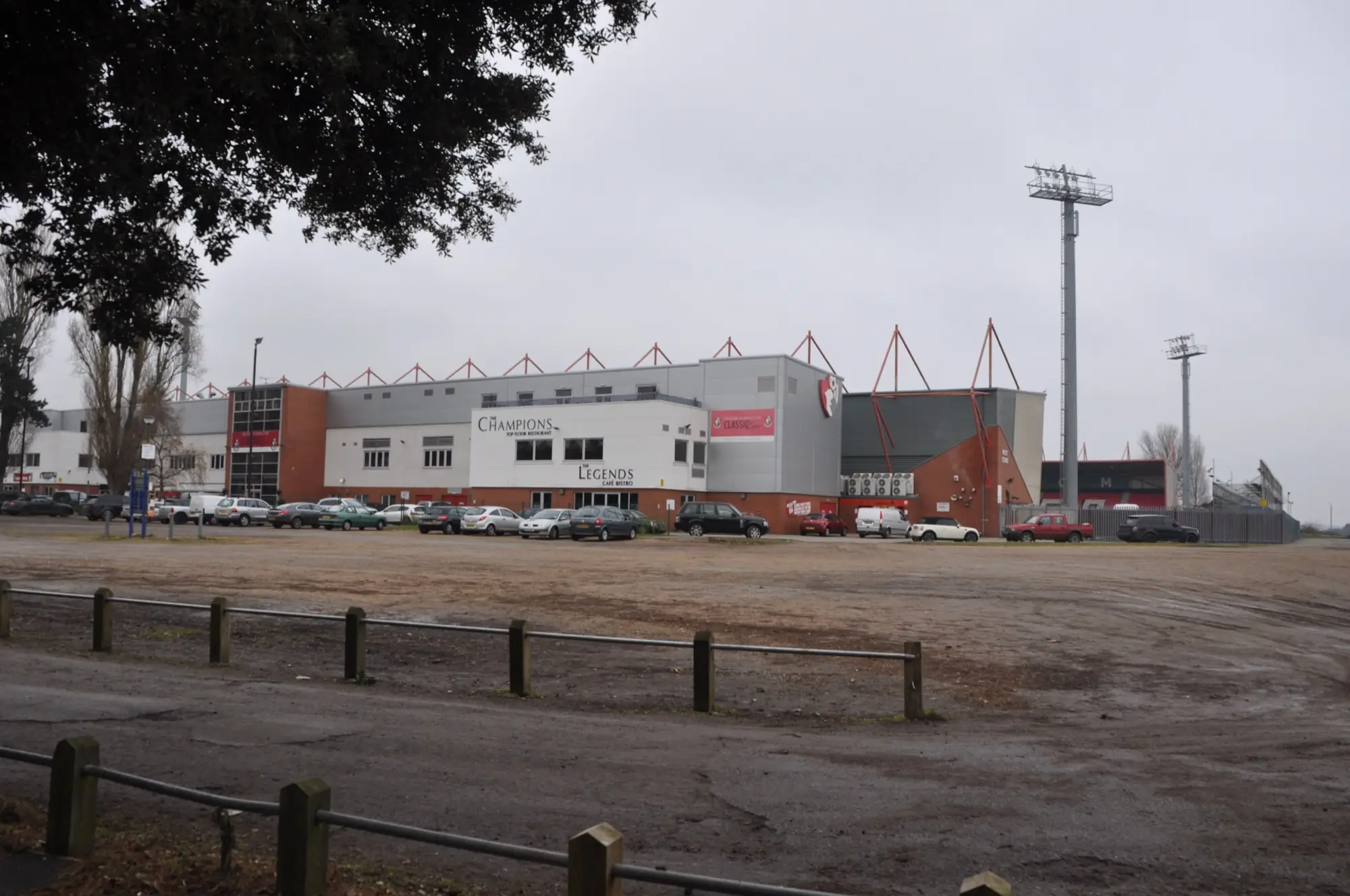
The archive stadium photograph accompanying this report dates from December 2010. It shows Dean Court and is credited to Lewis Clarke under its stated reuse licence. It is not a photograph of Thursday’s goals, weather or crowd. Keeping that description visible matters when using an older venue image to illustrate a fresh result for which licensed match photography is not available to us.
For further match reporting, visit our Sports coverage. This article is published after midnight on October 23 in Europe/Belgrade, while the match took place on October 22. The confirmed sporting outcome is Bournemouth’s third consecutive Europa League victory, earned through two penalties, a late free-kick and a performance that made full use of a decisive first-half advantage. The next tests will establish how far that start can carry them.
Smashology Editorial Team
The Smashology Editorial Team is responsible for reviewing and publishing content at Smashology Media, overseeing sourcing, fact-checking, corrections, and editorial standards across coverage of internet culture, technology, entertainment, news, and crime.
Sources
Links cited in this article.
- Original photographcommons.wikimedia.org
- CC BY-SA 2.0creativecommons.org
- Milan's official match reportacmilan.com
- Sky Sports' reportskysports.com
- IFAB Law 12theifab.com
- completed Sky Sports statistics pageskysports.com
- 2026/27 UEFA competition regulationsdocuments.uefa.com
- format explanationuefa.com
- AS's reportas.com