A viral gallery presents Pink Panther scenes as images of recent French protests, but a fact-check traced key backgrounds to older photographs. Dated agency captions provide a clearer basis for assessing the claim than visual impressions or an unexplained AI-detector score.
Pink Panther Paris protest images face a provenance problem
A gallery circulating during renewed attention to French protests places a Pink Panther character amid confrontations with police. The central question is whether those pictures document the recent events described in their captions. An October 21 Lead Stories investigation found that key images were altered from earlier photographs. This October 23 report explains the documented source trail and why it matters; it does not present the gallery as new eyewitness coverage.
The finding is narrower than saying that no person has ever attended a protest in a costume. It concerns the particular pictures checked and the claim attached to them. That scope is essential. A humorous or striking scene might be possible in real life while a specific image offered as proof is still manipulated. Possibility cannot authenticate the file being shared.
Lead Stories traced examples to a 2015 scene in Armenia, a 2025 Paris football celebration and a 2010 confrontation in Athens. It described the Pink Panther elements as changes to older material. The dated originals are the useful part of that evidence: readers can examine source records that predate the current French demonstrations, instead of relying solely on a judgment that a character looks unusually smooth or out of place. Read the original fact-check.
The Paris source photograph concerns a football celebration
The Getty Images record for photograph 2217310886 identifies a scene in which riot police detain a person on the Champs-Élysées during Paris Saint-Germain celebrations on May 31, 2025. That dated caption places the underlying scene in Paris, but at a different event and in a different year. A genuine Paris location therefore cannot, on its own, validate the later protest caption.
This is a useful example of how a misleading image can preserve authentic surroundings. A street, police uniforms and the arrangement of people may all be derived from a real photograph. If a central figure is replaced, familiarity with the background can make the altered version seem more plausible. Recognising the city answers only the location question; it does not establish the date, event or identity of the person depicted.
The agency record also offers a practical reference point for readers. Compare the underlying arrangement of police and bystanders, rather than focusing only on the colourful character. The relevant question is whether the scene matches the older record while one element changes. A matching historical composition is stronger evidence of reuse than a disagreement over whether a costume could physically exist. The source link is provided for comparison; it is not permission to republish the agency photograph.
The Athens record changes both the place and the date
Another source record linked in the investigation is an AP photograph distributed through Alamy, credited to Alkis Konstantinidis and captioned as Athens on December 15, 2010. Its description concerns a confrontation during an anti-austerity labour protest. Whatever conclusions a viewer draws from a later altered image, that original record cannot serve as contemporaneous documentation of French protests in October 2026.
The geographical difference matters as much as the age. An image can contain real protest activity while the caption assigns it to the wrong country. Adding a synthetic character introduces another change, but the false context would already be a problem without that addition. Verification needs to test each layer separately: what the original photographer recorded, what an editor changed and what a later uploader says the resulting image represents.
Historical source records are not automatically infallible. They are nevertheless specific, attributable evidence that can be checked against an otherwise unsupported caption. A careful correction should name the earlier event and date, rather than merely call a picture fake. Explaining the source trail gives readers something concrete to verify and avoids making authenticity depend on trusting a publication’s unexplained verdict.
An Armenian source shows why the publication date matters
One source photograph was published with reporting from Yerevan in June 2015. That earlier publication establishes a historical reference point for the comparison.
There are several dates to keep separate when a picture circulates again. The original photograph has a creation or publication history. An altered version may have been produced much later. A social post has its own upload date, and a news article discussing that post has another. A screenshot showing this week’s date proves, at most, that someone shared material this week. It does not move the original scene into the present.
For the same reason, the first post a reader happens to encounter is not necessarily the first upload. A successful reverse-image search may reveal an older copy without establishing the ultimate creator of the manipulated version. The responsible statement is that earlier evidence has been located. Attribution of the alteration requires its own evidence, and the reviewed source trail does not justify inventing the identity or motive of the person who made it.
Other French-protest claims need their own checks
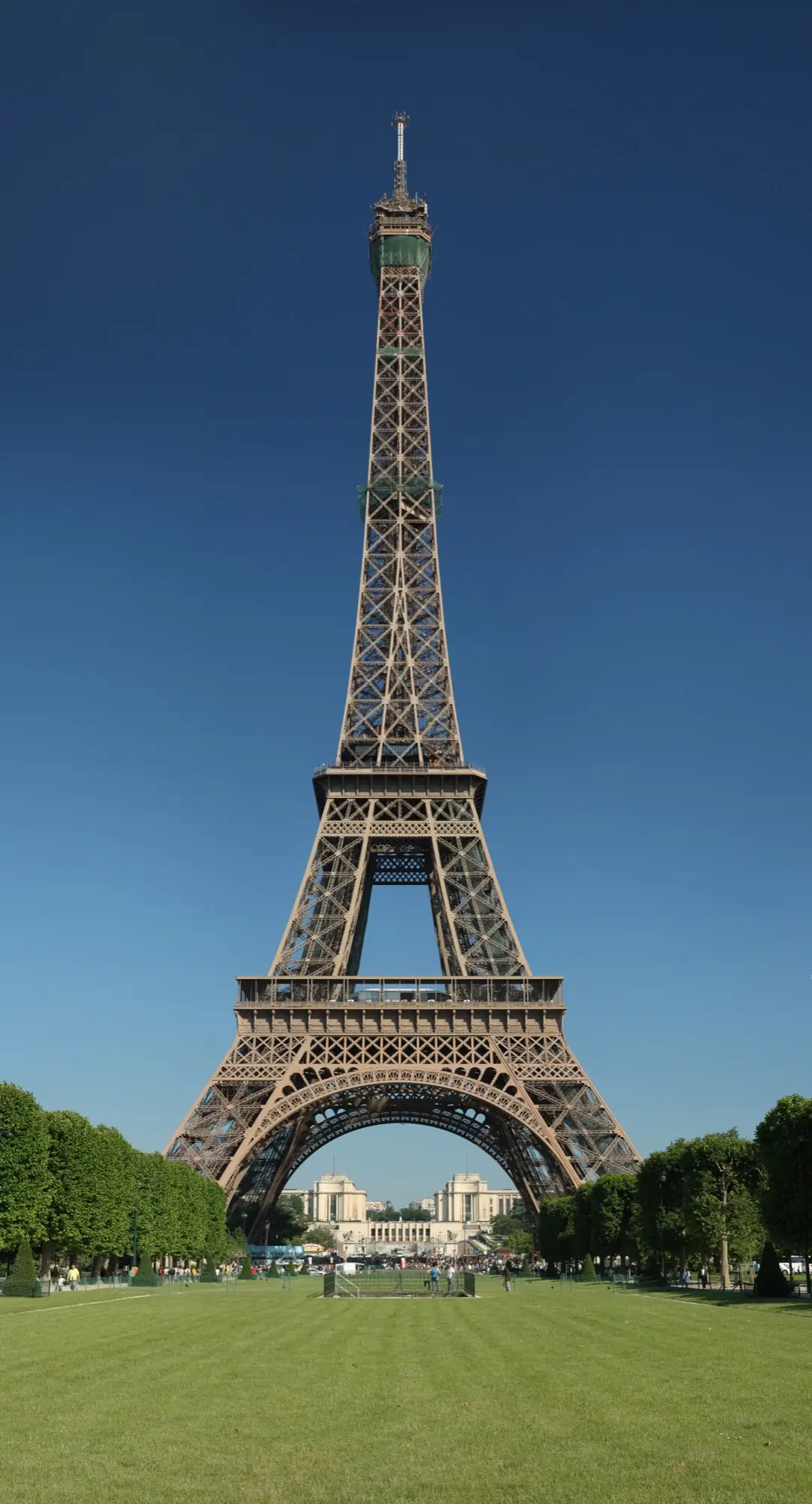
Full Fact’s October 22 roundup describes other misleading material shared around the French demonstrations, including images and video involving the Eiffel Tower. It also distinguishes recycled footage from material assessed as generated or altered. The broader point is that a real news event can attract several different forms of misleading content at once. The finding for one file should not simply be transferred to every other clip in the same feed.
An authentic video with a false date calls for a contextual correction. A composite calls for explaining the parts that changed. A wholly generated scene raises a different question about whether any depicted event occurred. Those categories can overlap, but treating them as interchangeable obscures the evidence. It can also encourage a damaging shortcut: assuming that discovering one fabrication proves that all reporting about the underlying demonstrations is false.
Our coverage of the Peshawar claim involving older Nepal footage illustrates a related verification problem. Reuse can mislead even when the camera originally recorded something real. The correction has to address the claim actually made, preserving what the evidence establishes while withdrawing the place, date or event that it does not support.
AI tools can add evidence, but labels need interpretation
Google DeepMind describes SynthID as a system for embedding and detecting invisible watermarks in AI-generated content. Its image and video watermarks are added during creation and designed to survive common modifications. This is a technical provenance signal associated with supported generation systems. It is different from simply asking a model to look at a picture and guess whether the scene seems artificial.
It is also important to name technologies accurately. SynthID is a Google technology. This report does not use confused references to model vendors as proof that a particular company created the Pink Panther pictures. Nor has Smashology independently run a forensic examination of the original gallery files. The stronger published evidence available here is the dated source-photograph trail, with the alteration findings attributed to the researchers who performed that comparison.
Microsoft’s provenance-detection documentation similarly explains that its own service identifies supported signals from Microsoft-generated material, not every possible AI image. It warns that the tool does not determine whether content is true and that a negative result does not establish that a file was created without AI. This limitation is useful well beyond one vendor: a tool’s supported scope must be understood before interpreting its output.
How to repeat a source-image check
Google’s image-search guidance explains that Lens can return visually similar images and websites containing the same or related pictures. A reader can search using an image file or an image URL. The useful next step is to open the resulting source page and examine its caption, credit and publication context. A thumbnail in a results grid is a lead to investigate, rather than a complete source record. Source and context.
For an altered protest scene, it can help to compare the unchanged background as well as the central figure. Keep a record of the page that supplies the older date and explain which parts match. A search that returns nothing is not a certificate of authenticity: the source may not be indexed, the crop may be different or the comparison may require another reference. The purpose is to find attributable evidence that another reader can follow, not to collect a tool-generated verdict without its supporting material.
Content Credentials answer a different question from truth
The C2PA Content Credentials explainer describes signed records that can connect a digital asset with assertions about its origin and editing history. Validation can help establish whether the credential and its association with the file remain intact. The standard explicitly distinguishes that provenance evidence from deciding whether the depicted content is true, accurate or factual. It also explains that provenance information may be incomplete or removed.
A valid record is therefore useful evidence about a file’s history, rather than a universal truth certificate for every visible event. Conversely, the absence of a credential does not turn an ordinary photograph into a fabrication. These distinctions protect against two opposite mistakes: accepting a misleading caption because a file has technical metadata, or rejecting real reporting because it lacks a badge.
For a reader deciding whether to share this gallery, the useful test is concrete. Open the earlier source records, compare the scenes and retain the dates. Read the fact-check’s stated scope. Do not turn an attributed alteration finding into an unsupported allegation about the uploader’s identity or intentions. The pictures examined do not provide reliable evidence for the recent protest scenes claimed, and the older photographs explain why. A correction that preserves that evidence is more durable than another striking image shared without context.
Sources and further reading
- Lead Stories: Pink Panther gallery fact-check
- Getty Images: May 31, 2025 Paris photograph
- AP / Alamy: December 15, 2010 Athens photograph
- The Guardian: June 2015 Yerevan reporting
- Full Fact: October 22 French-protest fact checks
- Google DeepMind: SynthID documentation
- Microsoft: provenance-detection scope and limitations
- C2PA: Content Credentials explainer
- Google: image-search instructions
Smashology Editorial Team
The Smashology Editorial Team is responsible for reviewing and publishing content at Smashology Media, overseeing sourcing, fact-checking, corrections, and editorial standards across coverage of internet culture, technology, entertainment, news, and crime.
Sources
Links cited in this article.
- Original photographcommons.wikimedia.org
- CC BY-SA 3.0creativecommons.org
- October 21 Lead Stories investigationleadstories.com
- Getty Images record for photograph 2217310886gettyimages.com
- AP photograph distributed through Alamyalamy.com
- reporting from Yerevan in June 2015theguardian.com
- Full Fact’s October 22 roundupfullfact.org
- Google DeepMind describes SynthIDdeepmind.google
- Microsoft’s provenance-detection documentationlearn.microsoft.com
- Source and contextsupport.google.com
- C2PA Content Credentials explainerc2pa.org