A video shared as evidence of protesters surrounding Peshawar’s Governor House instead shows unrest in Kathmandu, Nepal, in September 2025. Dated reporting and a separate AFP investigation establish the older context, exposing how genuine footage can mislead when its location and date are changed.
The claim attached to the clip is false
A crowd gathers outside a large building, and smoke rises into the air. The images are dramatic, but the caption circulating with them supplies a crucial claim that the video itself does not prove: that the scene shows supporters of Imran Khan surrounding the Governor House in Peshawar. A new Geo Fact-Check report published October 20 identifies the footage as protests in Nepal in September 2025.
The distinction is the central finding. This is a correction of the clip’s claimed time and place, not a finding that every visible person or plume of smoke was artificially generated. Real images can carry a false message when a later caption relocates them. Viewers who recognise that the scene looks authentic can still be misled about the event they are being shown.
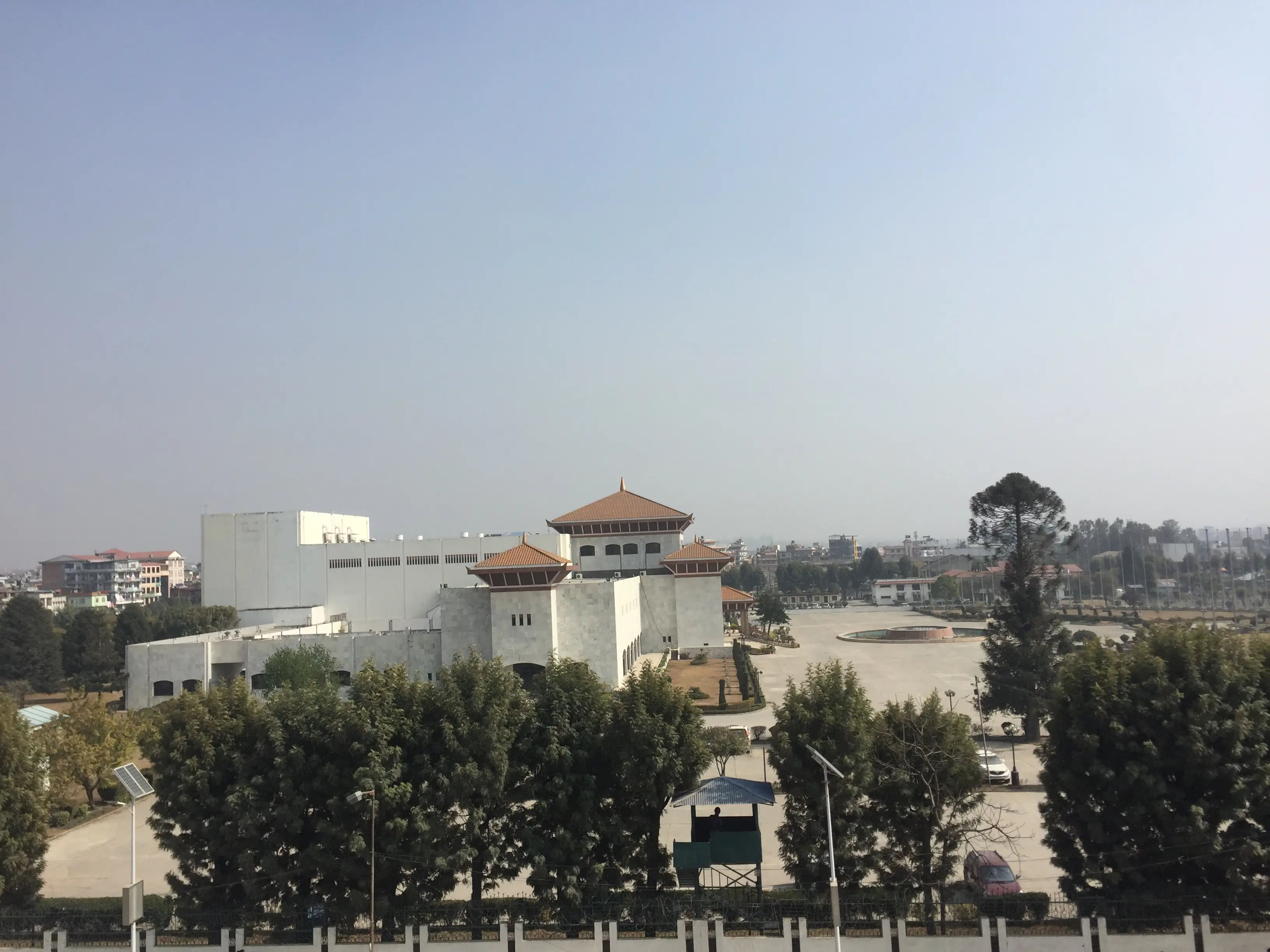
Geo traces the material to the Birendra International Convention Centre in Kathmandu and to a Geo News English YouTube Short dated September 9, 2025. It also reports a comparison with the architecture of the actual Governor House in Peshawar. The report’s conclusion concerns this identified footage; it is not a comprehensive assessment of every video or every protest claim circulating in Pakistan.
A dated earlier upload changes the timeline
The linked Geo News English Short is titled “Nepal Protesters Set Fire To Parliament Building.” That title associates the clip with Nepal rather than Pakistan. The earlier publication date reported in the fact-check is especially important because it places the footage online long before the October 2026 claim with which it has now been shared.
An old upload and a new repost answer different questions. The new post tells us when someone circulated the material under a particular description. An earlier matching version tells us that the images already existed. A recent timestamp beside a social media caption therefore cannot, by itself, establish that the camera recorded a recent event.
The evidential value comes from matching the material, not merely finding another video about a similar subject. A crowded street or a burning building is not unique enough to prove identity on its own. Investigators need corresponding visual details, a recognisable sequence or other features that connect the circulating clip to the earlier recording. The published investigations supply that connection, rather than relying only on the broad resemblance of unrest.
AFP checked another Pakistani caption for the same older scene
AFP published an Arabic-language investigation on October 14 into a related version of the footage. The claim there was different: posts presented the scene as protesters surrounding a Pakistani army command headquarters and demanding Khan’s return. AFP traced matching and alternative views to September 9, 2025, reporting from Nepal, and compared the visible structure with mapping imagery and its own photographs of Nepal’s parliament building.
The two corrections should not be collapsed into a single caption. Geo examined the Governor House claim; AFP addressed a military-headquarters claim. Their findings nevertheless point to the same wider problem: imagery from the Nepal protests being used to illustrate a different country’s political events. AFP’s evidence also places the scene in the context of the September 2025 unrest in Kathmandu.
This matters because a correction can become inaccurate if it exaggerates its own scope. Demonstrating that a particular building is in Nepal does not reveal who first created every misleading caption, whether all accounts knew it was wrong or how every person who saw it interpreted it. The available evidence supports the location and chronology finding. It does not establish a complete account of the posts’ origins or their authors’ intentions.
The real Nepal context is independently documented
Contemporary Associated Press reporting from September 9, 2025 described unrest in Kathmandu after a short-lived social media ban, the burning of government buildings and Prime Minister Khadga Prasad Oli’s resignation. Demonstrations had also expanded into criticism of corruption. That reporting supplies independent historical context for the period identified by the fact-checkers.
The correction does not diminish the seriousness of those events. It restores them to the people, place and period to which they belong. Reassigning footage to a different country can obscure the original event as well as distort the new one. A viewer may come away with a mistaken impression of both: an invented visual account of the current claim and no recognition of the older event that actually produced the images.
The archive photograph accompanying this article is another separate piece of evidence. It shows the Kathmandu convention centre in January 2018 and is credited to Nirmal Dulal under a reusable licence. It helps identify the subject of the story, but it does not document the fire, the 2025 crowd or the building’s present condition. Its date is stated because an image used to explain a correction should not introduce another misleading chronology.
Why a building can be more useful than a dramatic caption
Architecture provides features that can be tested independently of a political description. Roof shapes, the arrangement of entrances, the relationship between separate wings and the surrounding space may help identify a location. No single feature should be treated as decisive if it is common to many structures. A stronger identification uses several details that fit the same place and checks whether plausible alternatives also fit.
Geo says it compared the footage with the actual Governor House. AFP’s work combined matching videos with maps and agency photographs. Those are complementary checks: one tests the proposed location, while the other establishes an alternative location. An official denial may be relevant, but visible and dated corroborating evidence gives readers something more substantial to assess than an assertion alone.
A still frame also has limits. Cropping can hide landmarks, smoke can obscure a facade and a camera angle can change how buildings appear. The appropriate response is to look for a longer sequence or another angle, not to turn a partial resemblance into certainty. This case is persuasive because the published evidence joins place identification with earlier coverage of the same scene.
How to check a repost before forwarding it
For readers examining a similar clip, the first practical step is to write down exactly what the caption claims. Identify the alleged location, date, participants and action. These are separate propositions. A video might support the presence of a crowd while providing no independent evidence about the crowd’s political affiliation or the day on which it assembled.
Then choose a clear frame containing features likely to be recognisable elsewhere. Google’s image-search guidance explains how to submit an image or its address to Lens to find related material. A result should be treated as a lead: open the underlying page, inspect its date and check whether it actually contains the same scene. A search-result preview alone is a weak basis for a confident conclusion.
If an earlier version appears, compare the sequence and the surrounding description. Check whether the upload is an original report, a later compilation or another repost. Search for the building name and the reported date in independent coverage. Preserve the relevant links so that the conclusion can be checked by someone who did not perform the search. These steps are a reproducible method, not a claim that every online clip can be resolved quickly.
Authenticity tools cannot replace context
AFP’s explanation of its verification work describes the use of primary material, archives and reporting across regions. It also cautions against relying on an AI-detection tool alone. That is relevant here because a detector aimed at synthetic imagery addresses a different problem from a genuine recording being presented with the wrong date or country.
A plausible-looking image can be old. A real camera recording can have a false caption. Conversely, a suspicious visual detail can result from compression or an obstructed view rather than artificial generation. The most useful conclusion states what the evidence establishes and what it leaves unresolved, instead of applying a general “fake” label to every aspect of the material.
AFP’s fact-checking stylebook also emphasises explaining the process and conserving evidence. In this case, that means keeping the dated older upload, the location comparison and the precise version of the false claim connected. Otherwise, a correction can lose the very evidence that makes it more reliable than the caption it challenges.
The correction should travel with the claim
Anyone who has already shared this clip under the Peshawar description can make the correction useful by identifying the same footage and stating the accurate context: Kathmandu, Nepal, September 2025. Simply deleting a post may remove it from one page without correcting the impression left with people who already saw it. A clear update gives those readers a way to revise their understanding.
The case differs from the fabricated iPhone cargo imagery we examined recently. Here, the central deception is the reassignment of genuine older footage. The evidence does not substantiate the claim that this clip shows Khan supporters surrounding Peshawar’s Governor House. It instead points back to the documented Nepal unrest, with a dated earlier publication and an independently identified building anchoring the correction.
Smashology Editorial Team
The Smashology Editorial Team is responsible for reviewing and publishing content at Smashology Media, overseeing sourcing, fact-checking, corrections, and editorial standards across coverage of internet culture, technology, entertainment, news, and crime.
Sources
Links cited in this article.
- Image sourcecommons.wikimedia.org
- CC BY-SA 4.0creativecommons.org
- Geo Fact-Check report published October 20geo.tv
- Geo News English Shortyoutube.com
- investigation on October 14factcheckarabic.afp.com
- Associated Press reporting from September 9, 2025apnews.com
- Google’s image-search guidancesupport.google.com
- explanation of its verification workfactcheck.afp.com
- fact-checking stylebookfactcheck.afp.com