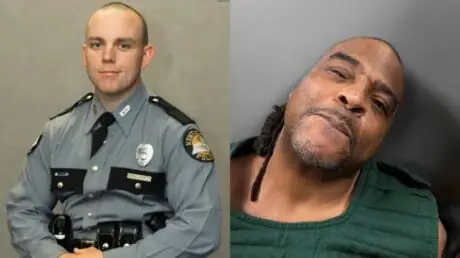
A federal jury has convicted Maryland laboratory owner Patrick Britton-Harr in a Medicare respiratory-testing fraud case involving $18.7 million in claims. Newly published Justice Department details distinguish the amount billed from payments received, while sentencing remains ahead and earlier civil proceedings form a separate part of the history.

A conviction announced this week, not a sentence
A federal jury in Maryland convicted Patrick Britton-Harr of five counts of health care fraud and one count of transactional money laundering in a scheme involving respiratory testing for nursing-home residents. The Justice Department’s October 20 announcement, updated October 21, says the verdict was delivered the previous day. The October 21 publication by the Maryland U.S. attorney’s office describes the same conviction; it is not a second verdict.
According to the department’s account of the trial evidence, Britton-Harr offered COVID-19 testing in 2020 and used the resulting opportunity to bill Medicare for separate respiratory pathogen panel tests. Physicians had not ordered those panels, and many were not performed. Through Provista Health, the scheme submitted $18.7 million in claims over six months, with Medicare paying more than $7.2 million.
The department says the evidence included claims for tests after a laboratory had closed and for residents who had already died. The jury’s verdict establishes a different procedural position from the earlier indictment: the case has reached conviction. It does not, however, supply a prison term. Sentencing will be determined separately, and the cited announcement does not set a hearing date.
The billing figure and the payment figure answer different questions
The distinction between $18.7 million billed and more than $7.2 million paid is central to an accurate account. A submitted claim is a demand for reimbursement. A payment is money the programme actually disbursed. Reporting the larger number as the amount paid would materially misdescribe the department’s figures.
The same care is needed when comparing the criminal case with older civil proceedings. A judgment can include components that are not identical to an underlying payment total. A financial figure therefore needs a label as well as a dollar sign: claims submitted, funds paid, judgment entered or money recovered. These terms should not be used interchangeably.
That is especially relevant in a case with several years of litigation. A later verdict can address conduct already examined in a civil action without making every earlier amount a new additional loss. Adding the headline values from separate announcements would create a total that the cited records do not establish. The figures are best understood within their own proceedings.
The earlier civil case began before the criminal verdict
The government’s civil complaint filed on July 18, 2023 describes the corporate structure behind the laboratory businesses. It identifies Coastal Labs as the owner of Provista and Britton-Harr as the owner of Coastal Labs. It also sets out allegations concerning other entities and the movement of money. A complaint records what the government alleged when it filed suit, not a criminal jury’s later determination.
That document provides a historical starting point for the enforcement sequence. Investigators and civil lawyers were examining the laboratory claims years before this week’s announcement. A reader seeing the conviction for the first time should not assume that the underlying conduct, the first public allegation and the verdict all occurred in October 2026.
Keeping those stages separate also avoids attributing unproven conduct to everyone named in a corporate diagram. Ownership and business relationships can be relevant evidence, but a list of entities is not itself a verdict against each employee or associate. This article identifies the individual conviction and attributes the government’s historical allegations to the documents in which they appeared.
A 2024 default judgment was a different kind of outcome
In a July 25, 2024 announcement, the Justice Department reported default judgments totalling $26,341,951.38 against Britton-Harr and laboratory companies under the False Claims Act. It said the court entered those judgments after the defendants failed to defend against the government’s allegations. The underlying complaint concerned unnecessary, unordered and sometimes unperformed tests.
That announcement also described a separate enforcement problem: the sale of an Annapolis property despite a court order requiring approval. The department said a civil-contempt ruling required Britton-Harr to deposit $575,000 with the court. Those are historical civil proceedings, rather than a sentence imposed for the Medicare conviction announced this week.
A default judgment and a criminal jury verdict should therefore remain distinct in the chronology. Both can have serious consequences, but they arise through different procedures. Nor does a judgment amount prove that the government has collected the full amount. The records cited here establish the reported orders and outcomes, not a verified balance of all funds recovered as of today.
The private-jet verdict belongs to a separate prosecution
Britton-Harr also faced a separate case involving AeroVanti, a private aviation business. The Maryland U.S. attorney’s June 4, 2026 announcement reports a jury conviction on six wire-fraud counts. It describes customers paying about $15 million upfront for aircraft-related arrangements and discounted flight hours, with false promises about how their money would be used and protected.
The department’s account says customer funds were diverted for personal purposes instead of the promised aircraft purchases. The case is relevant to the broader history because it concerns the same defendant, but it is not another name for the respiratory-testing scheme. The aviation customers, business promises and criminal counts belong to a different prosecution.
That separation matters when reading claims about a combined punishment. Maximum penalties in one case cannot be turned into a prediction for another. Nor should a report of two convictions imply that every civil dispute involving the businesses has been resolved. Each outcome needs to be matched to the case, the counts and any subsequent order actually made.
What happens between a verdict and sentencing
The federal judiciary’s overview of criminal cases explains that the judge determines punishment after a guilty verdict. Sentencing can take account of the advisory guidelines, trial evidence and information presented by the parties. The process can result in imprisonment, a fine or restitution, depending on the applicable law and the court’s decision.
The judiciary’s separate description of presentence investigations explains the work probation officers undertake to inform that decision. The report can address the offence, criminal history, personal history, the applicable guidelines and victim impact. These are general explanations of federal procedure, not confirmation of the contents of a report in Britton-Harr’s case.
The practical implication is that a maximum penalty is a statutory ceiling for a count, not an announced sentence. A responsible follow-up will report the actual hearing and judgment when available. Until then, it is accurate to say that sentencing remains ahead, while avoiding a calculated aggregate term that assumes how the judge will handle the counts.
Why laboratory billing can be difficult for residents to check
The public-interest issue extends beyond a company’s books. A nursing-home resident may remember receiving a swab without knowing how many separate services were billed against it. A family member can recognise that a test happened while still lacking the technical information needed to assess whether a different panel was ordered or carried out. The conviction should not be turned into an implication that residents were responsible for preventing the scheme.
The HHS inspector general’s COVID-19 fraud alert, last updated in February 2023, warns that personal and Medicare information collected through purported testing services can be used for fraudulent billing. It advises caution about unsolicited offers and requests for sensitive information. That is historical prevention guidance, not an assertion that every example on the alert page occurred in this particular case.
A useful response is to preserve records and use official channels when a claim looks unfamiliar. An unexpected billing entry can warrant a question without proving that a crime occurred. Administrative mistakes and deliberate false claims require different conclusions, which is why a concern should be checked against records rather than publicised as an accusation against a provider without further evidence.
Where beneficiaries can find the relevant records
Medicare’s official account guidance explains that Original Medicare beneficiaries can view processed claims through their account and receive electronic Medicare Summary Notices. It presents reviewing those notices as a way to catch billing errors and check whether the listed services were received. The notice is a source of information about claims, not proof on its own that a disputed charge was fraudulent.
For readers wanting to understand a notice, Medicare’s annotated sample advises checking facility names, dates and listed services against personal records. Although the sample concerns Part A, its emphasis on recognising providers and checking dates illustrates the value of a careful record review. Questions about an individual claim should go through the appropriate Medicare or provider channel.
The confirmed development here is a criminal conviction, with punishment still to be decided. The earlier civil judgments and separate aviation verdict explain the wider chronology, while the billing and payment figures describe different financial measures. Our guide to criminal-case terminology explains the stages that separate allegations from established outcomes. Further reporting should follow the actual sentencing record and any verified recovery information, without treating either as already settled.
A further distinction concerns recovery. Identifying assets, obtaining a judgment and distributing recovered money are separate events. A photograph of an expensive purchase can illustrate evidence described by prosecutors, but it does not establish how much money will ultimately be available for repayment. Any later account of restitution should cite the actual order and verified collection information. Until those records are available, a promised recovery figure would go beyond the evidence reported here.
Smashology Editorial Team
The Smashology Editorial Team is responsible for reviewing and publishing content at Smashology Media, overseeing sourcing, fact-checking, corrections, and editorial standards across coverage of internet culture, technology, entertainment, news, and crime.
Sources
Links cited in this article.
- Image sourcejustice.gov
- Reuse termsojp.gov
- civil complaint filed on July 18, 2023justice.gov
- July 25, 2024 announcementjustice.gov
- Maryland U.S. attorney’s June 4, 2026 announcementjustice.gov
- overview of criminal casesuscourts.gov
- description of presentence investigationsuscourts.gov
- HHS inspector general’s COVID-19 fraud alertoig.hhs.gov
- Medicare’s official account guidancemedicare.gov
- annotated samplemedicare.gov