A resurfacing social-media claim says poll workers’ writing automatically invalidates ballots. North Carolina election officials say that is false: authorised markings can be part of normal election administration. An October 20 fact-check revisits the claim as early voting continues, with rules and remedies varying by jurisdiction.
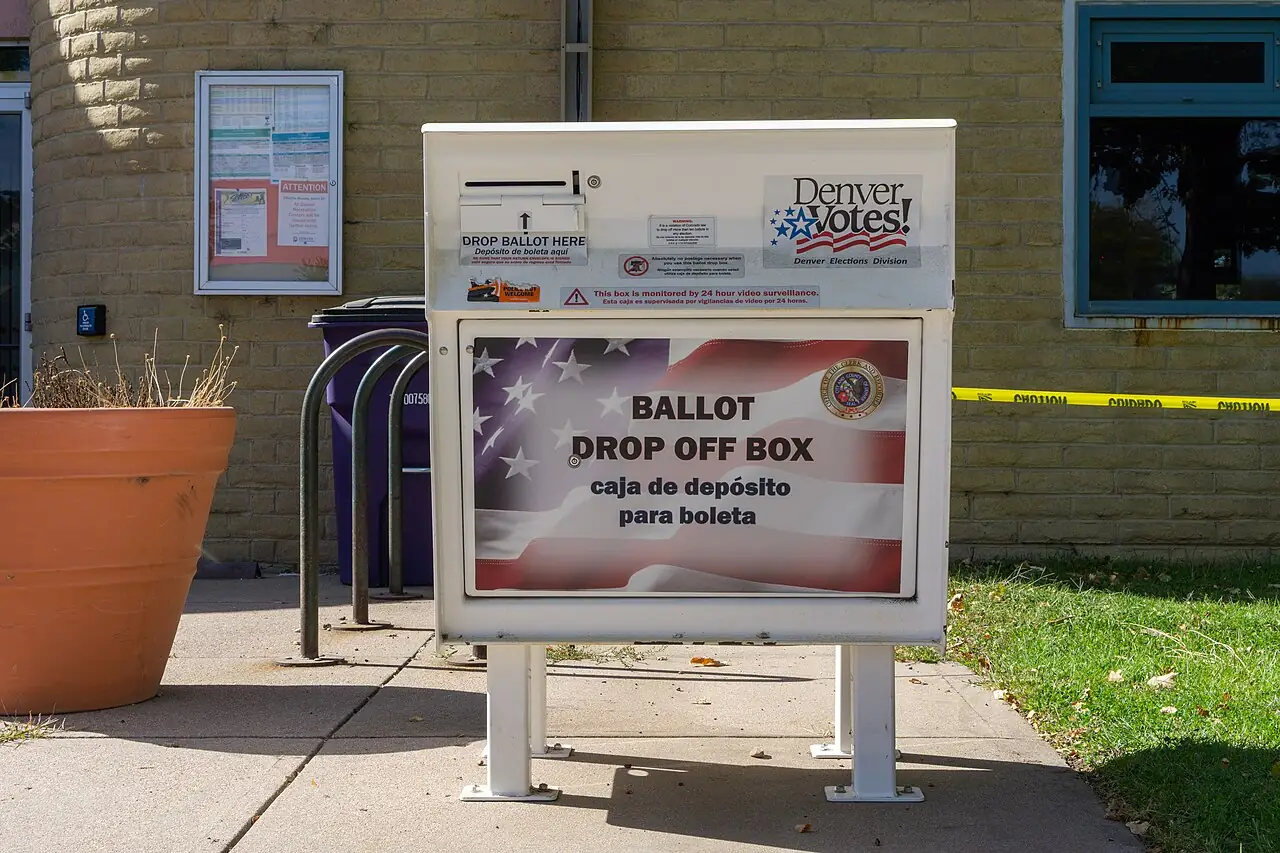
A warning circulating online tells voters to reject a ballot if an election worker writes on it. Presented as an insider tip from someone who supposedly completed poll-worker training, it suggests that an administrative mark can secretly stop a vote from counting. In North Carolina, that blanket claim is false, according to the State Board of Elections.
The issue received renewed attention in an October 20 WFAE interview with WRAL fact-checker Paul Specht. It follows an October 14 state-board statement and an October 15 Associated Press fact-check. These are separate publication dates in the latest round of coverage; the underlying rumour has circulated in earlier election cycles.
The official answer is specific and clear
The State Board’s October 14 explanation says election workers sometimes must write on ballots as part of their duties. Examples include identifying numbers on certain early and by-mail ballots, precinct information used for sorting, and notations associated with provisional or absentee processing. The presence of such writing does not itself invalidate a ballot.
The board also explains an important limitation: stray marks should not stop counting when the margin bars and selection ovals are unaffected. That is different from saying any mark anywhere is harmless. Voters should follow the ballot’s instructions and ask an election worker about a concern rather than trying to alter an official mark themselves.
This is the central correction. The rumour treats a visible action as evidence of disqualification, while the responsible authority describes legitimate reasons for that action. A photograph showing writing on a ballot does not establish whether the writing was improper or whether the ballot was rejected. Those conclusions require additional evidence about the local process.
Why the rumour sounds persuasive
In WFAE’s interview, Specht describes posts styled as a message between acquaintances, with the claim attributed to a friend who recently attended training. He says the same supposed message can be traced back at least to 2024 and that the origin of current recirculations is unclear. That is an attributed account of the posts, not a verified identification of the person who first created them.
The format matters because it borrows authority from proximity. A familiar-looking message can feel more trustworthy than an unfamiliar official document, even when the message supplies no named trainer, jurisdiction or rule. Forwarding can then strip away the original date and make an old claim look like an urgent new warning.
That does not mean everyone sharing it intends to mislead. The evidence reviewed here does not establish the motives of individual users. The practical issue is whether the claim matches the rules, and the relevant North Carolina authority has repeatedly explained that it does not. Correcting the information does not require speculating about every person who passed it along.
This is not a new election procedure announced today
The board issued a similar explanation in August 2024. That older notice described identifying numbers for retrievable ballots and precinct information used for sorting. Its existence helps establish the rumour’s history. It should not be read as a source for this year’s voting dates, which are different.
Separating the dates prevents two opposite mistakes. The latest coverage does not mean the practice began this week, and the age of the earlier rebuttal does not make the current rumour accurate. An old procedural explanation can remain relevant when the authority republishes the substance for a new election, as the October 14 statement does here.
The Associated Press’s October 15 fact-check likewise rejects the nationwide blanket claim while emphasising that procedures vary. That is an essential qualification. A North Carolina example can disprove the assertion that official writing always invalidates every ballot; it does not establish a single marking procedure for every election jurisdiction in the United States.
Early voting explains the sorting problem
North Carolina’s current early-voting guidance says voters may use any early-voting site in their county, whereas Election Day voting generally uses an assigned polling place. A site can consequently serve voters from different precincts. Keeping precinct information connected to the ballot helps explain why administrative sorting is necessary.
The same guidance lists this year’s in-person early-voting period as October 15 through 3 p.m. on October 31, with Election Day on November 3. Readers should check the official site search for their county’s locations and schedules. A shared post containing dates from 2024 is not a substitute for that current information.
There is a broader distinction between a ballot’s style, a voter’s precinct and the physical place where early voting occurs. Those things can be related without being identical. An administrative notation may help staff manage that relationship. Its meaning should be established by asking the officials responsible for it, rather than inferred from an unexplained letter or number in a screenshot.
A provisional ballot follows a separate review process
The board’s provisional-voting explanation describes what happens when questions arise about eligibility or ballot style. The voter completes the ballot privately and seals it in an envelope. County officials research the relevant issue, and the board determines whether the ballot can be counted, or partially counted for contests for which the voter is eligible.
That is not the same as a ballot being secretly discarded because someone wrote on it. It is a documented process for resolving a specific question. The guidance also says election officials provide instructions about any further action required and a way to check the provisional ballot’s status.
A voter facing that situation should keep the official instructions and use the designated status process. An online generalisation cannot determine an individual ballot’s eligibility. Conversely, the existence of a provisional procedure does not prove that every provisional ballot will be accepted: the outcome depends on the board’s review of the relevant facts.
By-mail ballots have their own requirements
The state’s absentee-voting FAQ separates requesting, marking, returning and reviewing a ballot. It says a voter who makes a mistake before returning a ballot may contact the county board to request a replacement. It also explains that county boards contact voters about deficiencies and that ballot tracking is available through the official process.
Those instructions should not be replaced with the rumour’s demand to reject any ballot containing official writing. A replacement request for an actual mistake and an automatic objection to an administrative notation are different situations. The appropriate response depends on what happened, which voting method is involved and what the election office instructs.
The FAQ also makes clear that marking and returning are separate stages. A voter should not assume a ballot is complete merely because the candidate selections are filled in; the accompanying instructions and return requirements still matter. For a personal question, the county board can address the actual packet and circumstances instead of relying on a generic social-media warning.
Counting includes checks beyond the polling place
North Carolina’s post-election procedures describe reviews before certification, including eligible absentee and provisional ballots and ballots that could not be read at the precinct. They also describe audits comparing records and sample hand counts with machine counts. These are established procedural checks, not a promise that an election system is incapable of error.
The distinction matters when a post treats one image as a complete account of an election. A ballot’s handling can involve several stages, and a question that arises at one stage may be addressed through a later review. To establish that a vote was wrongly rejected, reporting needs the relevant records and outcome, rather than a general fear attached to a picture.
Transparency is most useful when it identifies a specific question that can be investigated. Which county? Which voting method? What mark? What did the election official say? Was the ballot accepted? Those questions move the discussion from suspicion to evidence without asking voters to ignore genuine problems.
A useful correction keeps the limits visible
When correcting a forwarded warning, the most helpful response is the dated official explanation for the relevant place. A reader can check who issued it, whether it addresses the same claim and whether its instructions apply to the voting method involved. A screenshot of a headline may omit those qualifications; the full source lets the next reader inspect them.
It is also worth separating evidence of circulation from evidence of harm. Several posts repeating the same warning establish that the warning is being shared. They do not establish how many voters acted on it, how many ballots were affected or whether any vote was rejected. Those are different questions requiring records or reporting of their own. This article does not assign such totals where the reviewed sources do not provide them.
What to do with a concern at a voting site
In an October 19 reminder, the state board advises voters at a site to speak to a poll worker, who can escalate a question to the chief judge or county board when necessary. Away from a voting site, it directs voters to the county board responsible for their election. That provides a route to an answer tied to the actual jurisdiction.
The verified conclusion is narrower and more useful than the rumour: authorised election-worker writing does not automatically invalidate a North Carolina ballot, and local rules should be checked before sharing a nationwide warning. No reliable view-count total or original author has been established for the current recirculation. Our guide to verifying viral stories explains how to trace dates, sources and missing context before forwarding a claim.
Smashology Editorial Team
The Smashology Editorial Team is responsible for reviewing and publishing content at Smashology Media, overseeing sourcing, fact-checking, corrections, and editorial standards across coverage of internet culture, technology, entertainment, news, and crime.
Sources
Links cited in this article.
- Image sourcecommons.wikimedia.org
- CC BY-SA 4.0creativecommons.org
- October 20 WFAE interview with WRAL fact-checker Paul Spechtwfae.org
- State Board’s October 14 explanationncsbe.gov
- explanation in August 2024ncsbe.gov
- Associated Press’s October 15 fact-checkapnews.com
- current early-voting guidancencsbe.gov
- provisional-voting explanationncsbe.gov
- state’s absentee-voting FAQncsbe.gov
- post-election proceduresncsbe.gov
- October 19 reminderncsbe.gov