Paris Saint-Germain host Barcelona at 21:00 in Paris and Belgrade on October 20, with both sides having won their opening two Champions League matches. Barcelona’s defensive absences add uncertainty to a meeting between the holders and a visiting team seeking its twelfth consecutive competitive win.
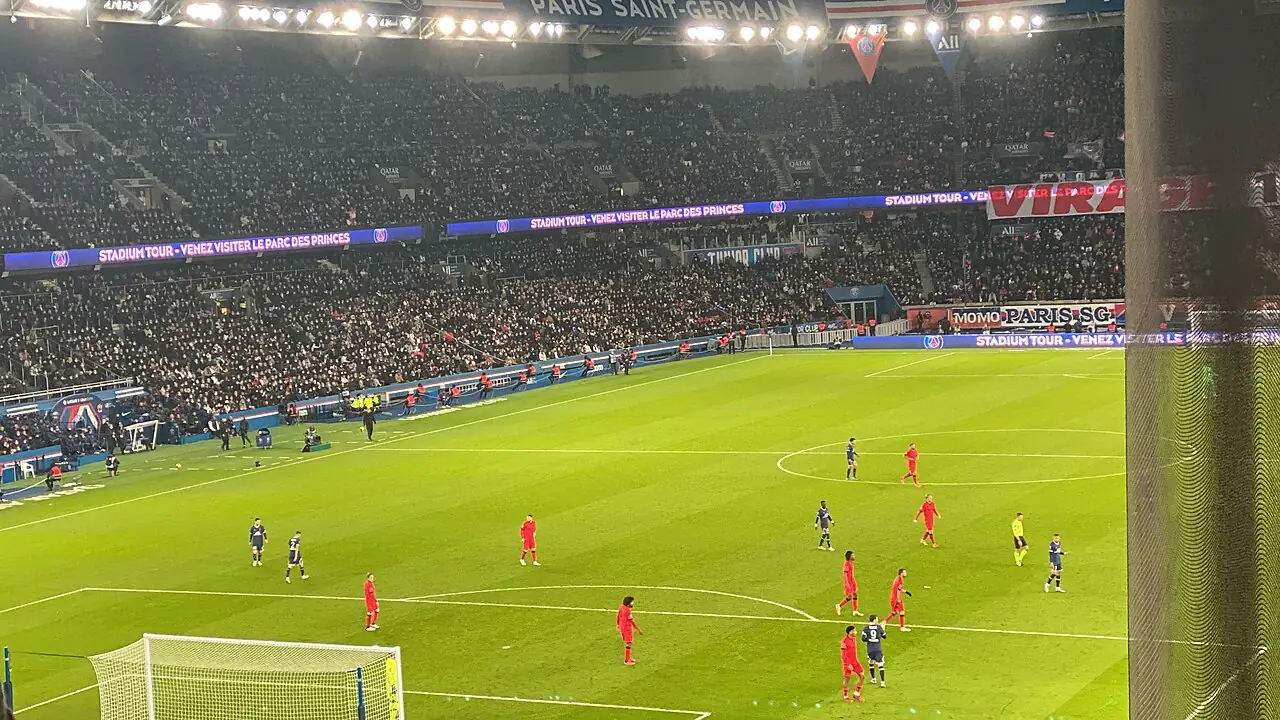
Tonight’s meeting at the Parc des Princes brings together two compelling early-season stories: Paris Saint-Germain’s defence of the European title and Barcelona’s perfect competitive start. Both clubs enter the third match of the Champions League league phase with six points. That creates an attractive contest, but it remains a league-phase fixture rather than a knockout tie or a final judgment on either season.
PSG’s official match page lists the game for Tuesday, October 20, at the Parc des Princes. Barcelona’s own preview confirms 21:00 CEST, which is also 21:00 in Belgrade and 19:00 UTC. This is a pre-match analysis; no result or starting eleven is being presented as confirmed before the clubs announce it.
Two successful starts reach a harder comparison
Barcelona’s October 20 club preview describes eleven wins from eleven competitive matches, including nine in the domestic league. Its latest league result was a 5–2 victory over Real Betis. European wins against Feyenoord and Galatasaray have added to that start, but an away meeting with the title holders asks a different question from simply extending a sequence.
A winning run records outcomes, not identical performances or opposition. The value of this match is the opportunity to see how Barcelona manage pressure against another side with substantial attacking quality. That does not mean previous wins were meaningless; it means the next opponent presents a different set of problems that cannot be answered by a record alone.
The same applies to Paris. Their strong European results do not remove every question about their domestic form or defensive control. A successful team can still concede dangerous situations, and an imperfect start can still contain the foundations of another powerful campaign. Tonight’s match should offer evidence about those details rather than merely a new slogan about who is favourite.
Barcelona’s defensive availability is a concrete issue
The clearest confirmed team-news development is the absence of Jules Kounde and Eric Garcia. Barcelona’s official travelling-squad announcement, published October 19, says both were injured against Betis and were left out of the trip. It lists the players available to Hansi Flick, while the match-day preview also identifies Andreas Christensen and Roony Bardghji among the existing absentees.
A travelling squad is not a starting lineup. Inclusion tells us that a player is part of the selection group, not how many minutes he will play or which position he will occupy. That distinction is especially important when injuries encourage speculation about an unfamiliar combination. The coach may have options, but their use remains to be confirmed.
Barcelona’s preview highlights a first senior call-up for eighteen-year-old defender Àlex Campos. That is a notable development for the player and a sign of the circumstances surrounding the trip. It does not establish that he will start against Paris. Reporting a call-up accurately allows readers to understand the available depth without turning a squad inclusion into an invented tactical decision.
The shape matters more than a predicted name sheet
The independent Football España preview also focuses on Barcelona’s defensive availability and explicitly treats the possible lineups as projections. It lists Nuno Mendes as unavailable for Paris and identifies other doubts. Those reports are useful context, but a doubt should remain a doubt until the team or match officials provide a firmer update.
Our tactical reading is that the distances between Barcelona’s defenders and midfielders will be an important indicator. If the team commits players forward, the remaining structure has to deal with a possible turnover. An attacking side can protect itself through positioning as well as individual defending; the question is whether those positions stay connected when the ball changes hands.
That is an analytical point, not a claim to know Flick’s instructions. It gives viewers something observable to watch: whether the player pressing the ball has support, whether passing lanes remain covered and whether a lost challenge exposes a much larger space behind it. The confirmed team sheet will help interpret those moments once it is available.
Paris have several ways to threaten
Barcelona’s official account identifies the attacking danger posed by former players Ousmane Dembélé and Ferran Torres, alongside Paris’s broader squad quality. Torres’s summer move gives the fixture an additional personal connection. Those stories create interest, but the central sporting issue is how Paris use their available players against Barcelona’s defensive arrangement.
As analysis, a match between proactive teams can change quickly when one side escapes the first press. That escape may create time for a receiver to face forward, forcing defenders to decide whether to step out or retreat. Repeatedly winning the first challenge is valuable, but so is the ability to recover shape when the opponent gets through it.
Support around the ball will therefore matter at both ends. A dangerous individual can still be isolated by poor spacing, while an apparently routine pass can become decisive if a teammate has drawn an opponent away. Watching how the teams create those advantages offers more insight than treating every attacking move as a standalone duel between famous names.
Recent meetings provide context, not a forecast
UEFA’s match facts records sixteen previous European meetings, with six wins for each club and four draws. Its account also recalls Paris’s 2–1 win in Spain last season and the contrasting legs of their 2023/24 quarter-final. Those results show the rivalry’s recent competitiveness without providing a reliable shortcut to tonight’s outcome.
Historical aggregates can conceal major differences between matches. Coaches, lineups, availability and game state change. An away first leg in a two-match knockout tie also creates different incentives from a league-phase fixture. The sensible use of history is to explain the relationship between the clubs, not to assume that an old scoreline is a tactical instruction.
UEFA’s page contains an introductory reference to Matchday 2, while its headline, date context and the clubs’ fixture information identify this as Matchday 3. This preview uses the corroborated Matchday 3 designation. Checking the underlying fixture is preferable to carrying a stray label into a new article.
The official records of the April 10, 2024 first leg and April 16 return illustrate that caution particularly well. Barcelona won 3–2 in Paris before losing 4–1 at home, sending Paris through 6–4 on aggregate. The two results belonged to one tie yet pointed in opposite directions when viewed individually. Tonight has no return-leg aggregate to manage, so neither the earlier away win nor the subsequent reversal supplies an automatic template for the present contest.
Goals are a theme, but they are not guaranteed
UEFA’s figures show why the fixture is attracting attention: Barcelona have scored nineteen goals across their last five league-phase matches, while their Champions League clean-sheet drought has reached seventeen games. Paris have also sustained a long sequence of scoring in home group-stage and league-phase games. Those are records of earlier matches, not guarantees about this one.
It would be easy to turn that background into a confident prediction of a high score. The stronger analysis asks what produces the chances. A match can be open because both teams create well, because both lose the ball in dangerous areas, or because an early goal changes their risk choices. Similar scorelines can emerge from very different performances.
Set plays and second balls deserve attention alongside the more spectacular attacking exchanges. A team can defend the initial delivery and still concede a good chance if it reacts slowly to the loose ball. Conversely, controlling those moments can interrupt an opponent’s momentum even when possession is difficult to sustain.
What the league-phase stakes actually are
Football España’s competition summary describes a thirty-six-team league phase with eight matches per club. The top eight advance directly to the round of sixteen, while the next sixteen enter a two-legged playoff. Both teams’ opening wins provide a strong base, but there are still points and positions to contest after tonight.
That format changes the language around pressure. Winning a prominent head-to-head can improve a team’s position and confidence; losing it does not automatically end a campaign. A draw can also mean different things depending on the remaining schedule and eventual table. The immediate result should therefore be assessed alongside the performance and the competition’s actual structure.
There is no need to describe the game as decisive to recognise its value. Facing a high-level opponent away from home can reveal how a team responds when its preferred pattern is disrupted. That information may matter later in the season even if the points total eventually places both clubs comfortably inside the qualification positions.
What to watch when the teams are confirmed
The first practical update is the official lineup, followed by the roles the players actually occupy. After kickoff, the most useful questions are how Barcelona manage their altered defensive options, how Paris connect their midfield to the forward line, and which side controls transitions after losing possession. These are observations to test, not conclusions established before the game.
The verified starting point is straightforward: two opening European wins apiece, Barcelona seeking a twelfth competitive victory and confirmed defensive absences shaping the visitors’ options. The rest must be decided on the pitch. Our Sports coverage keeps previews, confirmed results and subsequent analysis distinct so that readers can follow how the evidence changes.
Smashology Editorial Team
The Smashology Editorial Team is responsible for reviewing and publishing content at Smashology Media, overseeing sourcing, fact-checking, corrections, and editorial standards across coverage of internet culture, technology, entertainment, news, and crime.
Sources
Links cited in this article.
- Image sourcecommons.wikimedia.org
- CC BY-SA 4.0creativecommons.org
- PSG’s official match pagepsg.fr
- October 20 club previewfcbarcelona.com
- official travelling-squad announcementfcbarcelona.com
- Football España previewfootball-espana.net
- UEFA’s match factsuefa.com
- April 10, 2024 first leguefa.com
- April 16 returnuefa.com