ABC reporter Will Murray and bystander Daniel Hainey rescued a driver from a sinking vehicle in Morayfield, Queensland, on October 22. Their widely shared rescue footage has drawn attention to both the intervention and official warnings about entering floodwater.
What is confirmed about the Morayfield flood rescue
The ABC’s original report identifies the location as Buchanan Road in Morayfield, north of Brisbane. Reporter Will Murray and bystander Daniel Hainey helped a driver escape a vehicle in floodwater on Thursday morning, October 22. ABC camera operator Liz Pickering recorded the incident while the team was working on coverage of the severe weather.
The official ABC video page, published on October 22, supplies an identifiable original outlet and publication record. That matters when a dramatic clip appears in social feeds with shortened captions or without a location. The recording can be traced to the reporting team, rather than relying solely on an anonymous repost or a claim about what viewers think it shows.
On Friday, October 23, New Zealand’s 1News followed the story with Murray’s account in a Breakfast interview. The later coverage does not move the rescue itself to Friday. There are two dates to keep separate: the Thursday incident and recording, and the subsequent interviews that brought it to additional audiences.
The driver has not been named in the accounts used for this article. We are not asserting a medical diagnosis, a police charge or the outcome of any investigation. Those would require further evidence. What is documented is an emergency involving a sinking vehicle and two people helping its occupant reach safety.
Two rescuers, with a camera operator documenting events
According to Murray’s account to the ABC, he called Triple Zero and handed his phone to Pickering before entering the water. He and Hainey reached the vehicle and helped the man out. The report describes the driver being brought into shallower water and embracing Murray afterwards. These details are attributed to the reporting, rather than presented as an independent forensic examination of the recording.
The names matter because the shortest version of the story can reduce a joint intervention to a single recognisable television reporter. Hainey was a participant in the rescue, while Pickering’s role explains how a record of the incident was made. Keeping those contributions visible produces a more accurate account than turning the event into a one-person performance.
The ABC NewsRadio follow-up, published on Thursday evening, documents Murray discussing the rescue with presenter Sarah Dingle. It also records that the footage was circulating online. That supports describing it as widely shared, without inventing a total for views, shares or approving comments across platforms.
An interview after an emergency is a participant’s recollection. It is valuable evidence, particularly when it comes from someone identifiable and is attached to a contemporaneous recording. It should still be described as an account, with the distinction maintained between what the footage establishes and what a participant later says about their thoughts or intentions.
The available reporting does not establish that the rescue was broadcast live. A camera crew recording material for news coverage is not automatically a live transmission. Avoiding that embellishment leaves the documented event fully compelling while keeping the description within the evidence.
How the driver’s explanation should be reported
In the 1News follow-up, Murray described the man as not realising how deep the water was. The ABC report also attributes to Murray an account that the driver said he had not seen signage. Those are reported explanations from a conversation after the rescue; they do not independently establish the precise condition or visibility of every sign on the road.
That distinction prevents two unsupported conclusions. It would be premature to declare that the road was unmarked, and equally premature to claim that the driver deliberately ignored a visible closure. A social-media clip may show the emergency clearly while leaving the earlier journey, approach to the road and decision-making outside its frame.
Nor does the successful rescue establish that the water was safe. The outcome tells us that the driver was helped out on this occasion. It cannot establish what would happen to another person entering a flooded road, or reveal every hazard beneath the surface. A fortunate result and an acceptable level of risk are different claims.
This is why the account should focus on verified actions and outcomes. Speculation about the driver’s character, the rescuers’ motives or unreported official consequences adds little understanding. The story already supplies a concrete public-interest question: how can a road that looks passable become dangerous enough to leave someone trapped?
The regional weather context was substantial
The ABC’s October 22 weather coverage recorded 203 millimetres of rain in six hours at Caboolture and 131 millimetres at Brookfield. It reported 14 school closures and 277 SES callouts across Queensland, including 152 in Moreton Bay. These are dated figures from that day’s reporting, not a current rainfall total or a warning for every part of the state.
The geographical distinction matters. A rainfall measurement at one location is not proof that exactly the same amount fell on Buchanan Road. Regional figures explain the broader emergency workload and disruption, while the specific incident requires its own location and account. Combining those types of evidence gives context without assigning an unmeasured total to the rescue site.
Queensland’s State Emergency Service flood guidance explains that flooding can also occur away from a familiar river channel. It can leave people isolated and interrupt necessary travel. The guidance discourages sightseeing because unnecessary traffic can obstruct emergency operations. The implication for readers is wider than one dramatic road crossing: disruption can affect a whole network of routes.
A current warning must be checked separately from a report of yesterday’s event. Weather information changes as rainfall, river levels and road conditions change. Sharing the rescue video can raise awareness, but its caption cannot substitute for present official information about a different suburb, route or day.
What official guidance says about entering floodwater
Queensland’s floodwater safety advice says not to drive, swim or wade into floodwater. That instruction applies despite the successful intervention shown in this story. A news report can acknowledge the two rescuers’ actions without presenting their experience as a technique readers should reproduce.
The same guidance addresses pressure to proceed with a journey. A driver should not feel compelled to cross because other people are waiting or another vehicle has attempted it. Planning a different route or delaying travel is a meaningful response to uncertainty. A vehicle’s appearance or the confidence of another road user does not establish the condition of the submerged road.
The Bureau of Meteorology’s flood preparedness guidance explains why appearances are unreliable: the depth and force of water can be deceptive, road surfaces may be damaged and hidden debris can create hazards. Floodwater can also contain contamination. The risk therefore includes what cannot be seen from a vehicle or judged from a short recording.
No single depth figure should be treated as a permission threshold for crossing. A demonstration involving a particular vehicle and water flow does not certify all shallower water as safe. Road damage, current, visibility and changing conditions remain relevant. The official instruction to avoid entering floodwater is clearer and more useful than trying to infer a safe crossing from a viral clip.
For roads that have been closed, Queensland transport guidance says to obey closures and wait for official reopening, including after visible water recedes. The absence of standing water does not prove that the underlying surface or supporting ground has escaped damage. Road-condition information is available through the state’s 13 19 40 service.
What residents can check without taking unnecessary risks
The Get Ready Queensland flood information encourages people to consider local council mapping and the routes connecting home, work and school. A property can avoid direct inundation while its access roads or essential services are disrupted. That makes planning for isolation relevant even to residents who do not expect water to enter their home.
A practical reading of the rescue is therefore about decisions made before reaching a flooded section of road. Knowing an alternative route, checking official information and allowing for a disrupted journey reduce dependence on a last-minute judgement at the water’s edge. These are ordinary preparedness decisions; they do not require entering the hazardous area to inspect it.
The SES contact page distinguishes life-threatening emergencies, which require Triple Zero, from storm and flood assistance requests through 132 500. It also directs residents toward local disaster dashboards. An online enquiry form is not an appropriate substitute for an urgent emergency call.
Any later update about the Morayfield incident should be assessed on its own evidence. A confirmed official statement, a correction from the reporting team or an identified additional witness would add something material. An unattributed claim attached to the same footage would not become verified merely because the original recording is authentic.
Why the original source is the useful starting point
AFP’s October 23 follow-up carried by NAMPA also reports Murray recalling the rescue. The additional coverage helps establish the story’s continuing reach, but the ABC’s original reporting remains the clearest reference for the participants’ names and the filming context. Independent repetition is most useful when it adds reporting rather than simply reproducing a caption.
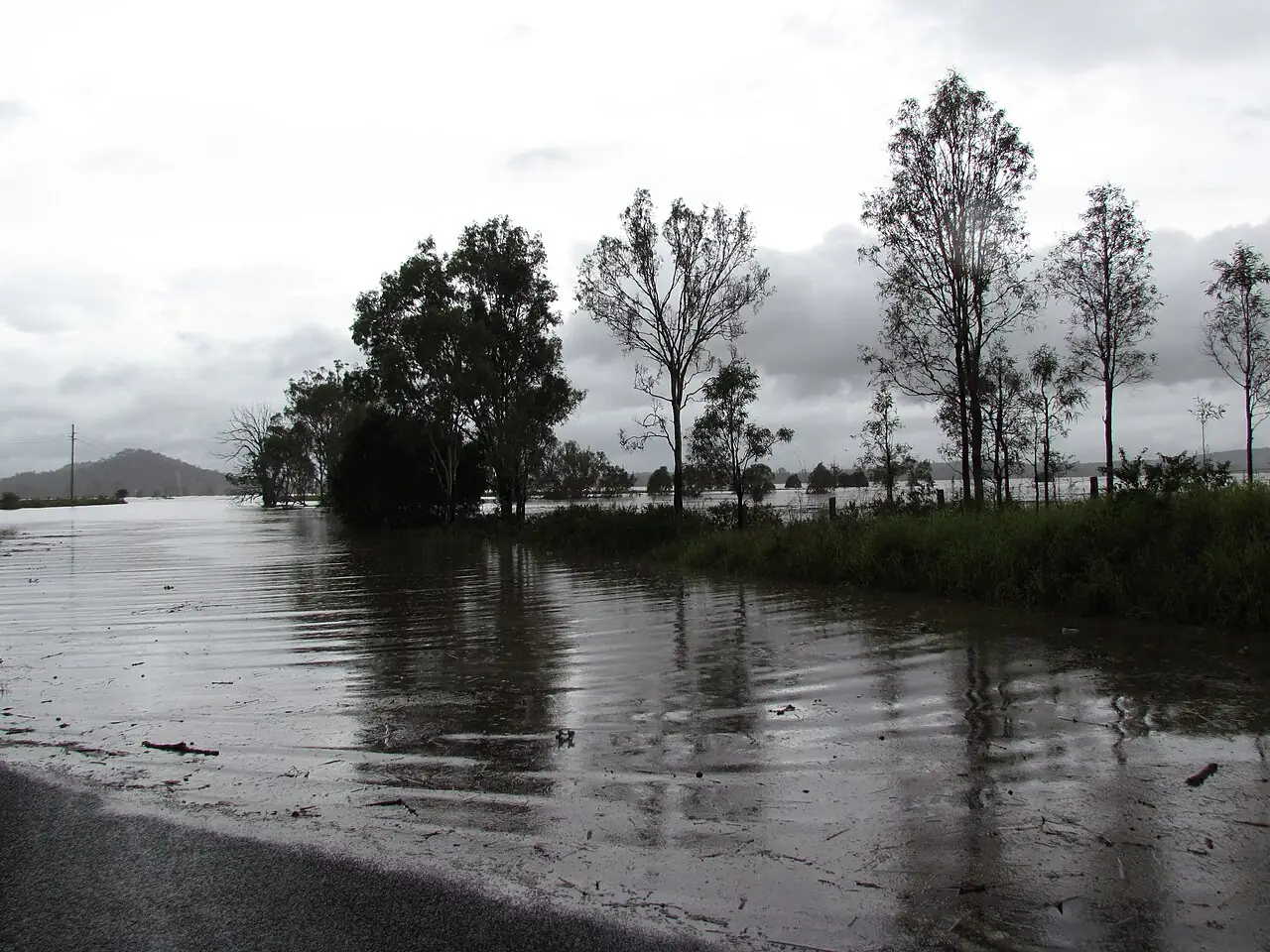
Readers can compare the outlet, publication date and location before sharing a shortened version. They should also distinguish original footage from illustrative images. The archive photograph accompanying this article shows Queensland flooding in 2011; it is not a still of the Morayfield rescue and does not depict the vehicle involved.
Our guide to verifying a viral story explains the value of tracing a clip back to an identifiable source. Here, the strongest account is both human and specific: Murray and Hainey helped a driver out of a dangerous situation, Pickering recorded it, and the event occurred on October 22. The public safety lesson remains the official warning to stay out of floodwater.
Sources and further reading
- ABC: original rescue report
- ABC: original video and publication date
- ABC NewsRadio: Will Murray interview
- 1News: October 23 follow-up
- AFP / NAMPA: subsequent reporting
- ABC: October 22 weather reporting
- Queensland Government: floodwater safety
- Bureau of Meteorology: flood preparedness
- Queensland SES: flood information
- Queensland Government: road conditions
- Get Ready Queensland: flood planning
- Queensland SES: emergency contacts
Smashology Editorial Team
The Smashology Editorial Team is responsible for reviewing and publishing content at Smashology Media, overseeing sourcing, fact-checking, corrections, and editorial standards across coverage of internet culture, technology, entertainment, news, and crime.
Sources
Links cited in this article.
- Original photographcommons.wikimedia.org
- CC BY-SA 3.0creativecommons.org
- ABC’s original reportabc.net.au
- official ABC video pageabc.net.au
- New Zealand’s 1News1news.co.nz
- ABC NewsRadio follow-upabc.net.au
- ABC’s October 22 weather coverageabc.net.au
- State Emergency Service flood guidanceses.qld.gov.au
- floodwater safety adviceqld.gov.au
- Bureau of Meteorology’s flood preparedness guidancebom.gov.au
- Queensland transport guidanceqld.gov.au
- Get Ready Queensland flood informationgetready.qld.gov.au
- SES contact pageses.qld.gov.au
- October 23 follow-up carried by NAMPAnampa.org