Real Madrid’s October 21 Champions League meeting with Leipzig brings an unbeaten European start, José Mourinho’s tactical choices and Ibrahima Konaté’s former club into focus. This matchday guide examines verified pre-match information and the league-phase stakes; it is not a live score report.
The confirmed Madrid selection
AS’s October 21 confirmed-line-up report lists Courtois; Valverde, Rüdiger, Huijsen, Carreras; Bernardo Silva, Camavinga; Arda Güler, Bellingham, Vini Jr; and Mbappé. This moves the selection discussion beyond the earlier squad announcement: Vini Jr starts, while Konaté is not in the reported starting eleven. The press-conference analysis below explains the context of those choices, rather than presenting a predicted team.
A third European match with different pressures
Real Madrid’s Champions League meeting with Leipzig is scheduled for October 21 at the Santiago Bernabéu, with kick-off at 21:00 in Madrid and Europe/Belgrade. Madrid’s official tourism listing confirms the fixture and venue. This article examines the verified pre-match context and tactical questions. It does not provide a running score or claim that a predicted selection is the confirmed starting team.
The clubs enter the third league-phase match with different European records. Madrid’s October 21 preview records two wins from two for the hosts. Leipzig have three points after a 4–1 defeat against Como and a 1–0 victory over PSV. That gives Madrid an opportunity to extend a strong opening while Leipzig seek to establish greater consistency.
These are starting conditions, not a forecast. Two matches are a small part of the league phase, and previous results do not determine how the next contest unfolds. The more useful questions concern how each team intends to play, where it can create advantages and what a result would mean in a competition with a much wider table than the old four-team groups.
Why the league-phase format changes the calculation
UEFA’s explanation of the standings sets out a 36-team league phase in which each club plays eight opponents. The top eight advance directly to the round of 16. Teams placed ninth through 24th enter a knockout phase play-off, while the remaining clubs are eliminated. Goal difference matters when teams are level on points.
The format creates two separate objectives for a leading side: avoiding elimination and reaching the direct-qualification places. The difference matters because a club can remain well positioned to continue in Europe while still facing the extra demands of a play-off. An early winning run helps, but it does not establish a guaranteed final position before the full set of matches has been played.
For Leipzig, points away at a strong opponent could be valuable without resolving qualification immediately. For Madrid, maintaining momentum could reduce later pressure without removing the need to perform again. Any claim that a specific result guarantees a top-eight place at this stage would require the actual mathematical position, not a familiar points target borrowed from another season.
Mourinho’s message was flexibility rather than entitlement
In his October 20 press conference, José Mourinho rejected the idea that Leipzig should be treated as an automatic win. He pointed to the German side’s ability to compete and discussed Madrid’s broader aim of progressing and reaching the top eight. He also emphasised performance in selection rather than the idea of untouchable players.
His discussion of positioning highlighted players capable of serving several functions, including Arda Güler and Federico Valverde. He explained how a nominal formation can change with the players selected and the spaces occupied, including the difference between a balanced midfield arrangement and one containing several advanced attackers. He said Vini Jr would play while leaving Diomande’s precise role undisclosed.
The analytical implication is that the team sheet alone cannot fully describe the plan. Two players listed as midfielders might occupy very different positions when possession changes. Likewise, selecting several attackers does not answer who protects the centre when a move breaks down. Those questions need to be judged through the team’s actual spacing and movement, rather than by assigning a fixed label before the match.
The squad provides options, not a confirmed eleven
Madrid’s official October 20 squad announcement includes a range of defensive and midfield options, alongside attackers such as Mbappé, Vini Jr, Endrick, Brahim and Yan Diomande. The list establishes who was called up. It is not itself confirmation of who starts, who appears as a substitute or which formation is used.
That distinction is particularly important for a match with several possible attacking combinations. A player being available gives the coach an option; it does not prove that the option is chosen. Substitutions can also change the balance of the side after the opening phase, depending on the score, physical demands and the opponent’s adjustments.
One useful way to follow the game is to watch how Madrid connect possession between lines. If several players move forward together, the remaining players need to provide passing options and protect the spaces behind them. If the team is more cautious, it still needs enough movement to prevent possession becoming predictable. These are questions for observation, not assertions about a starting plan that the squad list does not establish.
Konaté’s former club adds a personal dimension
Ibrahima Konaté described the Leipzig fixture as a special meeting in his October 20 press conference. The defender discussed his former club, Madrid’s wish to make it three European wins and the importance of focusing on this opponent before the forthcoming Clásico. He also spoke positively about his adaptation and the help of teammates.
The reunion gives the match an individual story without changing its competitive purpose. Familiarity with a club can provide useful background, but it should not be exaggerated into a complete understanding of an opponent whose players, staff and approach can change. A defender still needs to respond to the attackers and situations actually in front of him.
The more immediate tactical interest is coordination. Defending a transition involves the timing of the first challenge, the cover behind it and the protection of passing lanes. One player’s experience cannot replace a connected team structure. A successful defensive sequence can be less spectacular than a recovery tackle while still being more valuable because it prevents the dangerous opportunity developing.
Leipzig’s response centres on courage and collective work
In the visiting team’s October 20 media appearance, Martín Demichelis urged Leipzig to play with personality and confidence. He contrasted the recent Bayern defeat with the victory over PSV as evidence that his team could compete. David Raum stressed intensity and a collective approach against Madrid’s individual quality. These are statements of intention, not proof that Leipzig will impose its preferred style.
The tension in that approach is familiar: a team needs enough ambition to create problems, while managing the space it leaves behind. Simply retreating can allow sustained pressure. Committing players forward without coordinated protection can create transition opportunities for the opponent. The useful test is whether Leipzig can move as a unit when it changes from defending to attacking.
Pressing also depends on collective timing. One player running at the ball is not automatically an effective press if the next passing option remains free. Conversely, an organised period without the ball can be purposeful when it protects important spaces and creates a clear moment to challenge. The intensity Raum described needs to be assessed through that coordination, rather than only the visible effort of individual players.
What to watch beyond the headline attackers
The home preview records six Madrid wins at the Bernabéu this season across domestic and European competition, with 19 goals scored and four conceded. It also notes Mbappé’s recent scoring form. Those figures explain the confidence around the hosts, but they are historical context. They do not guarantee either another victory or another goal from the same player.
A useful viewing focus is the space around the ball after an attack is stopped. Does the attacking side recover its structure quickly, or can the opponent pass through the first challenge? Another is the movement on the far side of the pitch: an unmarked player can become important before the ball reaches him, because his position changes the defender’s choices.
The same applies to substitutions. Introducing a fresh attacker may change width, pressing or the occupation of the penalty area, rather than simply adding another potential scorer. A replacement midfielder may allow an existing attacker greater freedom. Reading those relationships offers a more informative account than attributing every improvement to one isolated change.
A matchday framework, with the result still to be established here
The immediate stakes are clear from the verified records: Madrid seek to build on two European wins, and Leipzig seek to add to three points. Mourinho’s comments emphasise flexibility and respect for the opponent; Demichelis and Raum emphasise courage and collective intensity. Those positions establish the questions each side brings into the meeting, without settling the answers.
Our report on Liverpool’s 4–3 victory over Villarreal shows how quickly a Champions League contest can change once the match is played. The Madrid–Leipzig analysis here should be read in that spirit: as an explanation of the context and observable tactical issues, not a substitute for confirmed match events.
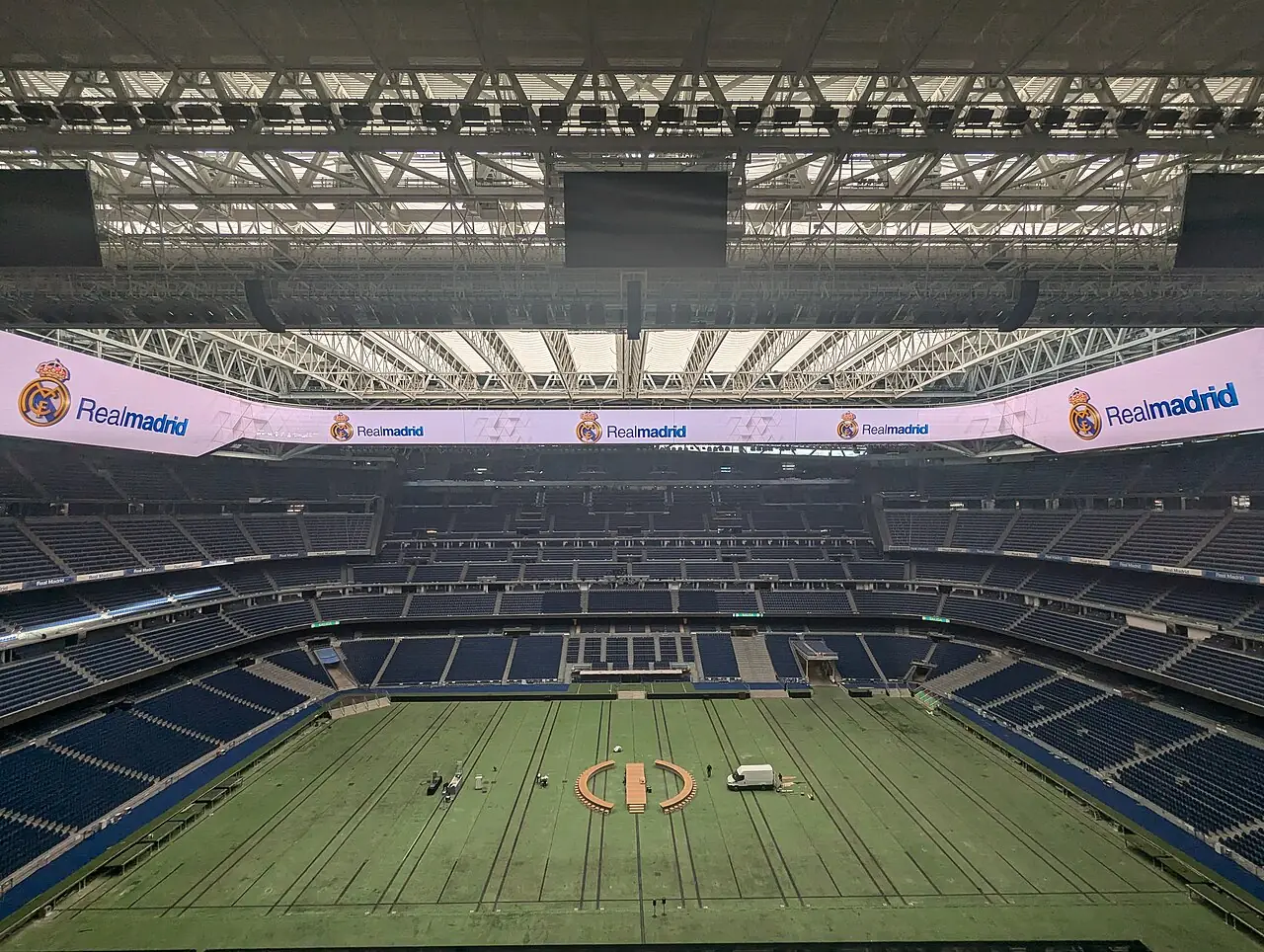
The photograph accompanying this guide is an archive view of the Bernabéu from September 2024, not a photograph of the October 21 fixture. Likewise, every squad and managerial reference above is attributed to dated pre-match material. Confirmed goals, disciplinary incidents and a final result require match reporting; none has been invented to turn a contextual guide into a live report.
Smashology Editorial Team
The Smashology Editorial Team is responsible for reviewing and publishing content at Smashology Media, overseeing sourcing, fact-checking, corrections, and editorial standards across coverage of internet culture, technology, entertainment, news, and crime.
Sources
Links cited in this article.
- Sourcecommons.wikimedia.org
- Licencecreativecommons.org
- October 21 confirmed-line-up reportas.com
- Madrid’s official tourism listingesmadrid.com
- Madrid’s October 21 previewrealmadrid.com
- UEFA’s explanation of the standingsuefa.com
- October 20 press conferencerealmadrid.com
- official October 20 squad announcementrealmadrid.com
- October 20 press conferencerealmadrid.com
- visiting team’s October 20 media appearancerealmadrid.com