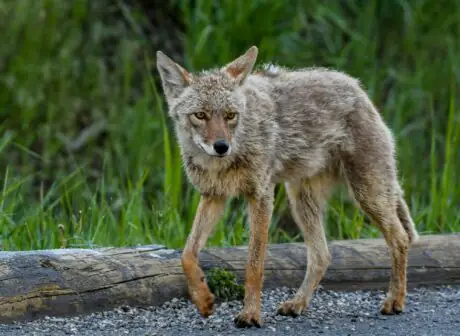
A leopard puppy viral video from Palghar, Maharashtra, has spread quickly because its ending appears to reverse what viewers expect. Night-time CCTV shows a leopard approach several dogs near a temple, chase the smaller animals and briefly seize a puppy. Seconds later, the big cat releases it and moves away.
The puppy is then seen leaving the scene. That visible sequence is striking enough without turning it into a fable. Social posts have described the leopard as compassionate, merciful or protective, but a security-camera clip cannot establish the animal’s motive. The more useful story is what the footage can—and cannot—tell us about leopards living near people.
Here is a careful breakdown of the Palghar CCTV video, the facts reported so far and the wider wildlife context behind the encounter.
What happens in the Palghar leopard and puppy video?
The incident was recorded around midnight in a residential area of Palghar district. According to India Today’s September 1 report, CCTV near a temple captured a leopard approaching a group of dogs. Larger dogs ran from the lane, while two puppies remained closer to the animal’s path.
The leopard pursued the puppies and caught one. It held the smaller animal briefly, then let go and walked away. The puppy moved off after the release. A local report from Aaj Tak placed the footage near a Ganpati temple in Bawda and published the story on August 30.
Those details explain the video’s central event. They do not prove why the leopard stopped, whether the puppy had any injury that was not visible on camera, or what happened to either animal later. A responsible account should keep those unknowns clear.
Did the leopard “show mercy” to the puppy?
“Mercy” is an interpretation, not something the CCTV recording can measure. The footage shows a release; it does not show the leopard’s internal state. The animal may have been distracted, startled, uncertain, interrupted or simply no longer motivated to continue the encounter. Without a qualified observer, additional camera angles or evidence from the scene, choosing one explanation would be speculation.
This distinction matters because emotional captions are one of the main ways wildlife videos become distorted. A dramatic label encourages sharing, then gets repeated as fact by accounts that never check the source. In this case, the observed behaviour is unusual enough to describe plainly: the leopard briefly held the puppy and then released it.
Avoiding anthropomorphism does not make the moment less interesting. It makes the story more honest. Wild animals regularly make rapid decisions based on information humans cannot see or hear. A short video preserves the outcome, not the full chain of sensory cues behind it.
Why leopards appear near homes in Maharashtra
Leopards are exceptionally adaptable big cats. They use forests, scrub, agricultural land and the edges of cities, often moving at night when human activity is lower. WWF-India’s work on living with leopards notes that the animals can travel through densely populated landscapes and find food close to human settlements.
Free-ranging dogs and other domestic animals can become prey in those environments. Research discussed by WWF-India found that feral dogs, pigs and other domestic animals formed a large share of leopard diet in one Maharashtra study area. That does not mean every leopard near a home is hunting a pet, but it explains why unsecured animals and unmanaged waste can increase risk.
Habitat fragmentation adds pressure. Roads, construction and changing land use can narrow the routes animals use between resting and hunting areas. At the same time, food and water around settlements may draw smaller animals, which in turn can attract predators. The result is a shared landscape, not a clean border between “wild” and “urban.”
What the viral video reveals about coexistence
The Palghar clip is not only a story about one puppy’s escape. It is a visible example of a much larger pattern: people, domestic animals and leopards are using some of the same spaces, especially after dark.
That overlap is often described only as conflict. Yet wildlife researchers emphasise that many encounters end without injury because leopards generally avoid people and move through inhabited areas quietly. WWF defines coexistence as a dynamic condition in which human and wildlife needs can be met even though some negative interactions still occur.
Coexistence is not the same as pretending there is no danger. It requires reporting sightings, protecting pets and livestock, managing waste, preserving habitat connections and following local wildlife authorities. It also requires communities to avoid crowding, chasing or attempting to capture a leopard themselves.
How residents can reduce risk in leopard areas
Advice must be tailored to local conditions, and residents should follow the Maharashtra Forest Department and district authorities when an animal is active nearby. Several general precautions are still useful:
- Keep small pets indoors after dusk. Dogs left outside or allowed to roam are more exposed when leopards are active.
- Use secure enclosures. Livestock and pets need roofs, strong doors and gaps too narrow for a predator to enter.
- Improve visibility around homes. Clear dense vegetation immediately beside entrances and use appropriate lighting on frequently used paths.
- Manage food waste. Open rubbish can support feral dogs and pigs, which may attract leopards.
- Supervise children outdoors. Avoid isolated paths at night in areas with recent sightings.
- Report sightings promptly. Give wildlife officials the time, exact location and direction of travel without approaching the animal.
If a leopard is seen nearby, people should stay calm, give it an escape route and move into a secure building or vehicle. Running toward it for a better video, surrounding it with a crowd or using flash photography can make an already tense situation more dangerous.
Why viral CCTV clips need careful verification
Security-camera video often looks authoritative because it appears to show an event without editing. But the footage still has limits. The camera may record only one angle, the timestamp may be wrong, the clip may begin after an encounter started, and reposted versions may remove the original location or date.
Before sharing, viewers should compare the caption with established reporting and look for a named place, date and source. They should also check whether an older video is being recycled. In the Palghar case, reports published on August 30 and September 1 agree on the basic sequence, while some of the emotional claims attached to reposts go further than the evidence allows.
Graphic or distressing footage deserves extra care. Even when a video has an unexpectedly positive outcome, treating a wildlife encounter as entertainment can encourage people to seek similar scenes. The public interest lies in understanding the risks and the ecology, not in provoking another close call.
Frequently asked questions about the leopard puppy viral video
Where was the leopard and puppy video recorded?
Reports place the incident in Palghar district, Maharashtra, near a Ganpati temple in the Bawda area. The footage appears to come from a fixed security camera overlooking the lane.
Did the puppy survive?
The visible clip shows the puppy moving away after the leopard releases it. Public reports describe the puppy as escaping, but no veterinary examination or detailed follow-up was available in the initial coverage.
Why would a leopard release potential prey?
The video alone cannot answer that question. Distraction, disturbance or a change in the animal’s motivation are possible, but assigning a specific reason without direct evidence would be speculation.
Are leopards common in residential parts of Maharashtra?
Leopards live across several human-dominated landscapes in the state and can move near farms, villages and urban edges. Sightings should be reported to local wildlife authorities, especially when the animal appears repeatedly in the same area.
Should people try to scare a leopard away?
No one should approach, corner or chase a leopard. Residents should move to safety, keep others away, preserve an exit route for the animal and contact the responsible forest or emergency authority.
The viral clip has a surprising ending, but its lasting value is the context around it. The clearest takeaway is not that one leopard behaved like a person. It is that a wild predator and domestic animals crossed paths in a shared landscape—and that accurate reporting, practical precautions and professional wildlife management matter. Find more verified internet stories in Smashology Media’s Viral section.
Leon Ramoviq
Primary Author · Editorial Reviewer · Researcher Leon Ramoviq is a digital media researcher, content creator, and primary author at Smashology Media. His work focuses on researching, verifying, and developing stories across entertainment, culture, sports, internet trends, curiosity-driven topics, and viral news. Before publishing, Leon reviews sources, cross-checks key claims, and works to ensure that articles are clear, accurately represented, and based on reliable information rather than unverified social-media speculation. With experience in digital media, graphic design, social media content, and online audience engagement, he brings both an editorial and visual perspective to the stories published on Smashology. Leon is particularly interested in how stories spread online, why certain topics capture public attention, and how complex or trending information can be presented in a simple and engaging format. Role at Smashology As a primary author and researcher, Leon is involved in: • Researching stories and identifying original or reliable sources • Writing and developing articles for Smashology • Reviewing facts, names, dates, quotations, and contextual information • Checking stories for misleading or unsupported claims • Reviewing articles before publication • Following developments and updating stories when meaningful new information becomes available • Maintaining editorial consistency across Smashology content Editorial Approach Leon believes engaging content should not come at the expense of accuracy. His approach is to combine strong storytelling with responsible sourcing, clear attribution, and additional verification when a story originates from social media or rapidly developing online discussions.
Sources
Links cited in this article.
- India Today’s September 1 reportindiatoday.in
- local report from Aaj Takaajtak.in
- WWF-India’s work on living with leopardswwfindia.org
- WWF defines coexistenceworldwildlife.org