An ICE agent shot a Venezuelan food delivery driver in Austin, Texas on Sunday, wounding him in the torso during an attempted immigration arrest that has since drawn sharp criticism from local officials, civil rights attorneys and members of Congress demanding a full, independent investigation.
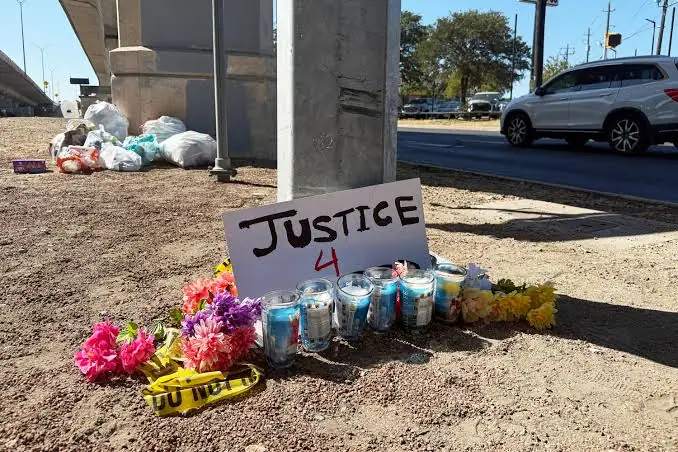
Wilber Rafael Garces Perez, 28, was working as a DoorDash driver on Austin’s north side when the shooting occurred shortly before 1 p.m. Sunday, according to accounts from city officials and Garces Perez’s legal representation.
How the encounter unfolded
According to Austin City Council member Mike Siegel, an ICE officer rammed Garces Perez’s vehicle before the shooting began, and the agent then “opened fire at least five times.” Austin Police Chief Lisa Davis said the incident may have involved a foot pursuit at some point during the encounter, though the full sequence of events — including what, if anything, preceded the ramming and gunfire — has not been publicly detailed by federal officials. Federal sources indicated that ICE agents were attempting to apprehend Garces Perez due to his immigration status and an existing deportation order.
The victim’s condition
Garces Perez was shot at least once in the torso and transported to Dell Seton Medical Center in serious condition. Austin Mayor Kirk Watson later confirmed that Garces Perez had been stabilized. Rather than remaining under standard medical custody arrangements, he was transferred into ICE custody following his stabilization, a move that has become a central point of controversy in the case.
A family kept in the dark
Garces Perez’s attorney, Kate Lincoln-Goldfinch, said his wife and family have been unable to see him or receive meaningful updates about his condition or location since the shooting. “We are deeply concerned that his wife and family have not been permitted to see him and have not received a meaningful update regarding his current condition or whereabouts,” Lincoln-Goldfinch said. She also described being physically turned away from the property where Garces Perez was being held, saying law enforcement “ran us off the property and told us we can’t even stand on the driveway.”
Who is investigating
Homeland Security Investigations, an arm of the Department of Homeland Security, will lead the investigation into the shooting, with assistance from the FBI. That arrangement marks a departure from the more typical practice in past federal officer-involved shootings, where the FBI has historically taken the lead role. Critics of the case have pointed to that shift in investigative structure as one more reason to question how independent and thorough the resulting investigation will actually be.
Local officials react
Austin Mayor Kirk Watson did not mince words in his public response, saying he was “very angry” about the shooting but “not surprised,” a comment that referenced a string of prior incidents involving ICE operations in the Austin area that have drawn local criticism. U.S. Representative Greg Casar, whose district includes parts of Austin, went further, demanding “a full, independent investigation, immediate release of the body camera footage, and accountability” from federal authorities.
Why this case has drawn national attention
The shooting has become a flashpoint in the broader national debate over ICE’s enforcement tactics, particularly as the agency has expanded operations under current federal immigration policy. That Garces Perez was actively working a gig-economy delivery job at the time he was shot — a detail confirmed by DoorDash-adjacent reporting and his attorney — has added a specific, sympathetic detail that has helped the case spread quickly through both local and national coverage, distinguishing it from immigration enforcement stories that don’t involve gunfire against someone in the middle of ordinary daily work.
The demonstrations that followed
News of the shooting prompted demonstrations in the area surrounding the incident, with protesters gathering to demand transparency and accountability from ICE and from the Austin Police Department’s role in supporting or responding to the operation. The demonstrations reflect a broader pattern seen in other cities where ICE enforcement actions involving use of force have triggered public backlash, particularly when body camera footage or independent documentation of the incident has not been promptly released.
What body camera footage could reveal
Representative Casar’s demand for immediate release of body camera footage points to one of the most consequential open questions in the case: whether video evidence exists that could clarify the sequence of events leading up to the shooting, including whether Garces Perez posed any threat that might have justified the use of deadly force, or whether the vehicle-ramming and subsequent gunfire described by council member Siegel represent an escalation that went beyond standard use-of-force protocols. Federal authorities have not indicated when or whether such footage will be made public.
Legal and political stakes
Beyond the immediate investigation, the case carries significant legal stakes for Garces Perez, who now faces both recovery from a gunshot wound and continued immigration proceedings tied to the deportation order that prompted the arrest attempt in the first place. Civil rights attorneys have signaled they may pursue legal action depending on what the investigation and any released footage show, while the political fallout has already reached Congress through Casar’s public statements, a sign that the case is likely to remain a point of contention well beyond the immediate Austin community.
How this fits a broader pattern
The Austin shooting is not an isolated case. It follows a string of incidents in cities across the country in recent months in which ICE enforcement operations have resulted in use-of-force incidents, some fatal, drawing sustained criticism from immigration advocates, civil rights organizations and local elected officials who argue that current enforcement tactics prioritize aggressive apprehension over de-escalation, particularly in cases involving individuals who, like Garces Perez, were not engaged in any violent or threatening activity at the moment agents moved to make an arrest.
What happens next
Garces Perez remains in ICE custody as he recovers from his injuries, with his legal team continuing to push for access and information about his condition and location. The Homeland Security Investigations-led probe, with FBI assistance, is ongoing, and calls from local and federal officials for greater transparency — including body camera footage — remain unanswered as of this writing. How quickly, and how fully, federal authorities respond to those demands is likely to shape both the public reaction to this case and the broader debate over ICE accountability in the months ahead.
How ICE use-of-force investigations typically proceed
When a federal immigration officer is involved in a shooting, the resulting investigation typically moves through several layers of review: an internal agency review by ICE and Homeland Security Investigations, a separate look by the Department of Homeland Security’s Office of Inspector General, and in many cases parallel scrutiny from the FBI given the potential for civil rights violations. That multi-agency structure is designed to provide independent checks on the agency directly involved in the shooting, though critics have long argued that investigations led primarily by DHS components rather than fully independent bodies can create the appearance, if not the reality, of conflicts of interest when an agency investigates its own personnel.
What Austin’s ICE relationship has looked like
Mayor Watson’s comment that he was “not surprised” by the shooting reflects a longer-running tension between Austin’s city government and federal immigration enforcement operating within city limits. Austin has, at various points, positioned itself as a city seeking to limit local law enforcement’s role in supporting federal immigration enforcement, a stance that has periodically put city officials at odds with ICE and with state and federal authorities pushing for greater cooperation. This shooting adds a new, high-profile flashpoint to that already strained relationship, and is likely to intensify calls from city leaders for clearer boundaries around how ICE operations are conducted within Austin.
The gig-economy angle
That Garces Perez was working as a DoorDash driver at the time of the shooting has added a distinct dimension to how the case has been covered and discussed publicly. Gig-economy delivery work has become a common source of income for immigrants navigating uncertain legal status, in part because platforms like DoorDash typically do not require the same documentation checks as traditional employers. That reality has made drivers in Garces Perez’s position a recurring subject of attention whenever ICE enforcement actions intersect with delivery or rideshare work, since the nature of the job — driving around a city, making stops at unfamiliar addresses — can create circumstances where an enforcement action unfolds in public, in front of customers or bystanders, rather than in a more controlled setting.
Data on ICE shootings and use of force
Incidents in which ICE agents discharge firearms during arrest attempts remain relatively rare compared to the total volume of immigration arrests conducted nationally, but they have drawn increasing scrutiny as immigration enforcement activity has expanded. Advocacy organizations that track use-of-force incidents involving ICE have called for more comprehensive public reporting on shootings, injuries and fatalities connected to immigration enforcement operations, arguing that the current patchwork of agency disclosures makes it difficult for the public to assess whether incidents like the one involving Garces Perez represent an isolated case or part of a broader trend in how enforcement operations are being conducted.
What advocates are calling for
Beyond the immediate calls for body camera footage and an independent investigation, immigration advocacy groups responding to the shooting have renewed broader calls for policy changes, including stricter use-of-force guidelines for ICE operations, mandatory body camera use during all arrest attempts, and independent civilian oversight of federal immigration enforcement shootings similar to models used in some local police oversight systems. Whether any of those policy changes gain traction at the federal level is likely to depend significantly on what the ongoing investigation into the Austin shooting ultimately reveals.
Follow Smashology Media’s News coverage as the investigation into the Austin ICE shooting develops.
Sources
- CBS News: ICE agent shoots and wounds man in Austin, Texas, sparking demands for full investigation
- CNN: Austin ICE shooting: Man in detention center ‘with a bullet in his back,’ lawyer says
Leon Ramoviq
Primary Author · Editorial Reviewer · Researcher Leon Ramoviq is a digital media researcher, content creator, and primary author at Smashology Media. His work focuses on researching, verifying, and developing stories across entertainment, culture, sports, internet trends, curiosity-driven topics, and viral news. Before publishing, Leon reviews sources, cross-checks key claims, and works to ensure that articles are clear, accurately represented, and based on reliable information rather than unverified social-media speculation. With experience in digital media, graphic design, social media content, and online audience engagement, he brings both an editorial and visual perspective to the stories published on Smashology. Leon is particularly interested in how stories spread online, why certain topics capture public attention, and how complex or trending information can be presented in a simple and engaging format. Role at Smashology As a primary author and researcher, Leon is involved in: • Researching stories and identifying original or reliable sources • Writing and developing articles for Smashology • Reviewing facts, names, dates, quotations, and contextual information • Checking stories for misleading or unsupported claims • Reviewing articles before publication • Following developments and updating stories when meaningful new information becomes available • Maintaining editorial consistency across Smashology content Editorial Approach Leon believes engaging content should not come at the expense of accuracy. His approach is to combine strong storytelling with responsible sourcing, clear attribution, and additional verification when a story originates from social media or rapidly developing online discussions.