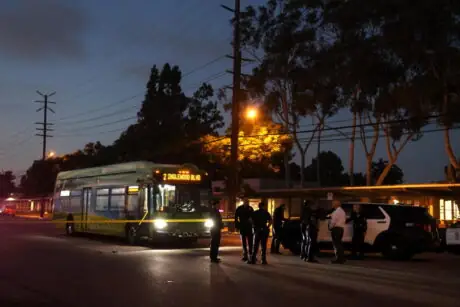
Nine women have been found dead over the past two months in and around Johannesburg, South Africa, sparking widespread fear that a serial killer — or possibly multiple killers working in a coordinated pattern — is targeting women in the country’s most populous province.
All nine bodies were discovered in the Ekurhuleni municipality, a sprawling metro area east of Johannesburg, with the first five found in and around Kempton Park and the remaining four scattered across locations 25 to 35 kilometers away, including Dawn Park, KwaThema and Springs.
How the pattern emerged
The first body was discovered around July 17, 2026, and over the following two months, police in Ekurhuleni found body after body under circumstances disturbing enough to raise the possibility of a connected killer. The ninth and most recent body was found on September 17. Investigators have noted that the victims share several characteristics: most were in their 20s and 30s, several were found naked or partially clothed, and some bore similar bruising, details that have fueled public fear even as police have stopped short of formally declaring the case the work of a single serial killer.
Who the victims were
Of the nine women found dead, only four have been publicly identified so far. Dineo Motapane, 38, a mother of two, was found burned. Gracious Nkomo, 28, was discovered along the R21 highway. Elizabeth Moselakgomo, 38, was identified after her own daughter alerted police to her disappearance. Itumeleng Kekana, 32, who worked as a shopkeeper, was found on a bridge. The remaining five victims have not yet been identified, a gap that has added to the unease in a region where women say they no longer feel safe going about their normal routines.
What police are saying
Police commissioner Fred Kekana has been careful in how he characterizes the investigation, telling reporters that “investigators are considering all possibilities, including multiple suspects.” That measured language reflects the genuine uncertainty investigators face: while the pattern of victims and circumstances has drawn comparisons to a single serial offender, authorities have not ruled out the possibility that more than one person, or even multiple unconnected incidents, could be responsible for the string of deaths.
A suspect in custody
At least one suspect has been detained in connection with the killings and appeared in court this past Wednesday. Police have said they are investigating a person of interest who may be a non-South African national, though officials have not detailed what evidence links this individual to any of the nine deaths or whether they are considered a suspect in all of the killings or only some of them. The limited public detail reflects the sensitivity of an active investigation that authorities say remains ongoing and fluid.
“This is a war”
The language used by South African officials and community leaders to describe the situation has been stark. Princess Eurika Mogane, a commissioner involved in the response, described the pattern bluntly: “This is a war… individuals are being hunted.” That framing captures the level of alarm the case has generated, not just among law enforcement but among residents of Ekurhuleni, where the sense that women are being specifically targeted has changed daily routines for many.
Fear on the ground
Residents describe a palpable shift in how women in the affected areas are living their lives. Nomgqibelo Tshabalala, who lives in the region, said she has been experiencing “a lot of fear and paranoia” since the killings began drawing wider attention. Police have issued advisories urging women to avoid walking or running alone near Kempton Park, guidance that, while intended to protect potential victims, has also underscored just how limited authorities’ ability to guarantee public safety in the area currently is.
A reward and a growing response
In an effort to generate leads, authorities have offered a reward of 400,000 rand, roughly $25,000, for information leading to an arrest connected to the killings. The reward reflects both the seriousness with which police are treating the case and the reality that, more than two months into the string of deaths, investigators still need public tips to make further progress. Community and women’s rights groups have organized around the case as well, using it to draw renewed attention to South Africa’s broader and long-standing femicide crisis.
South Africa’s femicide crisis as backdrop
The Ekurhuleni killings have landed against the backdrop of a country that already has one of the highest rates of femicide in the world, a statistic that has made gender-based violence a persistent, high-profile political and social issue in South Africa for years. Women’s advocacy groups responding to this case have been careful to frame it not as an isolated horror but as an extreme manifestation of a pattern the country has struggled to address at a systemic level, with some activists arguing that the case demonstrates the urgent need for more resources devoted to protecting women rather than treating each new case as a standalone tragedy.
Where responsibility lies
Women’s groups responding to the case have also pushed back against any framing that puts responsibility on the victims for their own safety, emphasizing instead that the responsibility for the killings lies with the perpetrator or perpetrators, and more broadly with the state’s capacity to prevent and solve crimes against women. That message has been a consistent thread in public commentary around the case, even as police advisories about solo walking and running have, in practice, placed at least some of the burden of avoiding danger back on women themselves.
What happens next
With five victims still unidentified and the investigation continuing, South African police face pressure on multiple fronts: identifying the remaining victims, determining whether the killings are connected to a single perpetrator or several, and building a case strong enough to bring charges against the suspect currently in custody or any additional individuals implicated as the investigation continues. The scale of public fear generated by the case means that however the investigation concludes, it is likely to remain a significant national story in South Africa for weeks or months to come.
How serial killer investigations typically unfold in South Africa
Criminologists who study violent crime patterns in South Africa note that cases involving multiple unsolved deaths of women present unique investigative challenges in a country where police resources are often stretched thin across a high overall crime rate. Establishing a definitive link between separate killings requires forensic evidence — DNA, fiber analysis, ballistics where applicable — that can take weeks or months to process, particularly when bodies are found in different jurisdictions within the same broader metro area, as has been the case in Ekurhuleni. That processing time helps explain why, more than two months after the first body was found, police are still describing the investigation as open to multiple theories rather than confirming a single offender.
The role of forensic identification
The fact that five of the nine victims remain unidentified more than two months into the investigation points to one of the most basic but persistent challenges in cases like this one: without a name, investigators often cannot establish a victim’s last known movements, associates or potential connection to a suspect, all of which are typically central to building a case. South African police have relied on dental records, distinguishing marks and, in some cases, appeals to the public for anyone with a missing family member matching a victim’s description to come forward, a process that can take considerable time even with modern forensic techniques.
Comparisons to past cases
South Africa has a documented history of serial killings targeting women, and true crime researchers and journalists covering the Ekurhuleni case have inevitably drawn comparisons to prior instances in which a string of unsolved deaths was eventually linked to a single perpetrator, sometimes only after a mistake or a surviving victim led police to a suspect. Those historical cases have shaped how both the public and investigators are approaching the current killings, with heightened public attention partly a product of collective memory around how long some past serial cases took to solve, and how many additional victims were sometimes found before an arrest was made.
Political and law enforcement pressure
The scale of public fear generated by the Ekurhuleni case has translated into direct political pressure on South African law enforcement leadership, with officials facing questions about resourcing for the investigation and about the broader state of gender-based violence enforcement in Gauteng province, where Ekurhuleni is located. South Africa’s police service has faced scrutiny in recent years over case backlogs and under-resourced detective units, criticism that has resurfaced pointedly in coverage of this case given how long the string of killings continued before drawing sustained national attention.
How the case has affected daily life
Beyond the police advisories urging women to avoid walking or running alone near Kempton Park, the case has visibly altered daily patterns in the affected communities. Local businesses have reported women adjusting their commuting habits, arranging group travel for what would normally be solitary trips, and avoiding certain routes and hours entirely. Community patrol groups, some organized informally through neighborhood associations, have also stepped up in some of the affected areas, a grassroots response that reflects both solidarity and a degree of frustration with how much protection official law enforcement resources have been able to provide during the two months the killings have continued.
What comes next for the investigation
Police have signaled that the reward, forensic work, and continued questioning connected to the suspect already in custody are the most likely paths toward further breaks in the case, though officials have been careful not to promise a swift resolution. Identifying the five remaining victims remains an immediate priority, both to bring closure to families who may not yet know their loved one is among the dead and because identification often opens new investigative threads that can help establish whether the killings are the work of one perpetrator or several.
Follow Smashology Media’s Crime coverage as the investigation into South Africa’s Ekurhuleni killings develops.
Sources
- Al Jazeera: Fear and anger in South Africa as bodies of nine women found: What we know
- CNN: ‘Women are terrified’: Ninth body found as South African police probe series of killings
Leon Ramoviq
Primary Author · Editorial Reviewer · Researcher Leon Ramoviq is a digital media researcher, content creator, and primary author at Smashology Media. His work focuses on researching, verifying, and developing stories across entertainment, culture, sports, internet trends, curiosity-driven topics, and viral news. Before publishing, Leon reviews sources, cross-checks key claims, and works to ensure that articles are clear, accurately represented, and based on reliable information rather than unverified social-media speculation. With experience in digital media, graphic design, social media content, and online audience engagement, he brings both an editorial and visual perspective to the stories published on Smashology. Leon is particularly interested in how stories spread online, why certain topics capture public attention, and how complex or trending information can be presented in a simple and engaging format. Role at Smashology As a primary author and researcher, Leon is involved in: • Researching stories and identifying original or reliable sources • Writing and developing articles for Smashology • Reviewing facts, names, dates, quotations, and contextual information • Checking stories for misleading or unsupported claims • Reviewing articles before publication • Following developments and updating stories when meaningful new information becomes available • Maintaining editorial consistency across Smashology content Editorial Approach Leon believes engaging content should not come at the expense of accuracy. His approach is to combine strong storytelling with responsible sourcing, clear attribution, and additional verification when a story originates from social media or rapidly developing online discussions.