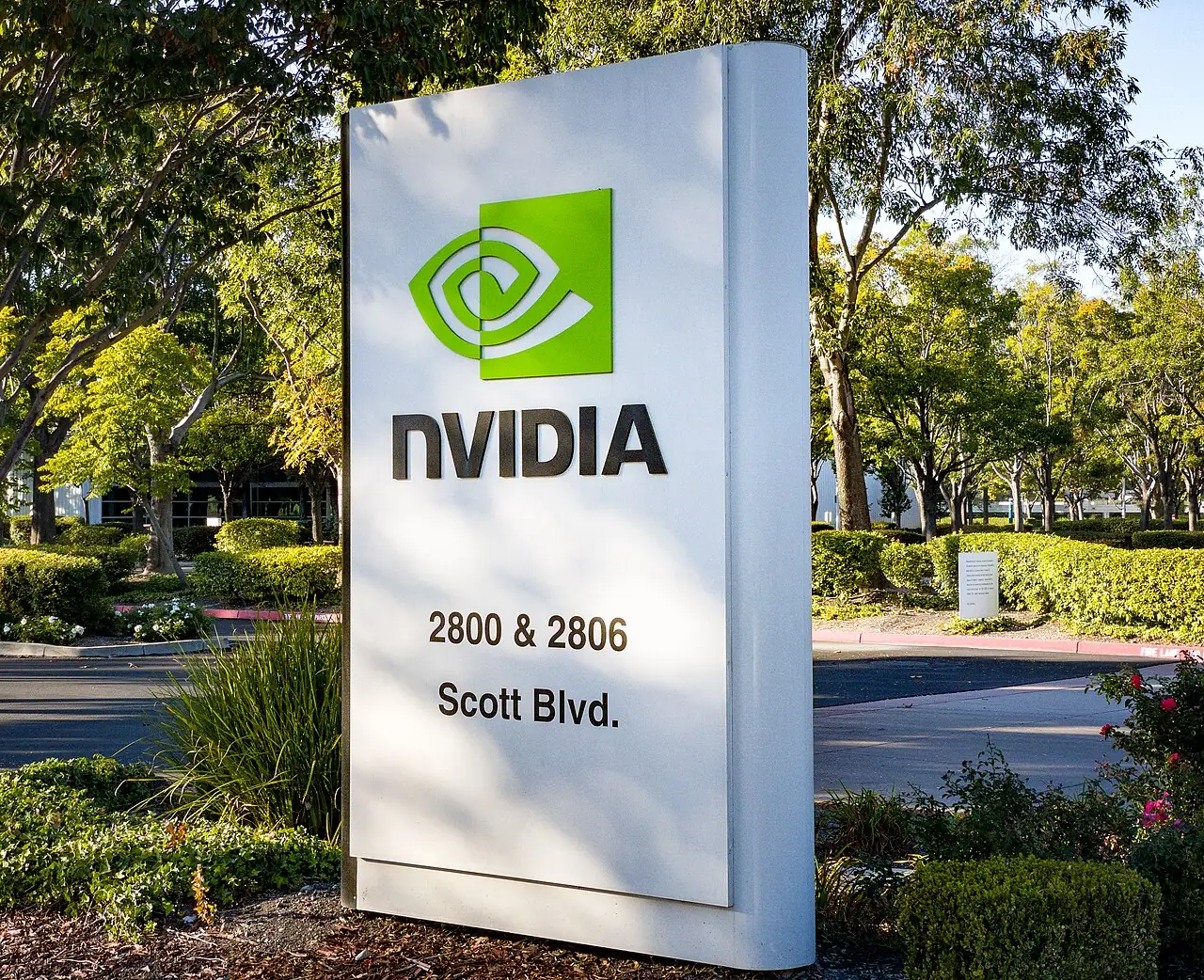
NVIDIA’s Nemotron 3.5 retrieval release combines tools for finding, ranking and parsing information before an AI system answers. The October 21 announcement includes promising vendor results, but the practical gains depend on documents, evaluation methods, deployment choices and access controls.
A retrieval release, rather than a new conversational assistant
NVIDIA’s October 21 announcement brings together embedding, reranking and document-parsing models under its Nemotron retrieval programme. The significance is the information pipeline around an agent: which material it finds, how it orders that material and whether complex pages survive conversion into usable evidence. This is not a claim that a newly released chatbot can automatically answer every question more accurately.
The chronology matters. This article examines the release on October 23, but the announcement appeared on October 21. Individual model cards carry their own earlier release dates. Treating every subsequent report as a new launch would obscure what actually changed and make it harder for developers to identify which checkpoint they tested.
A retrieval system typically begins with a collection of documents. It needs to find potentially relevant material before a language model can use that material in an answer. If the right evidence is never retrieved, a fluent explanation cannot recover the missing source. If irrelevant evidence occupies the available context, the model may spend additional work interpreting information that does not resolve the question.
Consider a hypothetical maintenance assistant searching a multilingual equipment archive. The answer could sit inside a scanned table rather than a normal paragraph. Finding a page about the right machine is only the first step: the system must preserve the table’s meaning, identify the relevant row and connect its answer to the correct version of the document. This example illustrates the problem; it is not a reported customer deployment.
What the embedding models contribute
The Nemotron 3.5 Embed 8B model card describes a multimodal embedding model that accepts text queries and documents containing text, images or both. Its full output has 4,096 dimensions. NVIDIA also documents reduced representations of 1,024 or 512 dimensions, with renormalisation required after truncation. These are implementation choices with consequences for storage and retrieval, rather than separate guarantees of identical results.
An embedding turns content into a numerical representation used for similarity search. In the hypothetical archive, that can help identify relevant pages even when the user’s question does not reproduce the document’s exact wording. Images, tables and diagrams complicate that task because their meaning can depend on relationships that plain text extraction loses.
The smaller Embed 1B model card lists approximately 1.55 billion total parameters and 2,048-dimensional full embeddings. It describes a distilled model with a frozen language component and added visual capabilities. The published name is therefore a family label, not an exact statement that the complete model has precisely one billion parameters.
Choosing a smaller representation or model involves a trade-off that should be measured on the intended collection. A compact index may be easier to store and operate, but its usefulness still depends on whether relevant documents appear among the candidates. A system that saves index space while repeatedly missing essential evidence has not achieved a useful overall efficiency gain.
The cards also separate evaluation coverage from universal capability. Testing across languages and visual documents can demonstrate breadth within the evaluated material; it does not establish that every language, scan quality, handwriting style or specialised technical drawing will work equally well. A deployment needs examples that resemble its own documents, including difficult cases rather than only clean demonstrations.
Reranking asks a different question from initial search
The Nemotron 3.5 Rerank 8B card describes a cross-encoder that evaluates query-and-document pairs, including visual material. Its output is a raw relevance score, expressed as a logit. A higher score is useful for comparing candidates for a particular query; it should not be presented to a reader as a calibrated probability that an answer is true.
That distinction separates relevance from factual reliability. An outdated manual may closely match a question while giving a superseded instruction. A document containing an allegation can be relevant to reporting about that allegation without proving it. Ranking can help select evidence, but publication date, authority, version and provenance remain separate considerations.
NVIDIA’s reranking guidance makes a practical diagnostic distinction. If the desired documents are missing from the candidate set, the initial retrieval stage needs attention. If the documents are present but ordered poorly, reranking is the more direct problem to investigate. The documentation is a nightly resource, so teams should record the version consulted rather than assuming its current contents are a permanent release specification.
For the hypothetical maintenance assistant, these failures would look different. Never finding the relevant table points toward candidate retrieval or document ingestion. Finding the table but burying it beneath generic descriptions points toward ordering. Rewriting the final answer prompt might hide either weakness temporarily, but it would not demonstrate that the underlying evidence path had been repaired.
A useful evaluation therefore records intermediate results as well as the final response. That makes it possible to identify whether a wrong answer began with missing evidence, badly ordered evidence, a parsing error or an incorrect interpretation. Without that separation, an overall success rate can reveal that something improved while leaving the reason unclear.
Parsing is where page structure can be preserved or lost
The Nemotron 3.5 Parse model card, dated October 17, lists roughly 631 million parameters. Its intended output combines machine-readable text with layout information, including regions and reading order. NVIDIA reports a 75.20 mean on ParseBench, while documenting a triple-pass region-union method and 2,078 unique pages. Those methodological details belong beside the score because they define what the result measures.
A table extracted in the wrong order can attach a number to the wrong heading. A diagram caption can become detached from the image it explains. Such errors are especially consequential when a downstream model receives plausible-looking text without the original layout. Better retrieval alone cannot establish that the material it returns has retained its meaning.
Parsing quality is also different from source quality. A system can reproduce a misleading document perfectly. Conversely, a reliable source can be rendered unusable through damaged extraction. Both checks matter: whether the document deserves trust and whether the pipeline preserves what the document actually says.
For an evaluation collection, this argues for inspecting representative outputs against the original pages. A correct answer on easy text-only material should not conceal failures on multi-column layouts, scanned tables or figure-heavy pages. The relevant question is whether the extraction remains fit for the decisions the assistant is expected to support.
What the published performance evidence establishes
In its release announcement, NVIDIA reports agent experiments holding the language model, tools, tasks, corpus and policy fixed while changing retrieval. It reports about a 14% reduction in agent inference tokens with the 8B embedding-and-reranking combination, alongside improved accuracy in that evaluation. This is a vendor-reported experimental result, not an independently established reduction in every customer’s total operating bill.
Agent inference tokens are only one part of an end-to-end system. Document processing, embedding generation, index maintenance and reranking also consume resources. A result that reduces work in the answering stage can still be valuable, but a complete comparison needs to count work across the pipeline and use the same definition of success.
The OpenSearch project’s October 21 evaluation provides another concrete test setting. Across six BRIGHT datasets, its comparison of Nemotron 3.5 Embed 1B with bge-m3 reported average nDCG@10 gains of 65% for neural search and 31% for hybrid search. These are relative improvements within the described experiments. OpenSearch’s collaboration with NVIDIA also warrants recognising the relationship rather than calling the exercise wholly independent validation.
The ranking metric describes how useful results are ordered near the top of a list; it is not a percentage of questions answered correctly. Nor can a comparison that changes both the search mode and the model isolate the effect of the model alone. Readers should compare like with like before translating a benchmark into a deployment expectation.
The strongest next evidence would come from a recorded evaluation on the intended document collection, with fixed questions, documented relevance judgements and a baseline that remains unchanged. That would make a claimed improvement assessable and repeatable. A single impressive demonstration is useful for showing a possibility, but it cannot establish the typical result across an organisation’s information.
Licensing, access and the deployment questions that remain
The model cards identify OpenMDW 1.1 as the relevant model licence. Its published text includes permissions and conditions, including retaining applicable licence and notice material when redistributing. A downloadable model should not automatically be described as carrying an Apache licence, nor should access to weights be confused with permission to reuse every third-party document placed in a search collection.
Deployment packaging has its own terms. NVIDIA’s NIM embedding container listing identifies software and product terms for the container. Teams comparing deployment options therefore need to distinguish the model’s licence from the runtime package’s licence. They should also preserve the exact checkpoint, configuration and evaluation records associated with any reported result.
Retrieval does not replace document permissions. In an enterprise search system, a page that closely matches a query may still be inaccessible to the person asking it. A better relevance model does not create authority to disclose that page. The system’s evidence path needs to respect the user’s existing access and retain enough provenance to explain where an answer came from.
Readers following our coverage of connected AI context will recognise the broader issue: useful answers depend on the information systems around the model. Nemotron 3.5 adds substantive tools at several points in that pipeline. Whether those tools improve a particular assistant is a question for measured retrieval, parsing and answering results, with costs and permissions included in the assessment.
Sources and further reading
- NVIDIA: October 21 retrieval announcement
- NVIDIA: Embed 8B model card
- NVIDIA: Embed 1B model card
- NVIDIA: Rerank 8B model card
- NVIDIA: Parse model card and benchmark method
- OpenSearch: retrieval evaluation
- OpenMDW 1.1 licence
- NVIDIA NIM embedding container
- NVIDIA: reranking evaluation guidance
Smashology Editorial Team
The Smashology Editorial Team is responsible for reviewing and publishing content at Smashology Media, overseeing sourcing, fact-checking, corrections, and editorial standards across coverage of internet culture, technology, entertainment, news, and crime.
Sources
Links cited in this article.
- Original photographcommons.wikimedia.org
- CC BY 2.0creativecommons.org
- October 21 announcementhuggingface.co
- Nemotron 3.5 Embed 8B model cardhuggingface.co
- Embed 1B model cardhuggingface.co
- Nemotron 3.5 Rerank 8B cardhuggingface.co
- reranking guidancedocs.nvidia.com
- Nemotron 3.5 Parse model cardhuggingface.co
- OpenSearch project’s October 21 evaluationopensearch.org
- OpenMDW 1.1openmdw.ai
- NIM embedding container listingcatalog.ngc.nvidia.com