The United States has begun a formal process to design a federal Space Academy intended to train future engineers, scientists, operators, civil servants and space leaders.
A commission comes first
An executive order signed on August 28 creates a Presidential Commission on the United States Space Academy. NASA’s administrator will chair the body, with representatives from the White House and several federal agencies also involved.
The distinction matters: the order does not by itself open a school or admit students. It directs the commission to submit recommendations within 120 days. Establishing the academy could still require presidential approval, congressional legislation, funding and accreditation work.
Questions the commission must answer
The report is expected to address governance, degree programs, leadership training and possible service obligations for graduates. It must also consider applicant requirements, including citizenship or security-clearance rules, and propose a process for selecting a permanent location.
The commission will examine whether the academy should sit within NASA and how it would coordinate with existing federal education programs. It can also recommend pilot programs and partnerships with universities or industry before a permanent institution is built.
Why the proposal is drawing attention
The United States already operates military service academies and a large network of civilian science and engineering programs. A space-focused federal academy would be a new model, combining technical education with public-service commitments across civil, commercial and national-security space work.
Supporters argue that increasingly ambitious lunar missions and a growing commercial space sector require a larger, more specialized workforce. Important unresolved questions include cost, duplication of existing programs, academic independence and how civilian and military priorities would be balanced.
The commission’s 120-day report should provide the first concrete indication of whether the proposal is likely to become a functioning institution or remain an early policy concept.
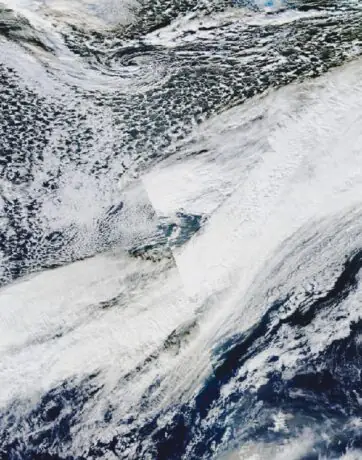
Sources: The executive order published by the White House and NASA’s August 28 release. Photo: NASA, a United States government work.
Leon Ramoviq
Primary Author · Editorial Reviewer · Researcher Leon Ramoviq is a digital media researcher, content creator, and primary author at Smashology Media. His work focuses on researching, verifying, and developing stories across entertainment, culture, sports, internet trends, curiosity-driven topics, and viral news. Before publishing, Leon reviews sources, cross-checks key claims, and works to ensure that articles are clear, accurately represented, and based on reliable information rather than unverified social-media speculation. With experience in digital media, graphic design, social media content, and online audience engagement, he brings both an editorial and visual perspective to the stories published on Smashology. Leon is particularly interested in how stories spread online, why certain topics capture public attention, and how complex or trending information can be presented in a simple and engaging format. Role at Smashology As a primary author and researcher, Leon is involved in: • Researching stories and identifying original or reliable sources • Writing and developing articles for Smashology • Reviewing facts, names, dates, quotations, and contextual information • Checking stories for misleading or unsupported claims • Reviewing articles before publication • Following developments and updating stories when meaningful new information becomes available • Maintaining editorial consistency across Smashology content Editorial Approach Leon believes engaging content should not come at the expense of accuracy. His approach is to combine strong storytelling with responsible sourcing, clear attribution, and additional verification when a story originates from social media or rapidly developing online discussions.