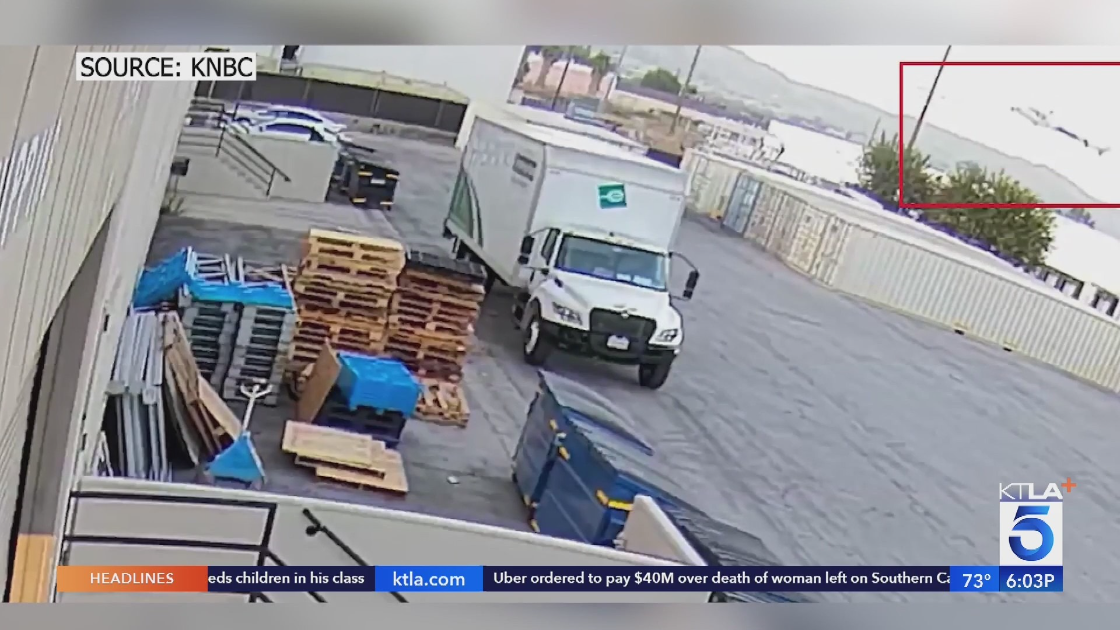
 An arbitrator has ordered Uber to pay $40 million to the family of a 23-year-old woman who was struck and killed on a Southern California freeway after her Uber driver forced her and a friend out of the car during a dispute over the ride. Emily Normandin-Parker died in August 2023 after driver Vu Tran pulled over on State Route 73 in Orange County and ejected her and her friend, Luna Moore, following an argument that started when Moore became ill inside the vehicle. Normandin-Parker was struck by another vehicle on the freeway shortly after being left on the roadway.
What happened that night
According to details from the arbitration, Normandin-Parker and Moore had hailed the Uber after a night out. When Moore got sick during the ride, an argument broke out between the driver and the passengers. Rather than pulling into a safe location or waiting out the dispute, Tran stopped the vehicle on the shoulder of SR-73, a tolled freeway that cuts through Orange County, and ordered both women out of the car. Moore survived being left on the freeway; Normandin-Parker did not.
“Trying to get help”
Emily’s mother, Carol Normandin, described her daughter’s last moments in terms that have stayed with the case throughout the arbitration process. “All I can think that Emily was doing — her friend, the driver arguing — was to get help,” she said. Family members have said in the years since the crash that the ruling, however large, does not change what they lost.
Why an arbitrator decided the case, not a jury
Like most Uber riders, Normandin-Parker had agreed to Uber’s terms of service, which route disputes into private arbitration rather than a public courtroom. Retired California judge Richard A. Stone was appointed to arbitrate the wrongful-death claim, and issued a ruling that found Uber “vicariously liable” for the actions of Tran, its driver, treating the company as responsible for what happened even though Tran was the one who pulled over and ejected the passengers. Vicarious liability is the same legal doctrine that can hold an employer responsible for an employee’s actions taken in the course of their job, and its use here is significant for a gig-economy company that has historically argued its drivers are independent contractors rather than employees.
How the $40 million breaks down
Stone’s ruling directed Uber to pay $20 million to each of Normandin-Parker’s parents, along with $300,000 to Moore, the friend who survived being left on the freeway. The total award, just over $40 million, is among the largest wrongful-death rulings connected to a rideshare company to date.
Uber disputes the ruling
Uber has pushed back on the decision, saying in a statement that the arbitrator “was wrong in holding Uber legally responsible for the tragic events of that night,” while also expressing condolences to Normandin-Parker’s family. The company has not detailed whether it intends to challenge the arbitration award in court, though arbitration rulings are generally difficult to overturn once issued, with courts typically limited to reviewing narrow procedural questions rather than re-examining the facts of the case.
Part of a broader pattern of rideshare safety lawsuits
The ruling lands amid a wave of lawsuits against Uber and rival Lyft over rider safety, spanning assault claims, wrongful-death suits and disputes over how much responsibility the companies bear for drivers once a ride is underway. Uber has faced criticism in several of these cases for treating drivers as independent contractors while still exercising significant control over how rides are conducted, a tension that keeps surfacing in litigation like the Normandin-Parker case. Safety advocates have pointed to the case as an example of what can happen when a dispute inside a moving vehicle is left for the driver alone to de-escalate, with no real-time oversight from the company facilitating the ride.
What the case changes for riders
For riders, the case is a reminder that a dispute inside a car, even one that starts with something as ordinary as motion sickness, can escalate quickly once a driver decides to end a ride on their own terms rather than following Uber’s own guidance to pull over in a safe, well-lit location. Consumer advocates have used the case to push Uber and other rideshare companies to build in more explicit driver guidance and monitoring for exactly this kind of mid-ride conflict, rather than leaving it to be resolved after the fact through litigation or arbitration.
Why this ruling became public at all
Arbitration cases like this one are typically confidential, which is part of why critics argue the system favors companies: unlike a jury verdict, an arbitration award rarely becomes public unless one side chooses to discuss it or it’s reported on by outlets that obtain the ruling. The scale of the $40 million award, and the family’s willingness to speak about it, are a big part of why this case broke out of the private arbitration system and into national news coverage, in a way most rideshare arbitration disputes never do. Follow Smashology Media’s News coverage as the fallout from the Uber ruling continues.
Sources
- UPI: Uber to pay $40M over death of woman killed on freeway after ride
- KTLA: Uber ordered to pay $40M over death of woman left on Southern California freeway
Leon Ramoviq
Primary Author · Editorial Reviewer · Researcher Leon Ramoviq is a digital media researcher, content creator, and primary author at Smashology Media. His work focuses on researching, verifying, and developing stories across entertainment, culture, sports, internet trends, curiosity-driven topics, and viral news. Before publishing, Leon reviews sources, cross-checks key claims, and works to ensure that articles are clear, accurately represented, and based on reliable information rather than unverified social-media speculation. With experience in digital media, graphic design, social media content, and online audience engagement, he brings both an editorial and visual perspective to the stories published on Smashology. Leon is particularly interested in how stories spread online, why certain topics capture public attention, and how complex or trending information can be presented in a simple and engaging format. Role at Smashology As a primary author and researcher, Leon is involved in: • Researching stories and identifying original or reliable sources • Writing and developing articles for Smashology • Reviewing facts, names, dates, quotations, and contextual information • Checking stories for misleading or unsupported claims • Reviewing articles before publication • Following developments and updating stories when meaningful new information becomes available • Maintaining editorial consistency across Smashology content Editorial Approach Leon believes engaging content should not come at the expense of accuracy. His approach is to combine strong storytelling with responsible sourcing, clear attribution, and additional verification when a story originates from social media or rapidly developing online discussions.