The Cleveland Guardians erupted for six runs in the sixth inning to overcome a 4-3 deficit and beat the Chicago White Sox 9-5 in Game 4 of the American League Division Series on October 8, 2026, forcing a decisive Game 5 in Cleveland after Chicago had carried an early lead into the late innings with a chance to clinch the series at home.
Chicago Builds an Early Lead, Then Watches It Slip Away
The White Sox jumped ahead 2-0 early and still held a 4-3 edge heading into the sixth inning, putting Chicago in position to close out the series in front of its home crowd. Cleveland had briefly tied the game at 3-3 in the top of an earlier inning when Patrick Bailey hit a solo home run and José Ramírez followed with a two-run shot off Jordan Hicks, but the White Sox answered immediately. Munetaka Murakami’s single loaded the bases, Sam Antonacci was hit by a pitch to tie the game, and Brenton Doyle’s sacrifice fly gave Chicago a 4-3 lead. Reliever Erik Sabrowski then struck out Braden Montgomery to escape the jam and preserve the lead heading into the sixth.
That lead would not survive the inning. Cleveland’s offense, which had managed just three runs combined across the first two games of the series, came alive all at once. Travis Bazzana’s RBI double and Bailey’s RBI single put the Guardians back in front, Ramírez added another RBI single on top of his earlier home run, Chase DeLauter singled to keep the inning moving, and Jo Adell capped the rally with a two-run single that pushed Cleveland’s lead to 9-4. By the time the inning ended, the Guardians had completely reversed the game’s momentum and put themselves in position to even the series.
A Late Push From Chicago Falls Short
Miguel Vargas gave the White Sox a brief jolt of hope with a leadoff home run in the ninth inning, cutting into Cleveland’s lead and offering a reminder that the Guardians’ bullpen would need to close out the final outs carefully. But Cleveland held on, closing out the 9-5 win and evening the series at two games apiece heading into Saturday’s decisive Game 5 in Cleveland. The win marked a significant swing in series momentum, since Chicago had entered the game with a chance to clinch its first postseason series victory on home turf in 120 years, a drought dating back to the White Sox’s 1906 World Series triumph.
José Ramírez and the Guardians’ Long-Dormant Power
Ramírez’s performance stood out as the offensive centerpiece of Cleveland’s comeback, contributing a home run and two separate RBI singles across the game, including the decisive blow in the sixth-inning rally. Patrick Bailey also factored heavily into the win, hitting a home run earlier in the game before delivering the go-ahead RBI single that helped trigger Cleveland’s six-run outburst. Jo Adell, who had already driven in runs during Game 3, added another two-run single in the pivotal sixth inning, giving him a string of clutch postseason contributions across multiple games in the series.
Notably, Game 4 produced Cleveland’s first two home runs of the entire postseason, a statistic that highlights just how quiet the Guardians’ power bats had been through the earlier rounds and the first two games of the ALDS specifically. Cleveland’s offense had scored only three total runs across Games 1 and 2 while playing at home, making the nine-run explosion in Game 4, on the road in Chicago, a particularly dramatic reversal of form at the moment the Guardians needed it most to keep their season alive.
Gavin Williams Pitches Through Uncertainty
Guardians pitcher Gavin Williams struck out 11 White Sox batters during his start before being pulled in the sixth inning, a dominant outing that nonetheless ended without a decision as Cleveland’s offense took over. Williams was later used in a relief role to help close out the win, throwing 18 additional pitches in the process. Asked about his readiness afterward, Williams offered a simple, confident response: “I’m good to go. It doesn’t matter,” signaling his willingness to pitch again on short rest if needed.
That willingness matters considerably heading into Game 5, since Williams had originally been expected to start the decisive game for Cleveland. His relief appearance in Game 4 now puts his workload and availability for Saturday’s start in question, forcing Guardians manager Stephen Vogt to weigh alternatives. Cleveland’s other options include Parker Messick, who started Game 4 before being pulled, Tanner Bibee, who has yet to make a postseason start this October, and Foster Griffin, who threw 53 pitches in Game 3 and may also be available depending on how the coaching staff manages the bullpen.
Chicago Leans on Sean Burke for Game 5
On the White Sox side, Sean Burke is considered the likely choice to handle the bulk of the innings in Game 5, assuming manager Will Venable opts for a similar bulk-relief approach that worked earlier in the series. Burke has not pitched since Game 2, when he retired 13 consecutive batters in a relief role, setting a new White Sox postseason record before finally allowing a single to Chase DeLauter in the eighth inning of that game. His regular-season numbers, an 11-7 record with a 3.34 ERA, suggest a pitcher capable of handling a significant workload if called upon to anchor Chicago’s pitching staff in the series’ deciding contest.
Venable’s pre-series message to his team, emphasizing discipline over aggression, has taken on new resonance after Game 4’s sixth-inning collapse: “Don’t walk batters and don’t give Cleveland extra outs.” That exact kind of lapse, extra baserunners and extended innings, proved costly for Chicago in Game 4, when Cleveland’s sixth-inning rally fed off a combination of hits and free passes that extended what might otherwise have been a far more containable frame.
The Historical Weight of Game 5
Saturday’s Game 5 carries significant historical stakes for both franchises. Only 10 teams in MLB postseason history have successfully come back from an 0-2 series deficit to win a best-of-five series, a feat Cleveland is attempting to complete after dropping the first two games of this ALDS. Making the comeback even more difficult, only the 2015 Toronto Blue Jays have managed to lose both of the first two games at home and still rally to win a best-of-five series, the specific template the Guardians would need to follow given that Cleveland lost Games 1 and 2 on its own turf before winning Game 3 and now Game 4 away from home.
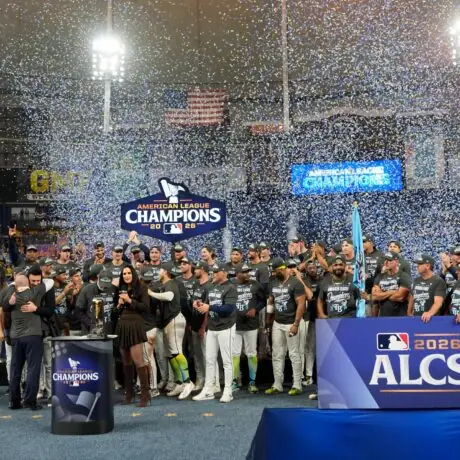
For the White Sox, the stakes are framed differently but are no less significant. Chicago has not won a postseason series in front of its home crowd since the franchise’s 1906 World Series championship, a drought spanning 120 years that the team came tantalizingly close to ending in Game 4 before Cleveland’s sixth-inning rally intervened. A loss in Game 5 would extend that drought yet again and send the Guardians to the American League Championship Series to face the Tampa Bay Rays, who have already secured their spot in the next round.
What’s at Stake in the ALCS
Whichever team wins Saturday’s Game 5 will advance to face the Tampa Bay Rays in the American League Championship Series, with a trip to the World Series on the line. For Cleveland, completing the historic comeback would validate the kind of resilience the Guardians have shown throughout the series, particularly given how quiet their offense had been in the opening two games before Thursday’s explosive sixth inning. For Chicago, closing out the series at home would not only end the franchise’s 120-year home postseason series drought but also reward a pitching staff, led by Burke’s potential Game 5 workload, that has largely kept the Guardians’ lineup in check for stretches of the series.
With pitching plans uncertain on both sides, Williams’ availability for Cleveland and Burke’s workload for Chicago, Game 5 is shaping up as a bullpen-dependent affair likely to hinge on which team’s relief corps can better navigate a lineup that has shown, across four games, the capacity to erupt suddenly after long stretches of quiet.
A Series Defined by Its Momentum Swings
What has made this ALDS matchup particularly compelling is how dramatically momentum has shifted from game to game, rather than settling into a predictable pattern favoring either team. Chicago’s Game 2 comeback, capped by Braden Montgomery’s two-RBI double and a franchise postseason record of 13 consecutive batters retired by reliever Sean Burke, gave the White Sox a commanding 2-0 series lead that appeared to put Cleveland on the brink of elimination. Cleveland’s response in Games 3 and 4 flipped that script entirely, culminating in Thursday’s six-run sixth inning that erased a White Sox lead built on both timely hitting and a bullpen that had largely contained Cleveland’s offense through the series’ opening stretch.
That volatility sets up Game 5 as a genuinely unpredictable contest between two teams that have each shown the capacity to both dominate and completely collapse within the same game, a quality that tends to produce especially tense, closely watched postseason baseball. Neither team’s recent form offers a clear statistical edge heading into Saturday, leaving pitching decisions, Williams’ availability for Cleveland and Burke’s workload for Chicago, as likely the single biggest factors determining which team advances to face Tampa Bay in the ALCS.
Sources
CBS Sports: Guardians vs. White Sox score — Cleveland comes from behind to force decisive ALDS Game 5
ESPN: Guardians 9-5 White Sox (Oct 8, 2026) Final Score
Leon Ramoviq
Primary Author · Editorial Reviewer · Researcher Leon Ramoviq is a digital media researcher, content creator, and primary author at Smashology Media. His work focuses on researching, verifying, and developing stories across entertainment, culture, sports, internet trends, curiosity-driven topics, and viral news. Before publishing, Leon reviews sources, cross-checks key claims, and works to ensure that articles are clear, accurately represented, and based on reliable information rather than unverified social-media speculation. With experience in digital media, graphic design, social media content, and online audience engagement, he brings both an editorial and visual perspective to the stories published on Smashology. Leon is particularly interested in how stories spread online, why certain topics capture public attention, and how complex or trending information can be presented in a simple and engaging format. Role at Smashology As a primary author and researcher, Leon is involved in: • Researching stories and identifying original or reliable sources • Writing and developing articles for Smashology • Reviewing facts, names, dates, quotations, and contextual information • Checking stories for misleading or unsupported claims • Reviewing articles before publication • Following developments and updating stories when meaningful new information becomes available • Maintaining editorial consistency across Smashology content Editorial Approach Leon believes engaging content should not come at the expense of accuracy. His approach is to combine strong storytelling with responsible sourcing, clear attribution, and additional verification when a story originates from social media or rapidly developing online discussions.