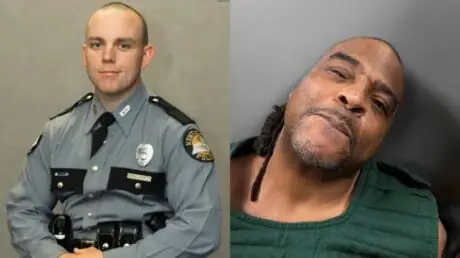
Los Angeles County prosecutors have charged 55-year-old Jose Antonio Zayas with first-degree murder in the fatal shooting of Culver City bus driver Bruce Rodriguez, a case that has drawn renewed attention to the safety of public transit workers after the 42-year-old father and husband was killed while simply refusing to make an unauthorized stop. District Attorney Nathan Hochman announced the charges, which include a special allegation for killing a public transit official and carry a potential sentence of life in prison without the possibility of parole.
A Routine Route Turns Deadly
According to police, the shooting unfolded on October 1, 2026, near the intersection of Centinela and Mitchell avenues in the Mar Vista neighborhood of Los Angeles. Investigators say Zayas tried to get Rodriguez to pull the bus over outside of a designated stop. When Rodriguez refused to comply, police allege that Zayas drew a handgun and fired multiple times, striking and killing the veteran driver. After the shooting, Zayas allegedly retrieved his bicycle from the bus’s front rack and fled the scene on it, according to investigators.
Zayas was arrested the following day, October 2, and booked on suspicion of murder. He now faces one count of first-degree murder with a special allegation tied to the killing of a public transit official, as well as a separate charge of being a felon in possession of a firearm, indicating he was legally barred from owning the weapon used in the attack. He is currently being held without bail as the case proceeds through the court system.
A 12-Year Transit Veteran Remembered
Bruce Rodriguez had worked for Culver City’s transit system for 12 years at the time of his death. District Attorney Hochman described him as “a valued colleague, a beloved father and husband,” language that underscored both his standing within the transit agency and the personal loss felt by his family. Rodriguez’s death has reverberated through Culver City’s transit workforce, a reminder that bus operators, who interact with hundreds of members of the public each day and have limited ability to control who boards or how passengers behave, face a level of occupational risk that is often underappreciated outside the industry.
Transit worker safety has become an increasingly prominent issue nationally in recent years, as assaults on bus and rail operators have been documented with growing frequency across major U.S. cities. Operators are often alone at the front of a vehicle, responsible for managing fare disputes, unruly passengers, and now, in cases like this one, confrontations that can escalate to lethal violence over something as mundane as where a bus is permitted to stop.
Prosecutors Pursue the Toughest Available Charges
Hochman said the charges filed against Zayas represent the most serious his office could bring under the circumstances, and that a conviction would likely result in a sentence of life without the possibility of parole. He framed the prosecution’s approach as a direct message to anyone who might consider targeting a transit worker, saying that those who threaten or harm a transit driver “will face the full force of the law.” The inclusion of the special allegation tied to Rodriguez’s status as a public transit official reflects California law’s recognition that attacks on transit workers performing their duties warrant enhanced penalties, similar to protections extended to other public-facing municipal employees.
The felon-in-possession charge adds another layer to the prosecution, suggesting that Zayas was already barred from legally owning a firearm at the time of the shooting, a detail that is likely to factor into both the criminal case and the broader public conversation about how someone prohibited from possessing a weapon was nonetheless able to carry one onto a public bus and use it against a driver who was simply performing his job.
Calls for Stronger Transit Safety Measures
In the aftermath of the shooting, Los Angeles City Councilwoman Traci Park called on transit agencies across the region to work more closely with drivers and their unions to develop stronger safety plans, including measures aimed at identifying and keeping dangerous individuals off public transit before violence occurs. Her comments reflect a broader push among transit labor advocates, who have long argued that operators need better protection, ranging from reinforced driver compartments and panic buttons to policies that allow drivers more discretion in refusing service to passengers who appear to pose a threat.
Culver City’s transit system, like many municipal bus networks, has grappled with how to balance accessibility and open ridership against growing concerns about operator safety. Incidents like the shooting of Rodriguez tend to accelerate those conversations, as transit agencies face pressure from both labor unions and elected officials to demonstrate concrete action rather than general expressions of concern after a tragedy.
A Case That Resonates Beyond Culver City
Rodriguez’s killing arrives amid a broader national pattern of violence against transit workers that has prompted several cities to examine their own safety protocols. Bus operators occupy a uniquely exposed position within the public transit system: unlike many other public employees, they cannot simply walk away from an escalating confrontation while still performing their job, since doing so would mean abandoning a vehicle full of other passengers. That structural vulnerability has made transit operators a recurring focus of workplace safety advocacy, even as high-profile incidents like the shooting of Rodriguez remain relatively rare compared to the volume of daily interactions transit workers have with the public.
The specific circumstances of this case, a dispute over an unauthorized stop that escalated within moments to gunfire, also raise questions about de-escalation training and the split-second decisions transit operators are forced to make when a passenger or would-be passenger becomes aggressive. Rodriguez’s decision to continue following standard procedure, by not stopping outside a designated location, is precisely the kind of policy-compliant behavior transit agencies expect from their drivers, making the fatal outcome especially difficult for colleagues and safety advocates to reconcile.
What Comes Next in the Case
Zayas has been charged but not yet convicted, and the case will now proceed through the Los Angeles County court system, where prosecutors will need to prove the first-degree murder charge and the accompanying special allegation beyond a reasonable doubt. Given the severity of the charges and the fact that Zayas is being held without bail, the case is likely to draw continued attention as pretrial proceedings unfold in the coming months.
For Culver City’s transit agency and its workforce, the case is likely to remain a touchstone in ongoing conversations about operator safety, regardless of the eventual outcome in court. Advocates like Councilwoman Park are expected to continue pressing for concrete policy changes, while Rodriguez’s family and colleagues navigate the loss of a driver remembered not just for his tenure but for the kind of everyday reliability that rarely draws public notice until it is tragically interrupted.
The Legal Road Ahead
California’s first-degree murder statute requires prosecutors to prove premeditation and deliberation, a standard that can be more difficult to establish than it might initially appear, even in cases where a defendant is captured on surveillance footage or identified by multiple witnesses. Zayas’s defense team, once formally entered into the case, is likely to scrutinize the sequence of events described by police, particularly the question of what transpired in the moments immediately before Zayas allegedly drew his weapon, since that sequence could influence whether the case proceeds as charged or whether a plea negotiation eventually becomes part of the resolution.
The special allegation tied to Rodriguez’s status as a transit worker is itself a relatively specific legal mechanism, reflecting California lawmakers’ recognition that public-facing municipal employees performing essential services face elevated risks that warrant enhanced sentencing provisions. Prosecutors will need to establish not only that Zayas committed the killing but that he did so knowing, or that the law presumes he reasonably should have known, that Rodriguez was acting in his official capacity as a bus operator at the time of the shooting, a detail that appears to be straightforward given that the shooting occurred in the immediate aftermath of Rodriguez’s refusal to make an unauthorized stop while actively driving his route.
A Pattern of Violence Against Transit Workers Nationally
Rodriguez’s death adds to a growing body of incidents involving violence against public transit employees across the United States, a trend that transit unions have flagged with increasing urgency in recent years. Surveys conducted by transit worker advocacy organizations have found that a significant share of bus and rail operators report having experienced some form of assault, threat, or harassment while on duty, ranging from verbal abuse to, in rarer but devastating cases like this one, lethal violence. Those findings have fueled a broader push for legislative and operational reforms, including expanded use of protective barriers between drivers and passengers, more robust reporting systems for threatening behavior, and clearer protocols for when and how drivers are permitted to deviate from standard routes or stop locations in response to safety concerns.
Whether Rodriguez’s death prompts concrete policy changes within Culver City’s transit system specifically remains to be seen, but the case is likely to be cited repeatedly in ongoing advocacy efforts, both locally and as part of the broader national conversation about transit worker safety that has gained momentum amid a steady drumbeat of similar, if less fatal, incidents reported in cities across the country.
Sources
ABC7 Los Angeles: Murder charges filed against Jose Antonio Zayas, man accused of fatally shooting bus driver Bruce Rodriguez in Culver City
Los Angeles County: Los Angeles Man Charged With Murdering Culver City Bus Driver
Leon Ramoviq
Primary Author · Editorial Reviewer · Researcher Leon Ramoviq is a digital media researcher, content creator, and primary author at Smashology Media. His work focuses on researching, verifying, and developing stories across entertainment, culture, sports, internet trends, curiosity-driven topics, and viral news. Before publishing, Leon reviews sources, cross-checks key claims, and works to ensure that articles are clear, accurately represented, and based on reliable information rather than unverified social-media speculation. With experience in digital media, graphic design, social media content, and online audience engagement, he brings both an editorial and visual perspective to the stories published on Smashology. Leon is particularly interested in how stories spread online, why certain topics capture public attention, and how complex or trending information can be presented in a simple and engaging format. Role at Smashology As a primary author and researcher, Leon is involved in: • Researching stories and identifying original or reliable sources • Writing and developing articles for Smashology • Reviewing facts, names, dates, quotations, and contextual information • Checking stories for misleading or unsupported claims • Reviewing articles before publication • Following developments and updating stories when meaningful new information becomes available • Maintaining editorial consistency across Smashology content Editorial Approach Leon believes engaging content should not come at the expense of accuracy. His approach is to combine strong storytelling with responsible sourcing, clear attribution, and additional verification when a story originates from social media or rapidly developing online discussions.