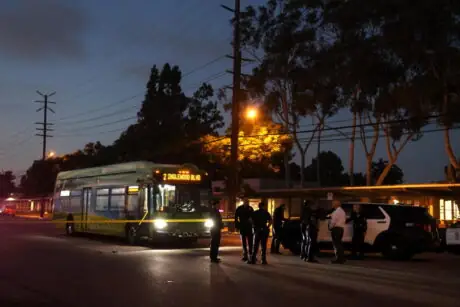
A 15-year-old Detroit boy is facing first-degree murder and felony murder charges after prosecutors say he robbed a 14-year-old of his backpack and then shot him in the head during a predawn confrontation on the city’s west side, a case that has renewed painful questions about juvenile gun violence in a city already grappling with a string of shootings involving teenagers this year.
The 14-year-old victim was found with a gunshot wound to the head in the 7000 block of Brace Street shortly before 2 a.m. on September 13 and later died from his injuries. The accused shooter, also a teenager, evaded arrest for four days before turning himself in at Detroit Public Safety Headquarters, where he was formally taken into custody and charged in connection with the killing.
A Predawn Shooting on the West Side
Detroit police responded to reports of a shooting in the 7000 block of Brace Street at approximately 1:48 a.m. on Sunday, September 13, arriving to find the 14-year-old victim unresponsive with a gunshot wound to the head. He was rushed to a hospital, where he was later pronounced dead, becoming the latest young victim in a city that has seen repeated instances of gun violence claiming the lives of children and teenagers in 2026.
The overnight timing of the shooting — well before dawn on a residential street — has raised questions among neighbors about what two teenagers were doing outside at that hour and how a confrontation between them escalated so quickly into gunfire, though investigators have not publicly detailed everything that transpired before shots were fired.
A Robbery That Turned Deadly
According to prosecutors, the confrontation began as a robbery: the 15-year-old suspect allegedly took the victim’s backpack before producing a handgun and firing, then fled the scene. The alleged targeting of a personal item as mundane as a backpack, followed by a fatal shooting, underscores how quickly a robbery involving teenagers and a firearm can turn lethal, particularly when the parties involved are still minors themselves.
The backpack robbery allegation, if proven in court, would establish the underlying felony that supports the felony murder charge prosecutors have filed against the teen, a legal theory that holds a defendant responsible for a killing that occurs during the commission of certain serious crimes, regardless of whether the killing itself was premeditated.
Four Days at Large
Rather than being apprehended immediately after the shooting, the suspect remained at large for four days before ultimately turning himself in to authorities at Detroit Public Safety Headquarters on September 17. That decision to surrender, rather than continuing to evade law enforcement, may have been influenced by mounting pressure as investigators worked to identify him in the days following the shooting, though the specific circumstances that led to his decision to turn himself in have not been publicly detailed.
Once in custody, the teen was also accused of lying to police during the investigation, resulting in two additional counts of lying to a peace officer being added to the list of charges against him — an allegation that suggests he attempted to mislead investigators about his involvement or whereabouts before ultimately being charged.
The Full Scope of the Charges
The Wayne County Prosecutor’s Office filed an extensive slate of charges against the teen: first-degree murder, felony murder, armed robbery, two counts of lying to a peace officer, and three counts of felony firearm. Together, the charges reflect prosecutors’ view that the shooting was not merely a tragic accident between two young people but a case involving a robbery, a firearm, and subsequent efforts to deceive investigators.
The felony murder and first-degree murder charges filed in tandem give prosecutors multiple legal pathways to secure a conviction, a common strategy in cases where the exact intent behind a killing may be difficult to establish definitively but where the underlying robbery and use of a firearm are well documented through the investigation.
An Arraignment and the Road Ahead
The teen was arraigned on September 23 and remanded to a Juvenile Detention Facility to await further proceedings. Despite his age, the nature and severity of the charges filed against him mean he could ultimately face sentencing as an adult, depending on how the case is designated as it moves through Michigan’s juvenile and adult court systems — a distinction that will significantly shape the potential consequences he faces if convicted.
A probable cause conference was scheduled for September 29, to be conducted via Zoom, where a judge will review whether sufficient evidence exists to proceed with the case against the teen on the charges as filed. That hearing represents one of the first formal tests of the prosecution’s case since the charges were announced.
Juvenile Justice in Michigan
Michigan’s juvenile justice system allows prosecutors to seek what is known as “adult designation” for minors charged with serious violent crimes, a legal mechanism that permits a case to proceed with the possibility of adult sentencing even though the defendant remains a minor at the time of the offense. Given the severity of the charges — particularly the first-degree murder and felony murder counts — the case against the 15-year-old appears positioned to test exactly how far Wayne County prosecutors are willing to pursue adult accountability for a defendant who was himself a young teenager at the time of the shooting.
That tension between the defendant’s youth and the severity of the alleged crime is one that Michigan’s courts have grappled with repeatedly in recent years, as prosecutors balance public safety concerns and the gravity of gun violence against the state’s evolving approach to how the justice system should treat offenders who commit serious crimes while still legally children themselves.
A City Confronting Youth Gun Violence
The killing adds to a difficult pattern in Detroit, where shootings involving teenagers — both as victims and as alleged perpetrators — have continued to draw attention from community leaders, school officials, and law enforcement throughout 2026. A case in which one 14-year-old is killed and another teenager stands accused of pulling the trigger illustrates the particularly tragic dimension of youth gun violence: it is frequently teenagers themselves, rather than adults, who are both the victims and the accused in these cases.
Community advocates who work on violence prevention in Detroit have repeatedly pointed to easy access to firearms among young people as a central driver of cases like this one, arguing that disputes or robberies that might once have ended without serious injury increasingly end in gunfire when a handgun is readily available to a teenager involved in the confrontation.
What Comes Next
As the case proceeds toward the September 29 probable cause conference and beyond, Wayne County prosecutors will need to present evidence supporting each of the charges filed against the teen, including the robbery allegation that underlies the felony murder count and any evidence tied to the lying-to-police charges stemming from his interactions with investigators after he turned himself in.
For the family of the 14-year-old victim, the case’s progression through the Wayne County court system offers the prospect of accountability, even as they continue grieving a son or brother whose life was cut short in circumstances that, according to prosecutors, began with something as ordinary as a backpack and ended in a fatal shooting on a Detroit street before sunrise.
The Weight of a Felony Murder Charge
Felony murder statutes like the one prosecutors are relying on in this case exist precisely for situations where a killing occurs during the commission of another serious crime, allowing prosecutors to pursue a murder conviction even in circumstances where proving premeditation for a standalone first-degree murder charge might be more difficult. By pairing the felony murder count with a direct first-degree murder charge and the underlying armed robbery allegation, Wayne County prosecutors have built a case with multiple layers of legal exposure for the teenage defendant.
That layered charging approach is common in cases involving a robbery gone wrong, since it gives prosecutors flexibility to secure a conviction on whichever theory the evidence best supports once the case reaches trial, rather than relying on a single charge that could hinge entirely on proving the defendant’s specific intent at the moment the gun was fired.
Detroit Public Safety Headquarters and the Decision to Surrender
The suspect’s choice to turn himself in at Detroit Public Safety Headquarters, rather than being taken into custody through a police manhunt, is notable in a case of this severity. Turning oneself in can sometimes be viewed favorably by prosecutors or judges during later proceedings, though the additional charges of lying to a peace officer suggest that whatever cooperation the teen offered upon surrendering did not extend to being fully truthful with investigators about his role in the shooting.
Detroit police have not publicly detailed what led investigators to identify the 15-year-old as a suspect in the four days between the shooting and his surrender, though the swift filing of a comprehensive set of charges immediately after his arraignment suggests investigators had already built a substantial case against him well before he appeared at police headquarters.
Sources
- ClickOnDetroit: Teen charged in fatal shooting of 14-year-old boy on Detroit’s west side
- CBS Detroit: Detroit teen, 15, accused of shooting, killing 14-year-old boy during robbery
Leon Ramoviq
Primary Author · Editorial Reviewer · Researcher Leon Ramoviq is a digital media researcher, content creator, and primary author at Smashology Media. His work focuses on researching, verifying, and developing stories across entertainment, culture, sports, internet trends, curiosity-driven topics, and viral news. Before publishing, Leon reviews sources, cross-checks key claims, and works to ensure that articles are clear, accurately represented, and based on reliable information rather than unverified social-media speculation. With experience in digital media, graphic design, social media content, and online audience engagement, he brings both an editorial and visual perspective to the stories published on Smashology. Leon is particularly interested in how stories spread online, why certain topics capture public attention, and how complex or trending information can be presented in a simple and engaging format. Role at Smashology As a primary author and researcher, Leon is involved in: • Researching stories and identifying original or reliable sources • Writing and developing articles for Smashology • Reviewing facts, names, dates, quotations, and contextual information • Checking stories for misleading or unsupported claims • Reviewing articles before publication • Following developments and updating stories when meaningful new information becomes available • Maintaining editorial consistency across Smashology content Editorial Approach Leon believes engaging content should not come at the expense of accuracy. His approach is to combine strong storytelling with responsible sourcing, clear attribution, and additional verification when a story originates from social media or rapidly developing online discussions.