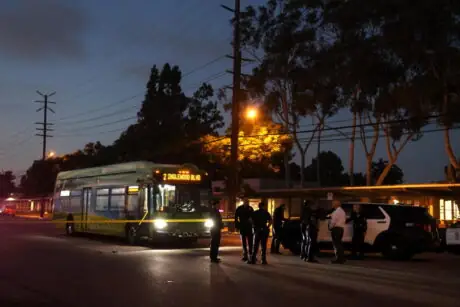
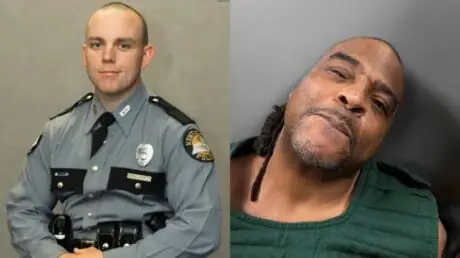
A street fight that began as an arranged confrontation between two women in Miami’s Liberty City neighborhood spiraled into gunfire last month, sending a bullet through the garage door of a nearby home while residents sheltered inside. Miami police have now made a second arrest in the case, charging 37-year-old Taji Akeem Cozart Thrasher with attempted second-degree murder and a string of firearms offenses after identifying him as the man who allegedly opened fire during the brawl.
Thrasher’s arrest on September 24 follows the earlier arrest of 22-year-old Charles Denis Jr. on September 15, bringing the total number of people charged in connection with the August 21 incident to two, even as questions remain about exactly how the confrontation escalated so quickly from a planned fight into gunfire that endangered an entire household.
How the Confrontation Began
According to police, the incident originated when two women arranged to fight one another at a location on Northwest 53rd Street in Liberty City — the kind of pre-planned street confrontation that, while not uncommon in some neighborhoods as a way of settling personal disputes, carries inherent risk of spiraling beyond the control of the original participants once other people become involved. That is precisely what investigators say happened here.
Denis and Thrasher allegedly arrived at the scene along with a third person who was carrying a golf club, according to police. What might have remained a contained physical altercation between the two women instead expanded into a broader, more chaotic confrontation once the men entered the picture, setting the stage for the violence that followed.
The Golf Club Assault
Police allege that Denis used the golf club to strike a woman, causing contusions to her forehead and arm — injuries serious enough to be documented by responding officers as part of the criminal case against him. The use of an improvised weapon like a golf club in what began as a fistfight illustrates how quickly street confrontations arranged between just two people can draw in additional participants and escalate well beyond what either original combatant may have anticipated.
Denis has disputed key elements of the police account, specifically denying that he possessed or provided the firearm that was ultimately used during the incident — a distinction that could prove significant for how prosecutors pursue charges against him separately from Thrasher, who police allege was the one who actually fired the weapon.
Gunfire Erupts
As the brawl continued, police allege Thrasher obtained a handgun and fired a total of five shots: one round into the ground and four more in the direction of a person who was fleeing the scene. Remarkably, given the number of shots fired, the fleeing individual was not struck by any of the gunfire, though the danger created by discharging a firearm multiple times in a residential neighborhood extended well beyond whoever Thrasher was allegedly aiming at.
That danger became starkly evident when one of the rounds struck the garage door of a nearby home, penetrating the structure while residents were inside. Fortunately, no one inside the house was injured by the stray gunfire, but the incident illustrates the real risk that street violence poses to uninvolved bystanders and residents who have no connection to the underlying dispute — people who can find their homes turned into an unintended backdrop for gunfire triggered by an argument that had nothing to do with them.
The Evidence Against Thrasher
Investigators recovered six spent shell casings from the scene, along with documentation of the bullet hole in the garage door, physical evidence that helped establish the trajectory and volume of gunfire during the incident. A witness also identified both Denis and Thrasher through photo lineups conducted by investigators, providing the eyewitness testimony that, combined with the physical evidence, formed the basis for the charges against both men.
The combination of shell casings, documented property damage, and witness identification represents the kind of methodical evidence-gathering that Miami police’s Violent Crimes Unit relied on to build a case strong enough to support the serious charges ultimately filed against Thrasher, whose arrest came more than a month after the initial incident as investigators worked to develop sufficient evidence.
The Charges Thrasher Faces
Thrasher’s charge sheet is extensive: attempted second-degree murder, being a felon in possession of a firearm, using a firearm during the commission of a felony, shooting a deadly missile, improper exhibition of a firearm, and unlawful discharge of a firearm in public. Together, these charges reflect prosecutors’ view that Thrasher’s alleged conduct during the brawl went well beyond a simple altercation and into the territory of attempted homicide, compounded by the fact that he allegedly possessed a firearm despite a prior felony conviction that legally barred him from doing so.
The felon-in-possession charge is particularly consequential given Florida’s sentencing structure for such offenses. Under the state’s well-known “10-20-Life” law, which mandates escalating minimum sentences for crimes involving firearms, Thrasher faces a mandatory minimum of three years in prison simply for the felon-in-possession charge, separate from and in addition to whatever sentence might result from the attempted murder and other charges tied to the actual shooting.
Potential Prison Time
Beyond the mandatory minimum for the firearm possession charge, Thrasher faces up to 15 years in prison specifically for the charge related to shooting into a building — a reference to the round that pierced the nearby home’s garage door and endangered the residents inside. When combined with the attempted second-degree murder charge and the various other firearms offenses, Thrasher is facing the prospect of a lengthy prison sentence if convicted on the full range of charges prosecutors have brought against him.
The severity of the potential sentence reflects how seriously Florida’s justice system treats gunfire directed at fleeing individuals in populated residential areas, particularly when that gunfire results in property damage to occupied homes. Even though no one was physically injured by the shots that struck the garage door, the law recognizes the grave danger inherent in firing a weapon multiple times in a neighborhood where stray rounds can easily strike unintended victims.
A Neighborhood Grappling With Gun Violence
The Liberty City neighborhood, like many urban communities across South Florida, has periodically grappled with issues of gun violence, and incidents like this one — where a personal dispute between individuals escalates into gunfire that threatens uninvolved residents — underscore the ripple effects that street-level conflicts can have on entire blocks. Residents on Northwest 53rd Street who found a bullet lodged in their garage door are left to reckon with just how close random violence came to their own household on an otherwise ordinary day in August.
Miami police’s Violent Crimes Unit, which led the investigation and ultimately secured Thrasher’s arrest, has continued to prioritize cases involving gunfire in residential areas, recognizing that even shootings that don’t result in injuries carry the potential for tragic outcomes and represent a significant threat to public safety that warrants thorough investigation and prosecution.
What Comes Next for Both Defendants
With both Denis and Thrasher now in custody and facing charges, the case will proceed through Miami-Dade County’s criminal court system, where prosecutors will need to present the physical evidence, witness identifications, and any additional testimony gathered during the investigation to support the charges against each man. Denis’s disputed claim regarding the firearm — specifically his denial that he possessed or provided the weapon — could become a central point of contention as his case moves forward, potentially shaping how his culpability is assessed relative to Thrasher’s more direct alleged role in the shooting itself.
For the women whose planned confrontation set the chain of events in motion, and for the residents whose home was struck by gunfire through no fault of their own, the case serves as a stark reminder of how quickly an arranged street fight can spiral into potentially deadly violence that extends far beyond the original participants, implicating an entire neighborhood in the fallout of a dispute they had no part in creating.
The Broader Pattern of Arranged Street Fights
Miami is far from alone in seeing informal, arranged confrontations spiral into gunfire. Across South Florida and many other urban areas, disputes that once might have been settled with fists alone increasingly draw in armed third parties, transforming what participants may have envisioned as a contained physical fight into a shooting that can claim innocent bystanders. Law enforcement officials and community advocates have long warned that the presence of even one firearm at a planned confrontation dramatically raises the odds of someone being seriously hurt or killed, regardless of what the original combatants intended.
That dynamic appears to have played out in Liberty City, where a dispute between two women drew in male associates, at least one improvised weapon in the golf club, and ultimately a handgun fired multiple times in a residential area. Community organizers who work on violence-interruption programs in Miami-Dade County have repeatedly pointed to exactly this kind of escalation pattern — personal disputes that balloon into group confrontations before someone introduces a firearm — as one of the most common pathways to non-fatal and fatal shootings in the county’s urban core.
How Investigators Build Cases Like This One
The month-long gap between the August 21 incident and Thrasher’s September 24 arrest illustrates how methodically Miami’s Violent Crimes Unit typically approaches cases involving multiple potential suspects and incomplete initial information. Rather than rushing to make an arrest based on partial evidence, investigators spent the intervening weeks collecting physical evidence — the shell casings and the damaged garage door — while also working to secure witness cooperation and complete photo lineup identifications that could stand up to scrutiny in court.
That investigative patience often proves critical to securing convictions in cases where the initial scene is chaotic and witnesses may be reluctant to come forward immediately after a shooting. By the time Thrasher was taken into custody, prosecutors had a case built on multiple corroborating pieces of evidence rather than relying solely on any single witness account, a strategy that tends to hold up better as cases move through preliminary hearings and eventually toward trial or plea negotiations.
Sources
Leon Ramoviq
Primary Author · Editorial Reviewer · Researcher Leon Ramoviq is a digital media researcher, content creator, and primary author at Smashology Media. His work focuses on researching, verifying, and developing stories across entertainment, culture, sports, internet trends, curiosity-driven topics, and viral news. Before publishing, Leon reviews sources, cross-checks key claims, and works to ensure that articles are clear, accurately represented, and based on reliable information rather than unverified social-media speculation. With experience in digital media, graphic design, social media content, and online audience engagement, he brings both an editorial and visual perspective to the stories published on Smashology. Leon is particularly interested in how stories spread online, why certain topics capture public attention, and how complex or trending information can be presented in a simple and engaging format. Role at Smashology As a primary author and researcher, Leon is involved in: • Researching stories and identifying original or reliable sources • Writing and developing articles for Smashology • Reviewing facts, names, dates, quotations, and contextual information • Checking stories for misleading or unsupported claims • Reviewing articles before publication • Following developments and updating stories when meaningful new information becomes available • Maintaining editorial consistency across Smashology content Editorial Approach Leon believes engaging content should not come at the expense of accuracy. His approach is to combine strong storytelling with responsible sourcing, clear attribution, and additional verification when a story originates from social media or rapidly developing online discussions.