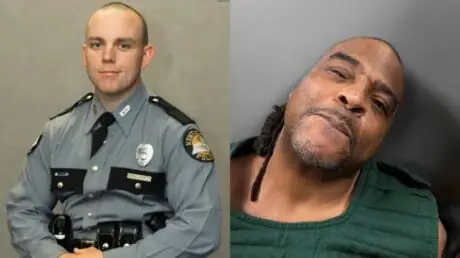
What was initially treated as a possible suicide has turned into a homicide investigation with two men now under arrest, after Jackson, Mississippi police testified that the hanging death of Tasia Fortune was staged to look like something it was not. A detective told a preliminary hearing this past week that the medical examiner’s professional opinion points to a killing rooted in a drug dispute — one so violent that witnesses say Fortune “fought hard before she was killed.”
The case, which began with the discovery of Fortune’s body hanging from a tree behind an abandoned home in August, has developed steadily over the following weeks, with one suspect arrested in mid-September and a second arrested just this week. A third arrest warrant remains outstanding. The next hearing is scheduled for September 30, and the exact cause of death has still not been publicly disclosed.
Who Was Tasia Fortune
Tasia Fortune was a mother of four who, according to her mother Christy Spivey, had been working to turn her life around after a period of homelessness. Spivey has said her daughter was actively trying to improve her circumstances, including discussing plans to start a cleaning business — the kind of forward-looking detail that has added an extra layer of grief for a family now grappling with the reality that her death may have been a targeted killing rather than a tragic accident or act of despair.
That contrast — a woman reportedly working toward stability, found dead in a manner initially consistent with suicide — is part of what has made this case resonate so strongly in the Jackson community and beyond. Family members and advocates have pushed for a thorough investigation from the moment her body was discovered, a push that appears to have been vindicated by the direction the case has since taken.
Discovery of the Body
Fortune’s body was found on August 3, 2026, hanging from a tree behind an abandoned home in Jackson. The location itself — an abandoned property rather than her own residence — was an early detail that raised questions among investigators and community members alike, since staged suicide scenes are frequently constructed in isolated or abandoned locations specifically to avoid witnesses and to delay discovery.
In the weeks following the discovery, investigators worked to build a case that would eventually lead them away from an initial suicide classification and toward a homicide investigation. That shift, from apparent self-inflicted death to active murder case, represents one of the most significant findings to emerge from the Jackson Police Department’s work this year, and it hinged heavily on forensic analysis performed by the medical examiner’s office.
Why Police Say the Hanging Was Staged
At a preliminary hearing held Friday, September 25, Jackson Police Detective Samuel Dukes testified directly that investigators believe the hanging was “staged” — a conclusion he said was based on the medical examiner’s professional opinion rather than circumstantial guesswork alone. Medical examiners can often distinguish between injuries consistent with self-inflicted hanging and those suggesting a body was hung post-mortem or under different circumstances, based on factors like ligature marks, the presence of other injuries, and the physical mechanics of how a body would need to be positioned.
Detective Dukes also testified that the motive appears to trace back to a drug-related dispute, and that witness accounts indicate Fortune did not go quietly — she “fought hard before she was killed,” according to his testimony. That detail suggests a violent, resisted struggle preceded her death, a picture starkly different from the passive, solitary circumstances typically associated with suicide by hanging.
The Arrests
The first arrest in the case came in mid-September, when 51-year-old Jarques Ratliff was taken into custody and charged with murder. Ratliff has pleaded not guilty and is being held without bond as the case proceeds. During Friday’s hearing, Ratliff reportedly blurted out in court that he and Fortune were friends — an unsolicited statement that, whether intended as a defense or simply an emotional outburst, has become a notable moment in the unfolding proceedings.
A second suspect, 25-year-old Earnest Lloyd Jr., was arrested just this week on murder charges as well, expanding the case from a single defendant to multiple people now facing homicide charges in connection with Fortune’s death. The age gap between the two men — more than two decades — raises questions about how they are connected to each other and to Fortune, questions that have not yet been publicly answered as the case remains in its preliminary stages.
Beyond Ratliff and Lloyd, police have indicated that a third arrest warrant has been issued for an additional, as-yet-unnamed suspect, suggesting investigators believe more than two people were involved in either the killing itself or the effort to stage the scene afterward. That detail points to a case that may ultimately involve a broader group dynamic tied to whatever drug dispute investigators believe triggered the killing, rather than a simple two-person altercation that escalated to violence.
What “Staged” Means for the Investigation
The staging allegation carries significant legal and investigative weight beyond simply establishing that a crime occurred. Staging a death scene requires deliberate, coordinated action after the fact — moving a body, arranging a hanging apparatus, and positioning the scene to withstand at least an initial law enforcement review. That level of premeditation and effort typically points prosecutors toward more serious charges and can undermine any later claims of accidental death or self-defense, since staging inherently demonstrates consciousness of guilt and an intent to deceive investigators.
For a case to proceed from an apparent suicide to a fully staged homicide, investigators typically need to identify specific physical inconsistencies: for example, ligature marks that don’t match a self-inflicted hanging, evidence of a struggle at a location other than where the body was found, or physical injuries that predate the hanging itself and could not have resulted from it. While the exact forensic details supporting the “staged” determination have not been made fully public, Detective Dukes’ testimony that the conclusion rests on the medical examiner’s assessment suggests exactly this kind of physical evidence is central to the prosecution’s case.
The Drug Dispute Angle
Detective Dukes’ testimony connecting the killing to a drug-related dispute opens up a range of possible scenarios investigators may be working through, from a dispute over money or product to retaliation over a prior conflict within a local drug network. Jackson, like many mid-sized American cities, has grappled with drug-related violence tied to competition and disputes over territory or debts, and homicides stemming from these disputes often involve multiple participants exactly as this case now appears to.
The detail that Fortune “fought hard” before her death also suggests the confrontation was neither quick nor one-sided — a prolonged struggle that could have generated significant physical evidence at the scene of the actual killing, separate from the location where her body was ultimately discovered and staged. Investigators will likely be working to identify that original scene, if they have not already, since it may hold considerably more forensic evidence than the abandoned property where the body was found.
What Happens Next
The preliminary hearing is set to resume on September 30, when additional testimony and evidence are expected to be presented as prosecutors work to establish probable cause to proceed toward trial for both Ratliff and Lloyd. That hearing will likely provide further detail about the specific forensic findings behind the staging determination, the nature of the alleged drug dispute, and how prosecutors plan to connect each defendant to the killing itself versus the staging that followed.
The outstanding warrant for a third suspect also means the case is likely to continue expanding in the coming weeks, with additional arrests possible as investigators work to identify and locate whoever else may have been involved. For Fortune’s family, including her mother Christy Spivey, the case represents a difficult but important vindication of their insistence, from the earliest days after her death, that something more than a simple suicide had occurred behind that abandoned Jackson home.
How Staged-Scene Homicides Typically Unravel
Cases like this one rarely fall apart in a single dramatic moment. Instead, they tend to unravel through a slow accumulation of small inconsistencies that investigators notice during the initial death scene review and then build on during autopsy and follow-up interviews. A staged hanging, in particular, is one of the more difficult scenes to fabricate convincingly, because it requires the person or people responsible to correctly replicate not just the visual appearance of a hanging but the physical forces involved — the direction and depth of ligature marks, the pattern of bruising, and the position of the body relative to whatever it was allegedly suspended from.
Medical examiners are trained to look for a specific set of red flags that distinguish a genuine suicide by hanging from a staged scene. These can include ligature marks that don’t match the type of material found at the scene, injuries that appear to have occurred before the body was suspended rather than as a result of the hanging itself, and the absence of certain physiological indicators that are typically present in true self-inflicted hangings. Investigators also frequently look at indirect evidence: whether the location makes sense for how the person could have gotten there on their own, whether personal items were left in a way consistent with a deliberate act, and whether any surveillance footage, cell phone data, or witness statements contradict the initial appearance of the scene.
In Fortune’s case, the combination of the abandoned-property location, the medical examiner’s forensic findings, and eventual witness cooperation appears to have been enough to move Jackson investigators from an initial suicide classification to a full homicide prosecution against multiple defendants. That progression — from a scene designed to discourage further inquiry to a multi-defendant murder case moving through the courts — reflects the kind of dogged follow-up investigative work that staged-scene cases require, since the initial appearance of the crime scene is, by design, meant to close off exactly that kind of scrutiny.
The Broader Pattern of Staged Deaths in Drug-Related Cases
Law enforcement officials and criminologists who study drug-related violence have noted that staging a death to resemble a suicide or accident is a recurring tactic in cases connected to the drug trade, particularly when those responsible have some kind of ongoing relationship or history with the victim that they hope investigators will overlook. Unlike a random act of violence, a staged scene requires forethought, access to the victim’s body after death, and often some knowledge of the victim’s personal circumstances that could make a suicide narrative seem plausible to people unfamiliar with the victim’s actual state of mind.
That dynamic is part of what makes Fortune’s case so painful for her family. Christy Spivey’s account of her daughter’s forward-looking plans — including her discussions about starting a cleaning business — directly undercuts any narrative that Fortune was in a place of hopelessness consistent with suicide. Family members in these cases often serve as a critical check against premature case closure, providing investigators with context about a victim’s mental state and circumstances that can prompt a second look at a death that might otherwise have been filed away without further scrutiny.
Sources
- PBS NewsHour: Mississippi police say Tasia Fortune’s hanging was “staged” after her death in a drug dispute
- NBC News: Police believe Tasia Fortune’s hanging was staged as new details revealed in court
- CNN: Tasia Fortune’s hanging was “staged” after her death in a drug dispute, Mississippi police say
Leon Ramoviq
Primary Author · Editorial Reviewer · Researcher Leon Ramoviq is a digital media researcher, content creator, and primary author at Smashology Media. His work focuses on researching, verifying, and developing stories across entertainment, culture, sports, internet trends, curiosity-driven topics, and viral news. Before publishing, Leon reviews sources, cross-checks key claims, and works to ensure that articles are clear, accurately represented, and based on reliable information rather than unverified social-media speculation. With experience in digital media, graphic design, social media content, and online audience engagement, he brings both an editorial and visual perspective to the stories published on Smashology. Leon is particularly interested in how stories spread online, why certain topics capture public attention, and how complex or trending information can be presented in a simple and engaging format. Role at Smashology As a primary author and researcher, Leon is involved in: • Researching stories and identifying original or reliable sources • Writing and developing articles for Smashology • Reviewing facts, names, dates, quotations, and contextual information • Checking stories for misleading or unsupported claims • Reviewing articles before publication • Following developments and updating stories when meaningful new information becomes available • Maintaining editorial consistency across Smashology content Editorial Approach Leon believes engaging content should not come at the expense of accuracy. His approach is to combine strong storytelling with responsible sourcing, clear attribution, and additional verification when a story originates from social media or rapidly developing online discussions.