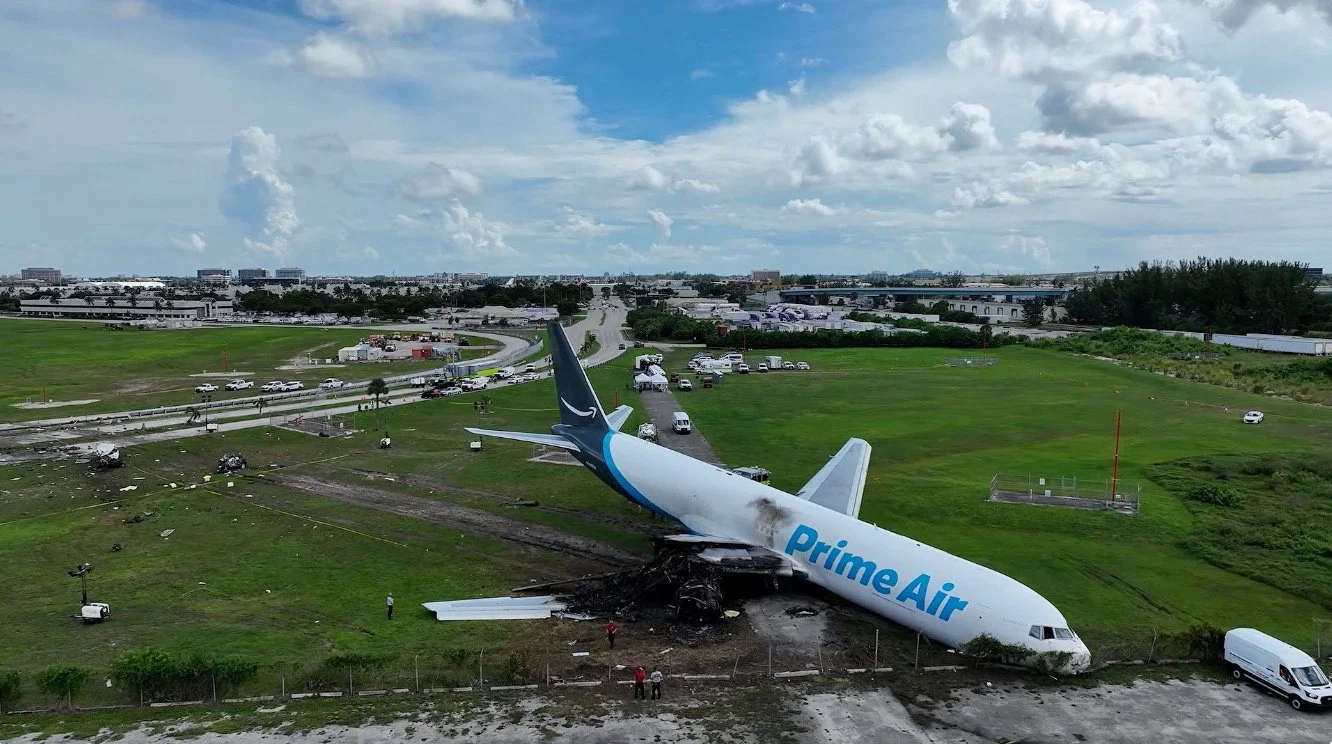
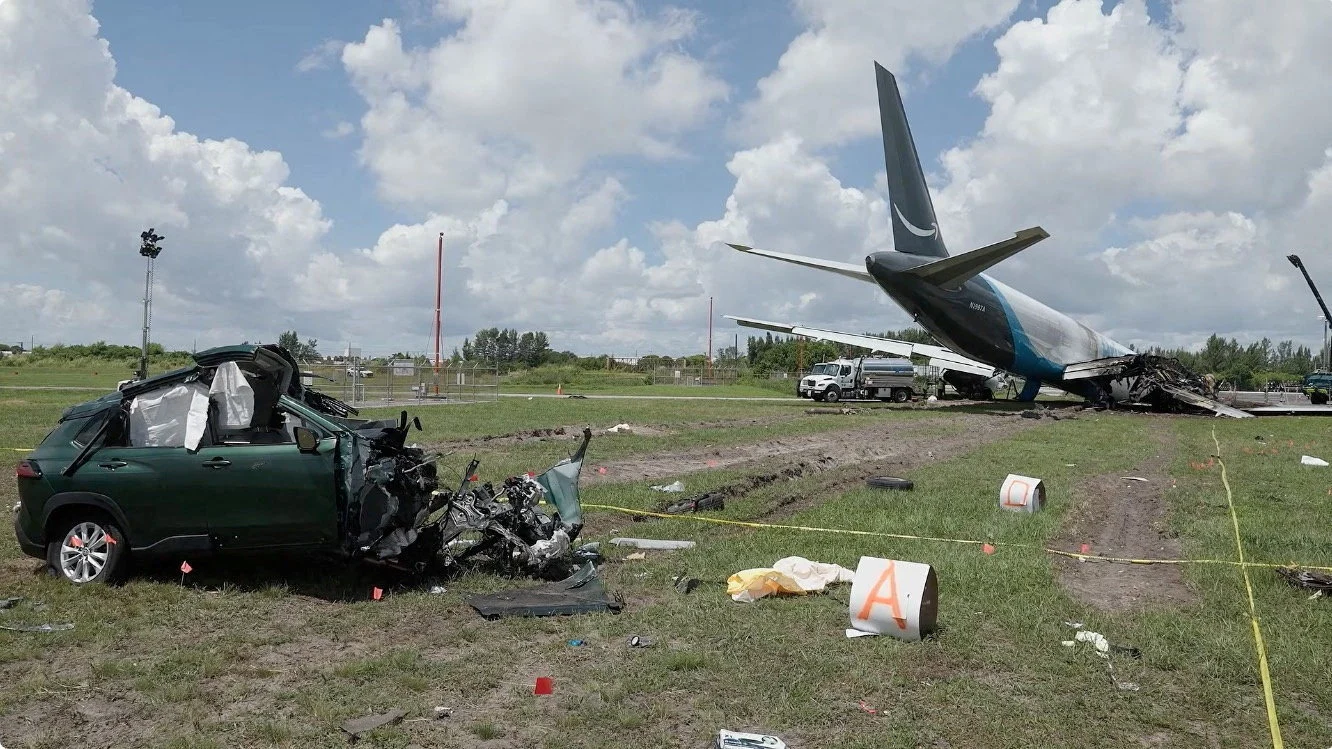
The Amazon cargo plane crash in Miami killed five people on the ground after a Boeing 767 operated by 21 Air overran the runway at Miami International Airport on Sunday, September 6, and slammed into a van carrying workers from a plane-cleaning company. The aircraft, flying under contract for Amazon as Prime Air Flight 7598, then struck a compact SUV as it slid across a public road and caught fire.
Cockpit recordings reveal repeated warnings
According to a summary of cockpit voice recordings released this week by the National Transportation Safety Board, one of the pilots repeatedly warned the other that the aircraft was coming in “too fast,” with the warnings continuing for nearly two minutes before impact. The receiving pilot never gave what investigators described as “a consistent verbal response.” Automated “too low terrain” callouts also sounded four times in the cockpit before touchdown.
Flight-tracking data reviewed alongside the NTSB summary suggests the plane was already well down the runway, nearly halfway along its 9,360-foot length, when its landing gear first touched down, sharply reducing the distance left to stop. Investigators say key braking systems, including the thrust reversers and speed brakes, did not deploy as the jet barreled roughly 1,300 feet past the end of the runway.
Scrutiny turns to 21 Air’s safety culture
The crash has renewed scrutiny of safety practices at 21 Air, the North Carolina-based carrier that has flown packages for Amazon since 2024, with former pilots reportedly having raised concerns about the airline’s culture before the accident. Aviation safety experts say the crew had multiple options to correct course, including extending spoilers, cutting the throttles, lowering the landing gear, or simply aborting the landing to circle around and try again.
A wrongful death lawsuit filed on behalf of victims alleges that corporate pressure to maintain delivery schedules contributed to the pilots pressing ahead with an unstable approach rather than going around. Amazon has not named any executives responsible for scheduling at 21 Air. The investigation remains ongoing as authorities continue reviewing flight data and pilot accounts.
Source: NPR
Leon Ramoviq
Primary Author · Editorial Reviewer · Researcher Leon Ramoviq is a digital media researcher, content creator, and primary author at Smashology Media. His work focuses on researching, verifying, and developing stories across entertainment, culture, sports, internet trends, curiosity-driven topics, and viral news. Before publishing, Leon reviews sources, cross-checks key claims, and works to ensure that articles are clear, accurately represented, and based on reliable information rather than unverified social-media speculation. With experience in digital media, graphic design, social media content, and online audience engagement, he brings both an editorial and visual perspective to the stories published on Smashology. Leon is particularly interested in how stories spread online, why certain topics capture public attention, and how complex or trending information can be presented in a simple and engaging format. Role at Smashology As a primary author and researcher, Leon is involved in: • Researching stories and identifying original or reliable sources • Writing and developing articles for Smashology • Reviewing facts, names, dates, quotations, and contextual information • Checking stories for misleading or unsupported claims • Reviewing articles before publication • Following developments and updating stories when meaningful new information becomes available • Maintaining editorial consistency across Smashology content Editorial Approach Leon believes engaging content should not come at the expense of accuracy. His approach is to combine strong storytelling with responsible sourcing, clear attribution, and additional verification when a story originates from social media or rapidly developing online discussions.