Updated August 14, 2026.
A Los Angeles judge has ordered singer David Anthony Burke, known professionally as D4vd, to stand trial on charges connected to the death of 14-year-old Celeste Rivas Hernandez. The July 27 ruling followed a five-day preliminary hearing and means the judge found enough evidence for the felony case to continue. It is not a finding that Burke is guilty.
Burke, 21, has pleaded not guilty. He is charged with murder, continuous sexual abuse of a child under 14 and unlawful mutilation of human remains. He remains held without bail and is scheduled to return to court for a post-preliminary arraignment on August 31, according to the Los Angeles County District Attorney’s Office.
What the judge decided—and what she did not
Judge Charlaine Olmedo ruled that prosecutors had established probable cause to hold Burke for trial on the filed charges. She also found probable cause for special-circumstance allegations involving lying in wait, financial gain and the killing of a potential witness.
A preliminary hearing has a narrower purpose than a criminal trial. The California Courts Self-Help Guide explains that a judge decides whether there is enough evidence for a felony case to move forward; the hearing does not determine guilt. At trial, prosecutors must prove the charges beyond a reasonable doubt, and Burke retains the presumption of innocence unless and until a jury or court finds him guilty.
The special-circumstance findings make Burke potentially eligible for the death penalty under California law. Prosecutors said after the hearing that they had not yet decided whether to seek it. Eligibility does not mean that sentence has been requested or imposed.
How the case began
Celeste’s remains were discovered on September 8, 2025 in the front trunk of a Tesla registered to Burke after the vehicle had been taken to a Hollywood tow yard. The Los Angeles Police Department publicly confirmed her identity and the connection to the vehicle while its Robbery-Homicide Division investigated her death.
Prosecutors allege Celeste was killed on or about April 23, 2025, months before her remains were found. Burke was arrested in April 2026 and charged shortly afterward. His defense attorneys have denied that he killed Celeste or caused her death.
Evidence described at the preliminary hearing
Because this is an active prosecution, the evidence publicly discussed so far should be understood as testimony and allegations presented before trial—not proven facts from a verdict.
According to reporting from the Associated Press and the District Attorney’s summary, prosecutors presented text messages that they say documented a relationship between Burke and Celeste and an argument shortly before her death. Investigators also testified about purchase records for tools and other items obtained after the alleged killing.
A DNA analyst testified that samples from apparent blood stains recovered in the garage of Burke’s Hollywood home strongly matched Celeste. Prosecutors also presented digital, financial and location evidence that they say connects Burke to the alleged crimes. The defense cross-examined prosecution witnesses during the hearing and has maintained that the evidence at trial will show Burke did not kill Celeste.
The preliminary hearing included disturbing evidence, but graphic detail is not necessary to explain the ruling. The central procedural fact is that the judge found a sufficient basis for a trial, where the evidence can be challenged under the higher burden required for conviction.
What happens next
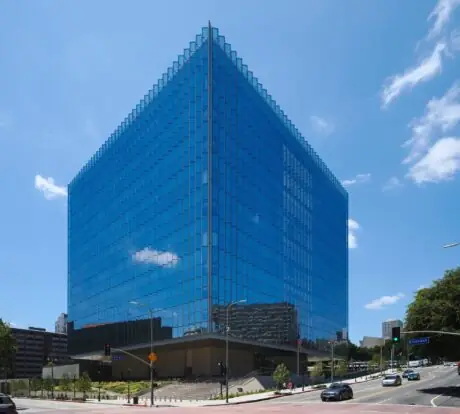
Burke’s next scheduled appearance is an August 31 post-preliminary arraignment at the Foltz Criminal Justice Center. At that stage, the charges on which he was held to answer can be formally addressed and the court can begin setting the next schedule. No trial date had been announced as of August 14.
Future dates can change because of motions, discovery disputes, scheduling needs or requests from either side. A trial date should therefore be reported only after it appears in a court announcement or reliable courtroom coverage.
Why careful language matters in this case
This case concerns an unproven prosecution and a child victim. Headlines that state allegations as established facts can mislead readers and undermine the presumption of innocence. At the same time, minimizing the court’s ruling or misstating Burke’s custody status would also be inaccurate.
Reliable updates should distinguish among four things: what police have confirmed, what prosecutors allege, what witnesses testified to at the preliminary hearing and what the judge actually ruled. Social-media claims or purported leaks that cannot be traced to court proceedings or named authorities should not be treated as evidence.
Current case status
- Defendant: David Anthony Burke, professionally known as D4vd.
- Plea: Not guilty.
- Charges proceeding toward trial: Murder, continuous sexual abuse of a child under 14 and unlawful mutilation of human remains.
- Custody: Held without bail.
- Next scheduled hearing: Post-preliminary arraignment on August 31, 2026.
- Trial date: Not yet announced as of August 14, 2026.
What Smashology verified in the court record
This is an active criminal case. We separated procedural facts from allegations described by prosecutors and from questions that can only be decided at trial. The Los Angeles County District Attorney’s release summarizes the preliminary hearing; it is not a verdict or a complete transcript.
| Statement | Classification | Why |
|---|---|---|
| A judge ordered David Anthony Burke to stand trial. | Confirmed procedural fact. | The District Attorney and Associated Press reported the ruling after a five-day preliminary hearing. |
| The ruling proves that Burke committed murder. | False. | A preliminary hearing determines whether sufficient evidence exists to continue the prosecution. Guilt must be decided under the higher trial standard. |
| Prosecutors presented purchase records, DNA evidence and testimony about the victim’s movements. | Attributed allegation/evidence summary. | The District Attorney described this material as part of the prosecution’s case. The defense can challenge admissibility, interpretation and weight. |
| Every allegation in the complaint has already been proven. | False. | A complaint states charges and allegations. It is not a judicial finding that each asserted fact occurred. |
| The public sources answer every question about the case. | False. | The complete evidentiary record, defense case and trial rulings are not contained in a press release. |
The procedural timeline
- Investigation: police investigated after Celeste Rivas Hernandez’s remains were discovered in September 2025.
- Charging: prosecutors filed criminal allegations. A charge begins a case; it does not establish guilt.
- Preliminary hearing: prosecutors presented witnesses and evidence to show there was enough cause for the case to proceed.
- Order to stand trial: the judge found the required preliminary threshold was met.
- Post-preliminary arraignment and pretrial litigation: the parties can address pleas, discovery, evidence and motions before any trial.
- Trial, plea or dismissal: the case can end in several ways. Until then, the presumption of innocence remains.
Questions the ruling does not resolve
- Which exhibits and testimony will ultimately be admitted at trial?
- How will the defense challenge the prosecution’s chronology and forensic interpretations?
- Will the charging allegations change before trial?
- Will the case be resolved by trial, plea agreement or another procedure?
Those are not gaps that responsible reporting should fill with guesses. Future updates should identify the date and document behind any change, and older versions should not be silently rewritten as though later events were known from the beginning.
How to read coverage of an active case
- Look for verbs such as “alleged,” “testified,” “charged” and “the judge found probable cause.” They describe different levels of proof.
- Prefer court documents and named on-record reporting over screenshots of unsourced posts.
- Check the publication date. A headline about an earlier hearing may no longer reflect the current posture.
- Avoid claims about motive unless they are explicitly attributed to evidence presented in court.
- Do not treat popularity, musical lyrics or online rumor as proof of a criminal act.
Method note: Smashology reviewed the District Attorney’s published case update, the police investigation notice, California’s public explanation of pretrial procedure and Associated Press reporting. We did not attend the hearing and have not reviewed a complete certified transcript. All charges remain allegations unless proved in court.
Sources
- Los Angeles County District Attorney: July 27 case update
- Associated Press: Judge rules D4vd must stand trial
- Los Angeles Police Department: Celeste Rivas Hernandez investigation
- California Courts: What a preliminary hearing means
Correction and update note: This article was substantially rewritten on August 14, 2026 to add authoritative sources, procedural context and the defense position. An earlier version incorrectly stated that Burke was free on bail; he is being held without bail. The headline and article were also revised to make clear that the court found probable cause for a trial, not guilt.
Leon Ramoviq
Primary Author · Editorial Reviewer · Researcher Leon Ramoviq is a digital media researcher, content creator, and primary author at Smashology Media. His work focuses on researching, verifying, and developing stories across entertainment, culture, sports, internet trends, curiosity-driven topics, and viral news. Before publishing, Leon reviews sources, cross-checks key claims, and works to ensure that articles are clear, accurately represented, and based on reliable information rather than unverified social-media speculation. With experience in digital media, graphic design, social media content, and online audience engagement, he brings both an editorial and visual perspective to the stories published on Smashology. Leon is particularly interested in how stories spread online, why certain topics capture public attention, and how complex or trending information can be presented in a simple and engaging format. Role at Smashology As a primary author and researcher, Leon is involved in: • Researching stories and identifying original or reliable sources • Writing and developing articles for Smashology • Reviewing facts, names, dates, quotations, and contextual information • Checking stories for misleading or unsupported claims • Reviewing articles before publication • Following developments and updating stories when meaningful new information becomes available • Maintaining editorial consistency across Smashology content Editorial Approach Leon believes engaging content should not come at the expense of accuracy. His approach is to combine strong storytelling with responsible sourcing, clear attribution, and additional verification when a story originates from social media or rapidly developing online discussions.