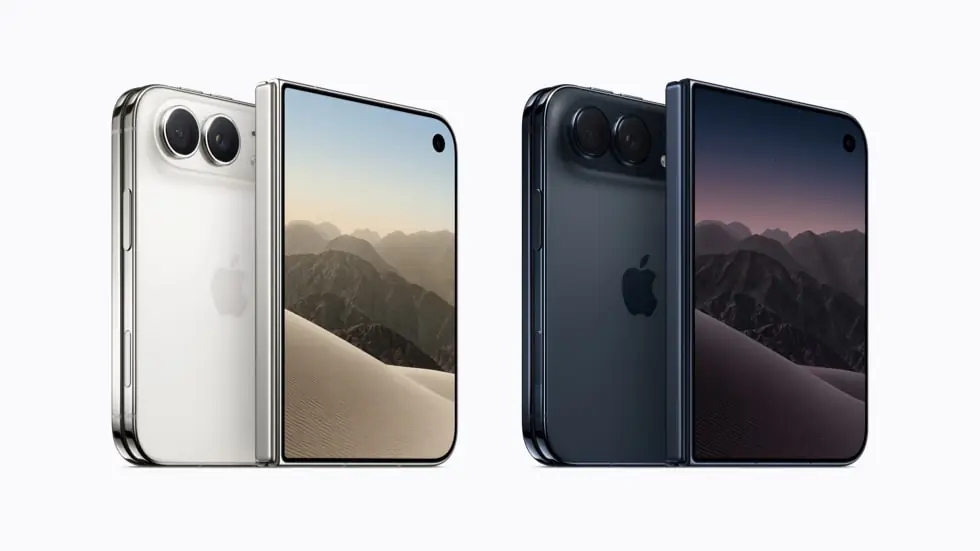
Apple has unveiled the iPhone Duo, its first foldable iPhone, with a 7.6-inch inner display, a 5.4-inch outer screen and a starting price of $1,999.
Preorders are scheduled to open on October 16, 2026, with availability beginning October 23. The device is Apple’s clearest attempt yet to combine an iPhone and a small tablet in one product—but the launch specifications also raise practical questions about price, durability, battery life and who actually needs a folding phone.
iPhone Duo price and release date
- Starting price: $1,999 in the United States
- Storage: 256GB, 512GB, 1TB and 2TB
- Preorders: October 16, 2026
- Availability: October 23, 2026
Regional prices, carrier offers and trade-in values will vary. The $1,999 figure is Apple’s US starting price before tax, and higher storage configurations will cost more.
Two displays, one foldable design
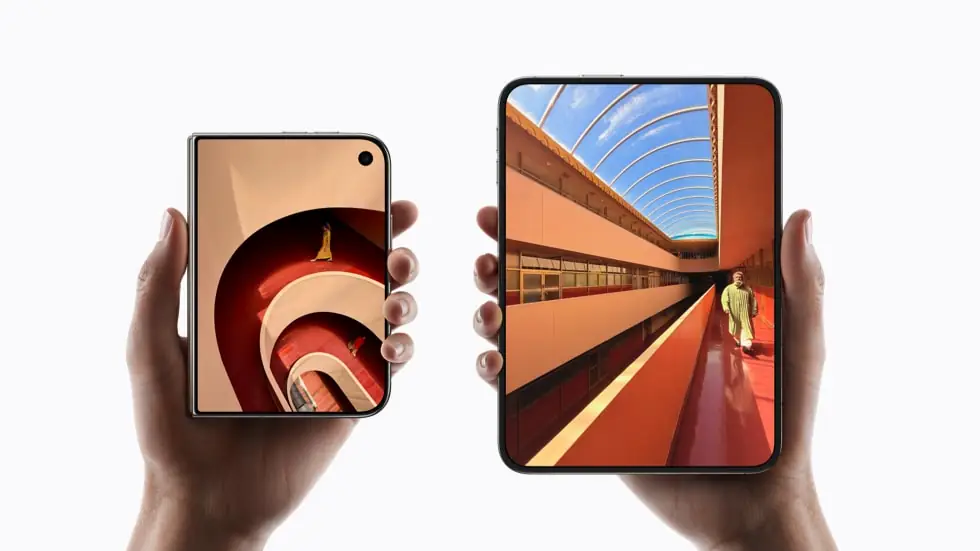
When closed, the Duo uses a 5.4-inch outer display intended for familiar one-handed tasks. Opening the device reveals a 7.6-inch inner display designed for video, reading, games and multitasking. Apple says the larger canvas can show multiple apps and layouts adapted for the foldable form.
The central engineering challenge is the hinge and crease. Apple emphasizes the hinge design and durability in its launch material, while early hands-on reports say the crease remains visible but is relatively subtle. That first impression is useful, but it is not a substitute for months of independent wear testing. Foldable screens contain more moving parts and softer internal display layers than conventional slab phones.
The Duo carries an IP68 rating for dust and water resistance, according to Apple. Buyers should still follow Apple’s handling guidance; an ingress rating does not make a phone damage-proof, and damage terms can differ from resistance claims.
Cameras: two 48-megapixel rear sensors
Apple lists a 48-megapixel Fusion Main camera and a 48-megapixel Ultra Wide camera. The system is designed to cover everyday wide-angle photography, higher-resolution capture and broader scenes without adding a large array of rear lenses.
The important distinction is between hardware specifications and image quality. Resolution alone does not determine detail, low-light performance, motion handling or skin tones. Those depend on sensor size, optics and Apple’s image-processing pipeline. Independent camera comparisons will be more informative once retail units are available.
A20 Pro, cooling and two batteries
The Duo runs on Apple’s A20 Pro chip and uses a vapor chamber for thermal management. Apple also describes a dual-battery design, with cells distributed across the two halves of the phone. That arrangement is intended to use internal space efficiently while balancing the device when opened.
Apple claims up to 31 hours of video playback using the inner display and up to 44 hours using the outer display, along with a separate mixed-use estimate. These are manufacturer test results from controlled conditions. Real-world endurance will vary with brightness, signal strength, camera use, gaming, background activity and how often the larger screen is used.
The phone also uses Apple’s C2 modem and supports Wi-Fi 7, Bluetooth 6 and Thread. Apple says the device is eSIM-only worldwide, so prospective buyers should confirm carrier support before ordering—especially when traveling or moving a number from a physical SIM.
Touch ID returns, and Apple Pencil support arrives
Instead of relying only on Face ID, Apple places Touch ID in the side button. A side-mounted fingerprint reader can be practical on a folding design because it remains accessible in both open and closed positions.
The Duo is also the first iPhone announced with Apple Pencil support. Apple says compatibility with the USB-C Apple Pencil will arrive later in the year. The feature could appeal to note-takers and illustrators, but buyers should wait for Apple’s final software details and independent testing before assuming the inner display will replace an iPad for sustained drawing work.
iOS 27 and foldable multitasking
iOS 27 introduces layouts built for the larger internal display, including expanded app views and multitasking behavior. The value of the hardware will depend heavily on how consistently Apple and third-party developers adapt their apps. A 7.6-inch screen is most useful when software takes advantage of the extra space rather than simply enlarging a phone interface.
Apple is also tying the device to its latest Siri and on-device AI features. As with any launch-day software promise, the safest approach is to distinguish features available at release from those scheduled for later updates.
Confirmed details versus claims still to test
| Detail | What we know |
|---|---|
| 7.6-inch inner and 5.4-inch outer displays | Confirmed by Apple |
| $1,999 starting price; October 16 preorder | Confirmed by Apple for the US |
| 48MP Main and 48MP Ultra Wide cameras | Confirmed hardware specification |
| Up to 31 or 44 hours of video playback | Apple laboratory claim; real-world results pending |
| Long-term hinge and screen durability | Not yet independently established |
| Apple Pencil support | Announced for later in the year |
Who is the iPhone Duo for?
The clearest audience is someone who wants more space for reading, video, games, documents or side-by-side apps but does not want to carry a separate small tablet. It may also attract early adopters who value Apple’s ecosystem and have been waiting for a foldable built around iOS.
For many buyers, the conventional iPhone line will remain the more practical choice. The Duo costs considerably more than a mainstream phone, and its long-term durability, repair economics and real-world battery performance still need independent evidence. The fold is the product’s defining feature, but it should solve a real need to justify the premium.
Bottom line
The iPhone Duo is a significant change to Apple’s phone lineup, not merely a larger-screen upgrade. The confirmed specification is ambitious: two displays, flagship processing, dual 48-megapixel cameras, IP68 resistance and software designed around the folding format. The biggest unanswered questions—daily comfort, crease visibility over time, battery endurance and repairability—can only be resolved after sustained use of retail hardware.
Potential buyers do not need to decide on launch day. Preorders begin more than a month after the announcement, leaving time for hands-on testing, carrier details and independent reviews to clarify whether the Duo’s benefits match its $1,999 price.
Sources
- Apple Newsroom: iPhone Duo announcement and specifications
- Associated Press: Apple’s new lineup and foldable launch
- MacRumors: early hands-on observations
- The Sun: Apple event coverage
Smashology Media labels manufacturer performance figures as claims until they can be checked against independent testing.
Leon Ramoviq
Primary Author · Editorial Reviewer · Researcher Leon Ramoviq is a digital media researcher, content creator, and primary author at Smashology Media. His work focuses on researching, verifying, and developing stories across entertainment, culture, sports, internet trends, curiosity-driven topics, and viral news. Before publishing, Leon reviews sources, cross-checks key claims, and works to ensure that articles are clear, accurately represented, and based on reliable information rather than unverified social-media speculation. With experience in digital media, graphic design, social media content, and online audience engagement, he brings both an editorial and visual perspective to the stories published on Smashology. Leon is particularly interested in how stories spread online, why certain topics capture public attention, and how complex or trending information can be presented in a simple and engaging format. Role at Smashology As a primary author and researcher, Leon is involved in: • Researching stories and identifying original or reliable sources • Writing and developing articles for Smashology • Reviewing facts, names, dates, quotations, and contextual information • Checking stories for misleading or unsupported claims • Reviewing articles before publication • Following developments and updating stories when meaningful new information becomes available • Maintaining editorial consistency across Smashology content Editorial Approach Leon believes engaging content should not come at the expense of accuracy. His approach is to combine strong storytelling with responsible sourcing, clear attribution, and additional verification when a story originates from social media or rapidly developing online discussions.